

There’s a moment in Tiara Wehbe’s 2025 track Weili Weili where she takes a phrase, a typical Arabic lament reserved for grief, weili, and flips it into a declaration of power. It’s cheeky, self-aware, and undeniably danceable. It’s the ultimate encapsulation of what the Lebanese artist is primarily building: a sound that honours her Arab heritage while refusing to be bound by traditional expressions.
When we connect for this interview, Tiara is riding high on the momentum of her electrifying MDLBEAST Soundstorm debut, alongside Steve Aoki and fresh off releasing two highly anticipated singles for 2026, Nawi Aaleih and Shatara. In the cultural landscape of the MENA region, Tiara’s presence has become impossible to ignore, from red carpet appearances at the Red Sea International Film Festival to campaigns with local brand The Giving Movement. But it’s in her music where her vision is most clear: Pop and R&B filtered through an Arab lens, sung fluidly across Arabic, English and French.
Defining a Sound Between Worlds Tiara Wehbe
When asked to describe her music, Tiara explains it’s “Pop and R&B seen through an Arab lens”. That lens was shaped by growing up in Dubai with eclectic musical exposure.
“I grew up listening to Lana Del Rey, The Weeknd, Rihanna,” she reflects with a laugh. “I even had a Justin Bieber-themed birthday once! My mum used to take me to every concert hosted in Abu Dhabi, and that constant exposure played a huge role in how eclectic and fluid my musical taste is today.”
The eclecticism extends to her language. In her music the artist moves seamlessly between Arabic, French and English, not as strategy, but as an organic extension of how melodies reveal themselves.
“Once I have my beat, I start creating melodies directly over it,” she explains. “I experiment with flows and toplines, mumbling words and singing freely to the music. I record everything, then listen back and select the melodies that feel best. Only then do I write the lyrics over that melody.”
Her music leans primarily into Arabic with French bridges and English words woven throughout. But as she evolves her music will also evolve and explore different aspects of her personality through all three languages.

Reclaiming Traditional Expressions in Weili Weili
Her track Weili Weili takes a phrase typically associated with sorrow, and embedded deep into Arabic culture and transforms it into what Tiara calls a “sass anthem”.
“The word weili just happened to be the perfect expression to describe the situation I am singing about,” she explains. “Having a man chase after your love through a bad period. In my song, the woman isn’t overwhelmed or weakened by love, she’s aware of her power. It’s like I’m poking fun at the drama itself.”
The track is self-aware and hilariously sarcastic, “turning something tragic into something you can laugh and dance with.” But beyond the clever wordplay, there is a deeper intention. “I want everyone listening to that track feeling so confident.”
It’s a philosophy that runs through her work: music as empowerment, femininity as strength, and traditional expressions as raw material for modern reinterpretation.
A New Era
Tiara’s 2026 releases explore contrast. Nawi Aaleih is rooted in R&B, it’s atmospheric, sexy and melodic, while Shatara moves faster, driven by derbake rhythms and Spanish guitar touches.
“What ties them together is the presence of beautiful oriental elements that feel immersive and transportive,” Tiara says. “There’s constant movement in the production, something evolving every 15 seconds, so the music never feels static. I hope listeners feel completely taken by the sound and enjoy discovering all the layers within both songs.”

Soundstorm: A Full-Circle Moment
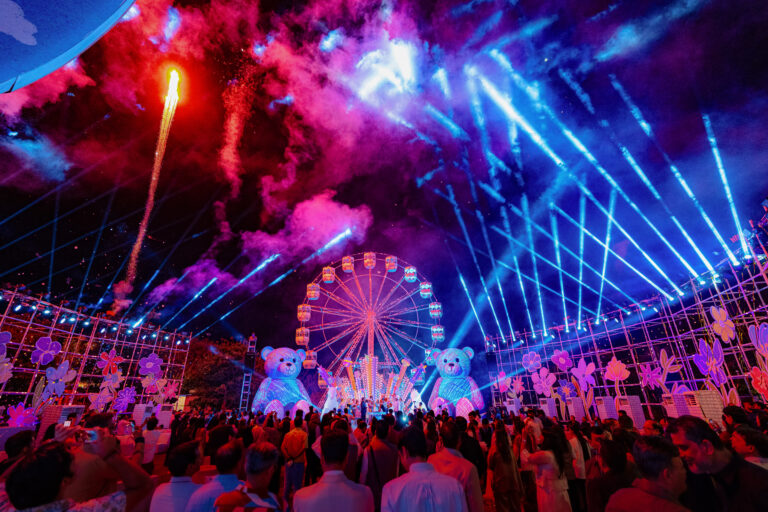
Tiara’s performance at MDLBEAST Soundstorm marked a pivotal moment in her career. It was the first time the Lebanese artist performed on a stage of that magnitude, and her debut performing original music after spending the previous two years developing her sound.
“That moment was honestly one of the best days of my life,” she says. “The emotions were completely unmatched, I felt happy, fulfilled, confident, and exactly where I was meant to be.”
Sharing the stage with Steve Aoki brought the surrealism to the experience. “I was incredibly nervous before going on, but the second I stepped out there, everything felt so natural, powerful, and just amazing.” The performance was a full circle moment for the artist who returned to stage after two years dedicated to songwriting and production. “Now I’m excited to keep evolving my live show, from the visuals and outfits to my movements and vocal delivery. I’m just at the beginning, currently performing 15-20 minute sets, and I’m so excited to grow this experience for my audience.”
Femininity as Power
Tiara’s presence extends into her visual and beyond just the audio. She has become a fixture on red carpets across the MENA region, and throughout all of these appearances one thing remains: her style is not separate from her music, it’s an extension of the same artistic vision.
“My sound and my visuals are very aligned,” she explains. “The music I make is sensual, soft, and confident, and I carry that same energy onto the red carpet. My style is deeply feminine. I love silhouettes that flatter my body and make me feel powerful and fully myself.”
“For me, feeling good in what I wear directly translates into presence, and that presence is the same one you hear in my voice in the studio. Femininity is a core keyword for me, in my sound, my energy, and my visual expression.”
Honouring Heritage Through Evolution
Naturally, Lebanon’s rich musical legacy looms large for any upcoming artist from the country, but for Tiara views this heritage not as a constraint, but as a foundation.
“Lebanon’s musical heritage is something I carry with a lot of pride. It is so beautiful. My legend is Fairuz,” she says. “For me, ‘modern’ Lebanese music just means translating its feeling into today’s language. I stay true to my identity, my emotions, and the way I hear music. I believe the best way to honour where we come from is to let it evolve naturally through who we are now.”

Ana Beirut, a Love Letter to a City
Ana Beirut captured a moment of collective grief and resilience of the Lebanese people after the 2019 protests and the Beirut port explosion.
“Beirut represents a feeling more than a theme in my music,” Tiara reflects. “‘Ana Beirut’ was a direct dedication to my country after everything it went through. I love this song and its beautiful lyrics very much.”
As we speak in 2026, her relationship to Beirut in her music has evolved. “In 2026, my music feels closer to my heart than ever, guided by emotion and truth rather than labels or themes.”
Building a World is the Vision for 2026
When asked about her plans for 2026 and beyond, the Lebanese artist’s goals are both ambitious and intimate. Tiara is focused on building something that is sustainable but at the same time true.
“My main goal for 2026 is to continue building my own world as an artist, through stronger releases, evolved live shows, and a deeper connection with my audience,” she says. “I want to grow into my most confident and happiest self on stage, and curate an incredible show that aligns with my aura and energy. This year is about growth, consistency, and fully enjoying the stage as my home whilst putting my heart into everything I create. Having my audience understand me and my character better, unmasking new layers along the way.”
As our conversation winds down, what becomes clear is that Tiara Wehbe is actively redefining what it means to be a Lebanese artist in 2026. She’s proving that honouring heritage doesn’t mean being trapped by it, that multilingual fluidity can be a strength, and that confidence, femininity and cultural pride can coexist in ways that feel both timeless and urgently contemporary.
“Weili weili” might traditionally signal grief, but in Tiara’s hands, it becomes an invitation to dance through whatever comes next. And isn’t that what the best pop music has always done: taken our most human emotions and transformed them into something that makes us feel less alone, something that reminds us of our own strength?
In Tiara’s case, she’s doing it in three languages, wrapped in oriental production, delivered with the confidence of someone who knows exactly who she is and where she’s going.
Tiara Wehbe Tiara Wehbe Tiara Wehbe Tiara Wehbe Tiara Wehbe Tiara Wehbe Tiara Wehbe Tiara Wehbe Tiara Wehbe Tiara Wehbe Tiara Wehbe Tiara Wehbe Tiara Wehbe Tiara Wehbe Tiara Wehbe Tiara Wehbe Tiara Wehbe Tiara Wehbe