

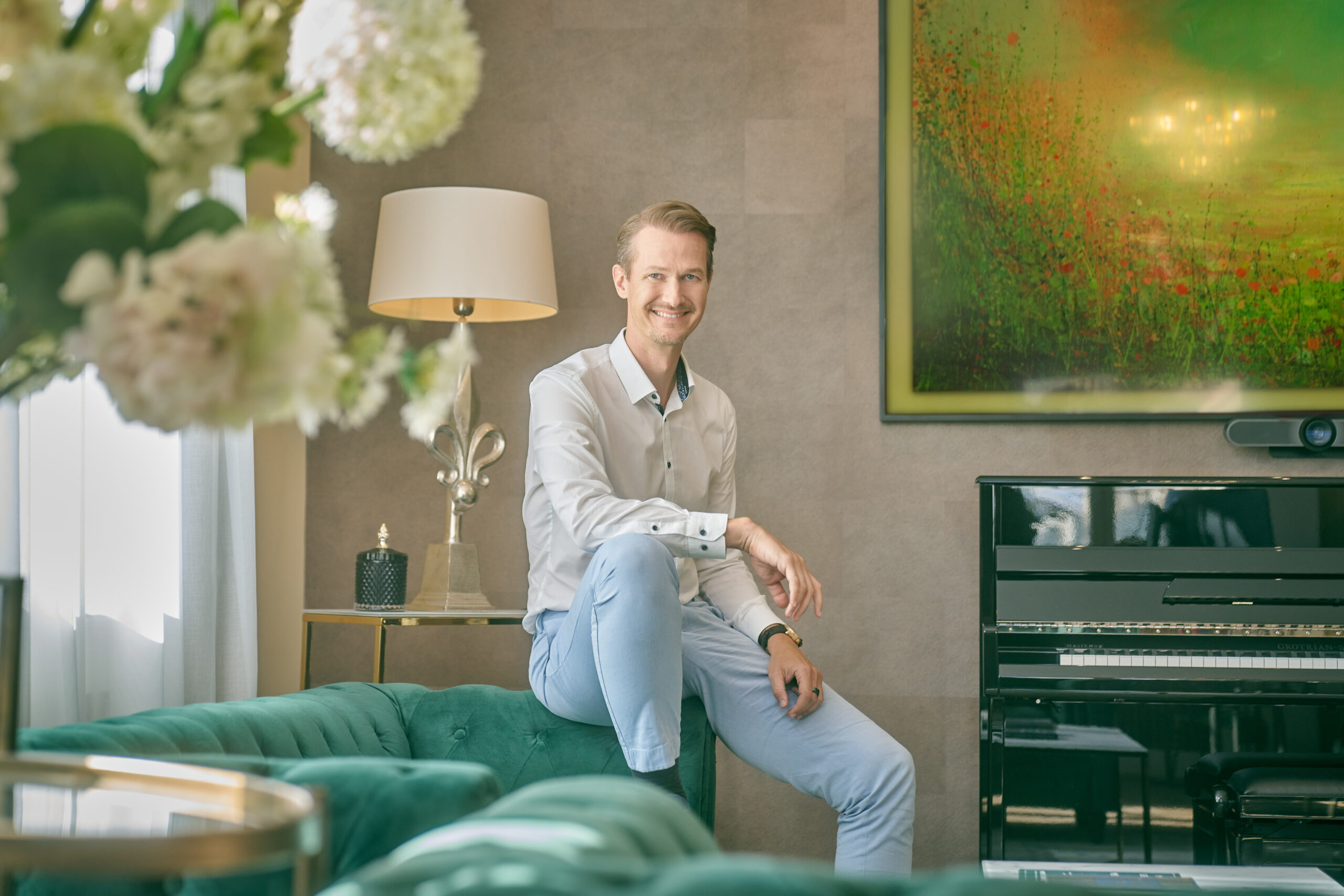

In the serene corners of Switzerland, away from the prying eyes of the public and protected by some of the world’s strictest confidentiality laws, lies what is arguably the most exclusive mental health clinic on earth, Paracelsus Recovery.
The clinic operates on a scale of intimacy that defies traditional medical models, with a dedicated staff-to-patient ratio of 15 to 1.
At its helm is Jan Gerber, founder of Paracelsus Recovery, who is quick to point out that the true luxury isn’t the five-star service that they provide but rather the intensity of a coordinated, interdisciplinary treatment program that addresses the complex interplay of hormones, genetics and social interaction.
“We treat one client at a time,” he tells me early on in our conversation. Each client lives in a private residence, supported by a therapeutic team dedicated solely to them.

Luxury Beyond Aesthetic
Paracelsus Recovery is associated with opulence, with gourmet chefs, discreet transport and meticulous housekeeping. However, the defining feature of the clinic is not its setting but its methodology.
“We realised long ago that mental health is much more complex than just psychiatry and psychotherapy,” Jan explains.
Clients undergo over 10 hours of therapy daily. Treatment extends to hormonal analysis, gut health, whole-genome sequencing, epigenetics and extensive laboratory testing. They operate on a simple premise, that the mind cannot be separated from the body or from social context.

The Isolation of the High Achiever
While Paracelsus Recovery offers complete exclusivity, during our conversation, we touched on something more universal, remote work.
The modern professional landscape, particularly the shift toward working from home, has introduced unforeseen risks for those at the top of the corporate ladder. Jan argues that while many celebrate the flexibility of remote work, for high achievers, the lack of structure can be rather destabilising.
Loneliness has emerged as one of the most significant threats to health while working remotely. Casual interactions at the office, from a greeting at the coffee machine to a passing conversation, release oxytocin and reinforce emotional stability. Without these “coffee machine moments,” loneliness can set in, a condition that has been likened in its health impact to smoking a pack of cigarettes a day.
For managers and CEOs, the digital divide adds a layer of anxiety. It results from a loss of control. When a team is reduced to icons on a screen, managers lose the ability to gauge the energy of the room or pick up on the subtle nuances of office morale. This lack of tangibility leads to a persistent, underlying stress that is difficult to mitigate in a home environment where the boundaries are perpetually blurred.
Jan highlights some important yet often overlooked issues that come with remote work. With fewer breaks to move around, irregular meal schedules and extended screen time, daily routines change significantly. Commutes naturally offer an opportunity for movement; however, when working from home, it’s easy to spend entire days with minimal physical activity if we’re not intentional about it.

The Engineered Addiction of Social Media
When the physical structures of in-person interactions are limited, most of us instinctively reach for our devices to fill the void of boredom or emotional discomfort. Our relationship with social media serves as a modern-day parallel to chemical addiction.
Jan explains how behavioural scientists engineer these platforms and contribute to app design, to trigger dopaminergic reactions. Even subtle design choices, such as colour saturation, can lead to heightened engagement.
Especially for the young developing minds, the constant craving for “likes” creates a fluctuating sense of self-worth. The dopamine response is quite predictable. For instance, receiving 100 likes on their first post feels exhilarating. Over time, that same post becomes the standard by which they measure their validation. As a result, receiving fewer likes can feel like rejection and they find that they need even more likes to achieve the same emotional high.
Adults are not immune to it either. High-level executives, he says, doomscroll between board meetings. Social media often becomes a default coping mechanism for boredom, stress, or discomfort. While the relief of doing so is immediate, the net effect over time is highly negative. Jan likens it to the neurological patterns of drug use. The spike above baseline is followed by a drop below it, then a slow return to equilibrium, with the cycle repeating.

Why Success Does Not Safeguard Mental Health
One of the most compelling parts of our conversation centred around wealth. Perhaps the most persistent myth in our society is that wealth provides an absolute safety net against distress. Yet Paracelsus Recovery exists precisely because this belief collapses at scale.
Jan describes what he calls “adverse self-selection.” Individuals who relentlessly pursue success often carry a few common underlying traits, low self-esteem, trauma, emotional neglect, ADHD and bipolar tendencies. In entrepreneurial and executive populations, these conditions appear at far higher rates than in the general public. The same drive that pushes someone to the pinnacle of success often makes them vulnerable to mental health crises.
As with the overuse of social media, the cycle of seeking external validation through achievement eventually hits a ceiling. Just as a drug user requires higher doses for the same effect, a billionaire may find that moving from one billion to two billion dollars fails to provide a meaningful reward. When you already possess every imaginable luxury, your dopamine response flattens, leaving the individual in a “golden cage”, surrounded by wealth but feeling profoundly empty.
There is also the biology of adaptation. Jan explains it with the example of winning the lottery and the dopamine surge that follows. Over time, the brain recalibrates. What was once extraordinary can quickly become the norm.
Success also brings a unique brand of loneliness, the inability to trust whether an associate is interested in the person or the status they represent. When someone is visibly wealthy or powerful, every new relationship they form comes with a certain level of doubt about whether someone’s interest is genuine or merely transactional.
“The air gets thin towards the top,” Jan says.
Pain Is Not Hierarchical
As we close, Jan leaves me with something deeply profund. Pain does not rank itself by income bracket. Whether someone is homeless or worth billions, suffering is still suffering.
“Pain is pain,” he says. Inhis view, empathy should not be distributed based on perceived deservingness. In a world that glamorises success and trivialises the struggles of the affluent, his position is firm, compassion should be universal.