


Luxury real estate has always had a recognizable language: a prime location, generous space, exceptional architecture, beautiful materials, privacy, views, and service. All of these still matter. But at the top end of the market, another idea is becoming part of the conversation: how well a home supports the people living there, day after day and over time.
Longevity is increasingly part of that shift. Sotheby’s International Realty’s 2026 Mid-Year Luxury Outlook identifies longevity-driven living as an emerging force in luxury real estate. In the same report, 62% of luxury real estate professionals said lifestyle was becoming more important to buyers, ahead of taxes and economic stability, and wellness real estate itself is cited as having more than doubled in size over five years, on track to surpass $1.1 trillion by 2029.
For developers, the question is what happens when longevity becomes part of the home itself. It isn’t one feature or amenity. It changes decisions about architecture and materials, air and water, nature, and technology.
Some of the new luxury is invisible
Think about what you see and feel walking into a good home: the view, the light, the quiet, the temperature, the feeling of space. Rarely do you think about the decisions that produced them.
Orientation and facade design influence daylight, shade, views, and temperature. Acoustic planning determines how much of the city follows you into the bedroom. These are familiar architectural considerations, but longevity gives them a different context. We live with these conditions every day, usually without consciously noticing them.
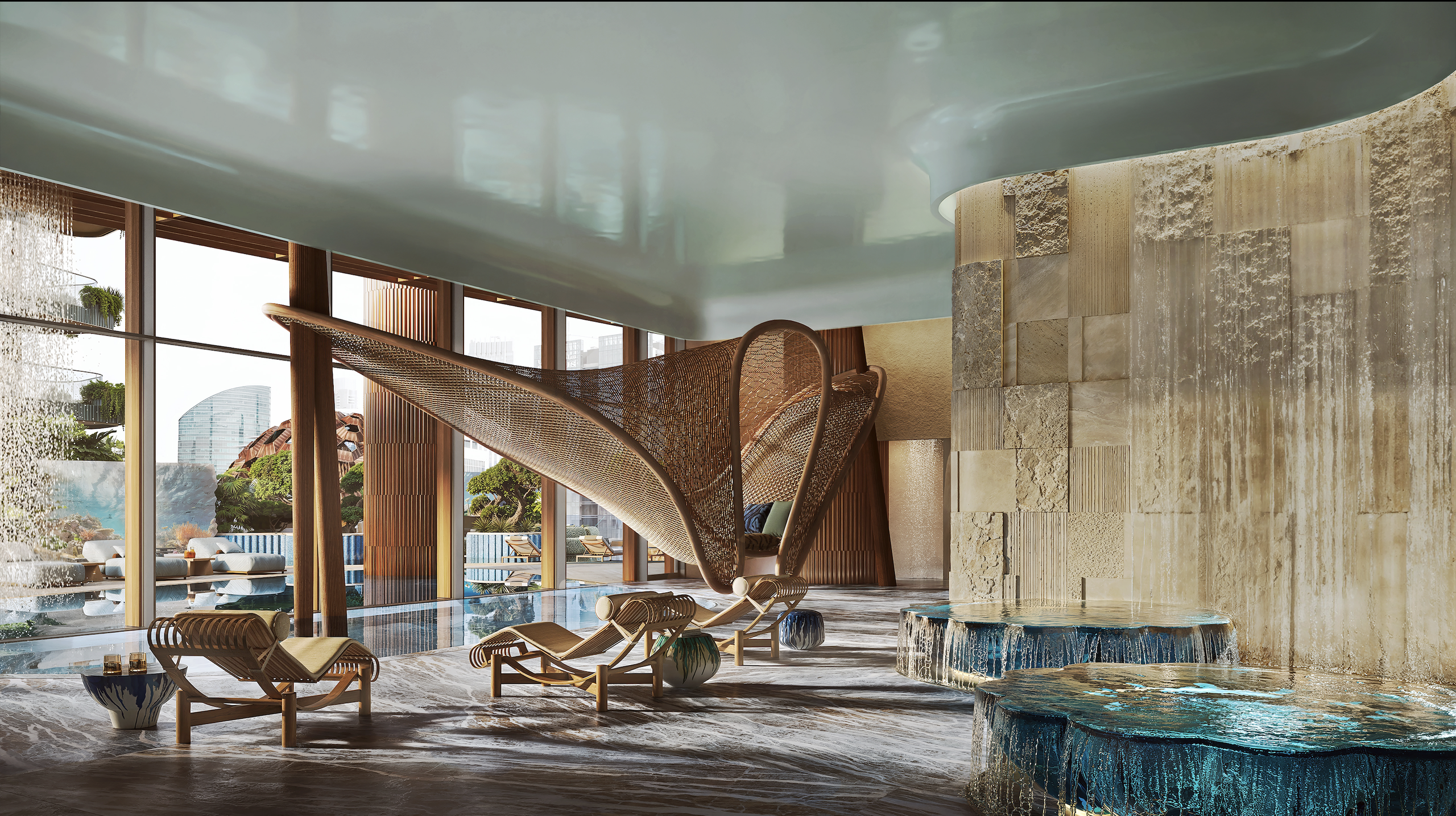
At EYWA Tree of Life in Dubai, for example, the building is positioned to open up views and increase access to daylight. Deep planted terraces provide shade and create a buffer between the large glazed areas and the external environment, while greenery extends vertically through the building rather than remaining at ground level. Inside, Roman travertine, textured limestone, and Paldao wood continue the use of natural materials.
What you may not notice at all
Some elements sit even further from view. Indoor air is a good example. The U.S. Environmental Protection Agency has found that concentrations of certain pollutants are routinely two to five times higher inside a home than in the air outside.
At EYWA’s Dubai developments, MERV 14 filtration and ionization are built into the air-management approach, alongside low-VOC and non-toxic finishes and specialized water-treatment systems – technical decisions that add up to a simple idea: pay attention to the conditions people live with every day, rather than treating wellbeing as something to seek out separately.
From the resident’s perspective, none of this should feel complicated. As building become more sophisticated, its systems should demand less attention.
When technology disappears
Technology is becoming part of this quieter definition of luxury too.
For years, an advanced home was easy to recognize: panels, screens, automated blinds, lighting and climate controls, and eventually an app to manage everything. These functions can be useful, but more controls don’t necessarily make life easier.
The best technology may be the technology residents gradually stop noticing. Air and water systems work in the background. Lighting and climate controls are intuitive. The complexity stays behind the experience rather than becoming part of it.
Luxury hotels have understood this instinct for decades. Guests don’t need to know how many systems and people are involved behind the scenes. They simply expect things to work. There is no reason a sophisticated home should ask more of its resident.
Luxury with a longer perspective
Longevity does not replace the qualities that have traditionally defined luxury. Location, architecture, craftsmanship, space, privacy, views, and service remain fundamental. What it adds is a longer perspective.
A residence has to make an impression when someone first walks through the door. Its real value is experienced over years – how the light feels every morning, how quiet the bedroom is at night and how well one rests in it, whether technology removes small complications or create new ones.
These questions are beginning to sit alongside the traditional measures of a premium home. For developers, that means some of the most important decisions may be made long before the finishes are selected or the amenities are presented to a buyer. They sit in the architecture, engineering, materials, landscape, and systems that shape everyday experience.
A truly exceptional home should be beautiful on the day you first see it. It should also continue to work for you long after that first impression has passed.