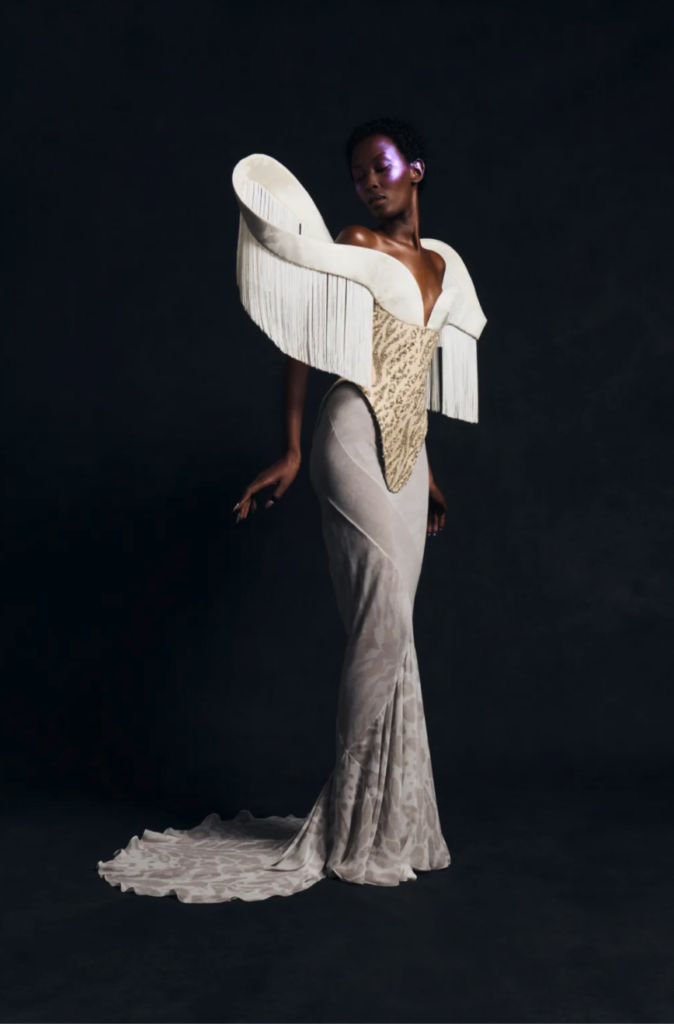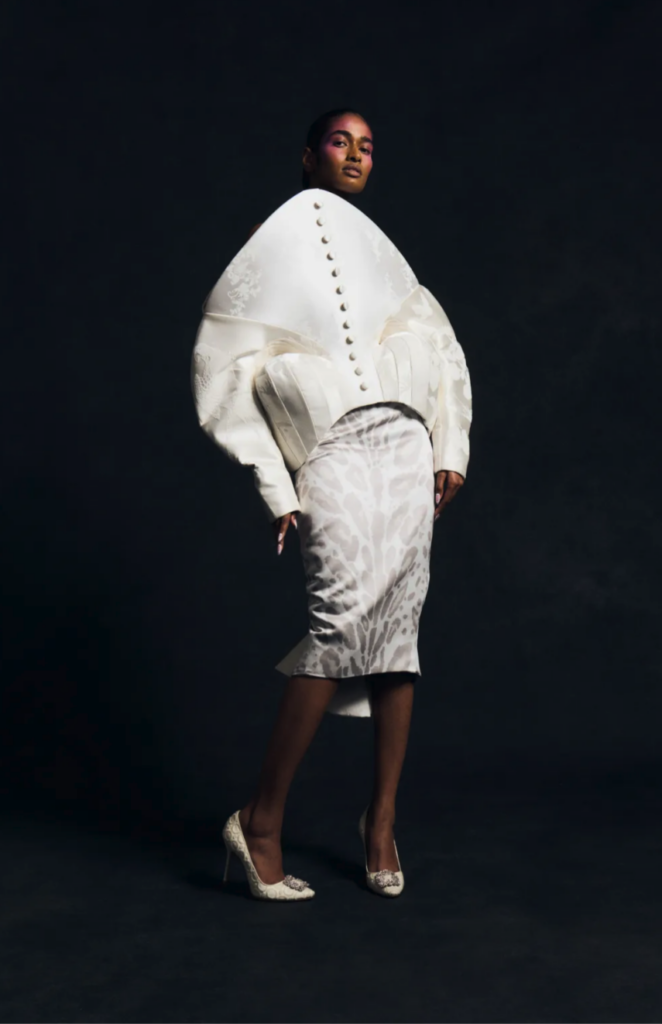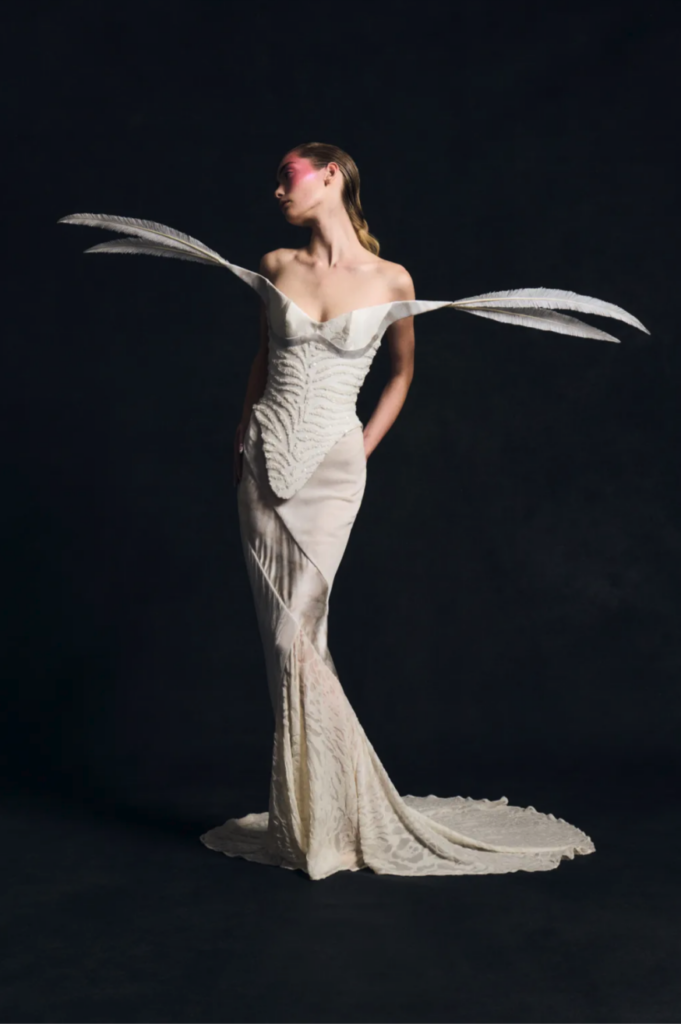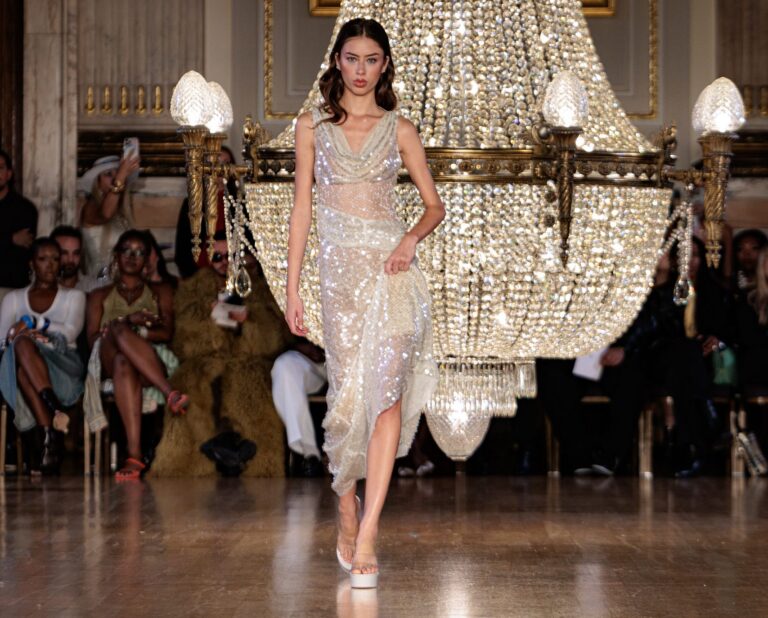


Known for theatrical silhouettes, towering platforms, corsetry and unapologetic glamour, Reed presented a far more restrained vision at London Fashion Week on September 17. Staged as a salon-style presentation at the Mandarin Oriental Ballroom in Knightsbridge, the collection looked back across the past 11 seasons of his namesake label while imagining what comes next.
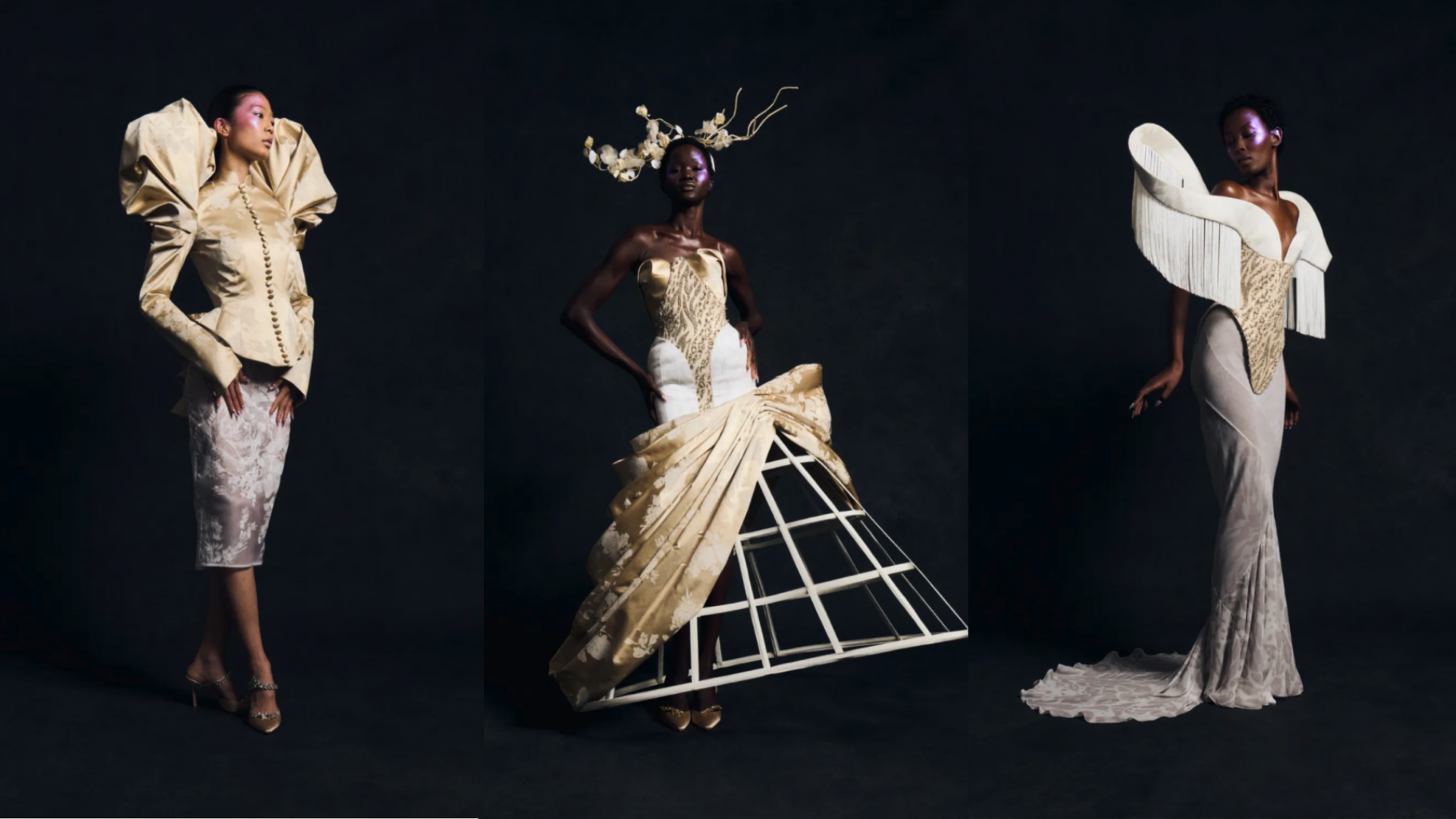
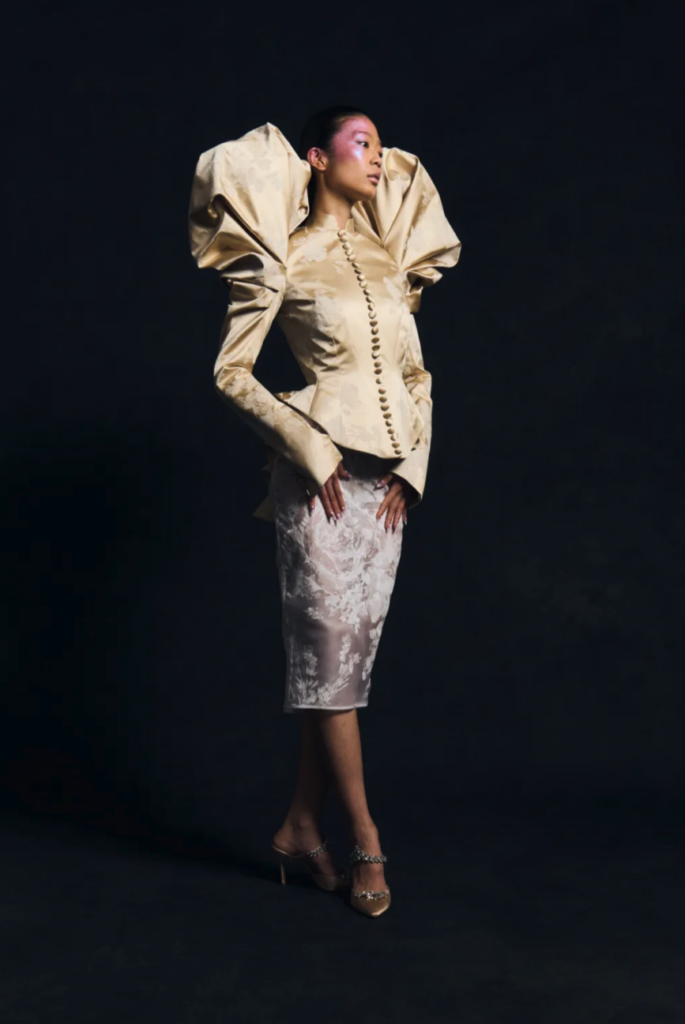
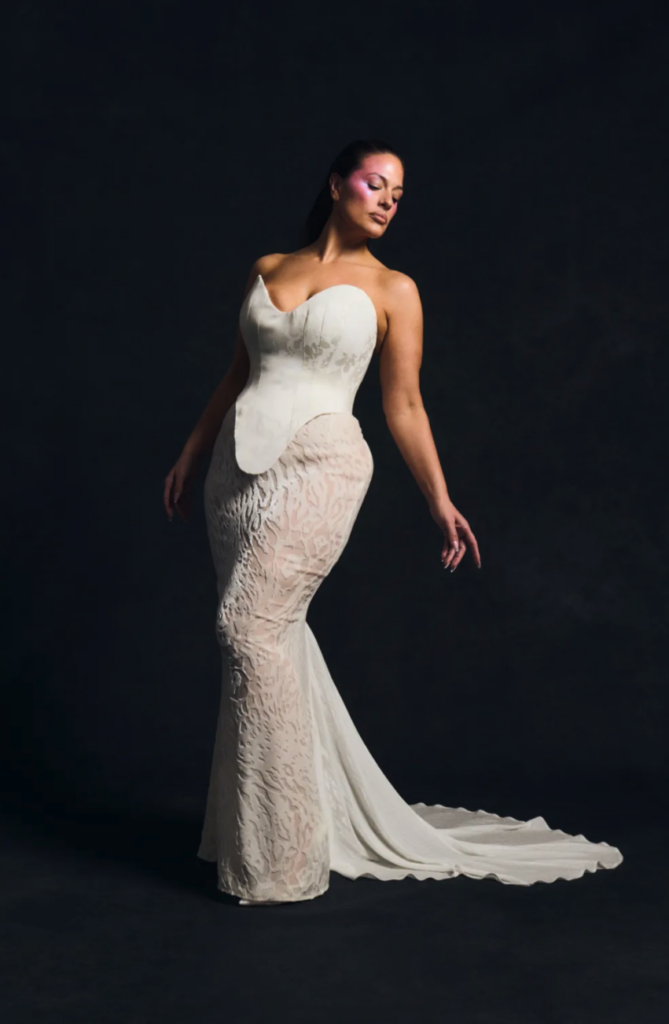
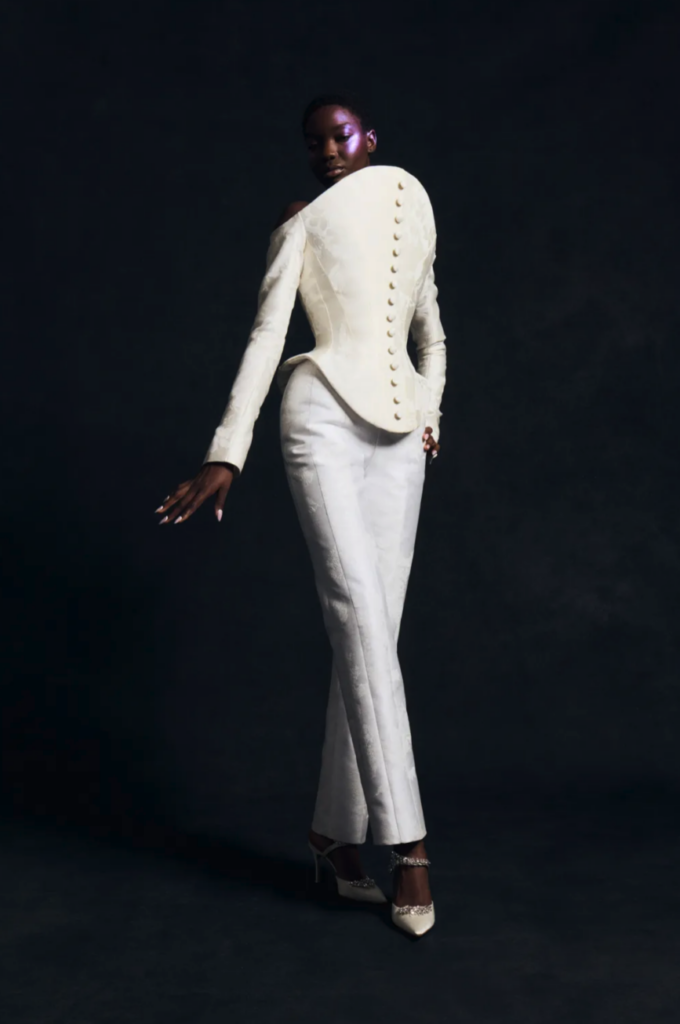
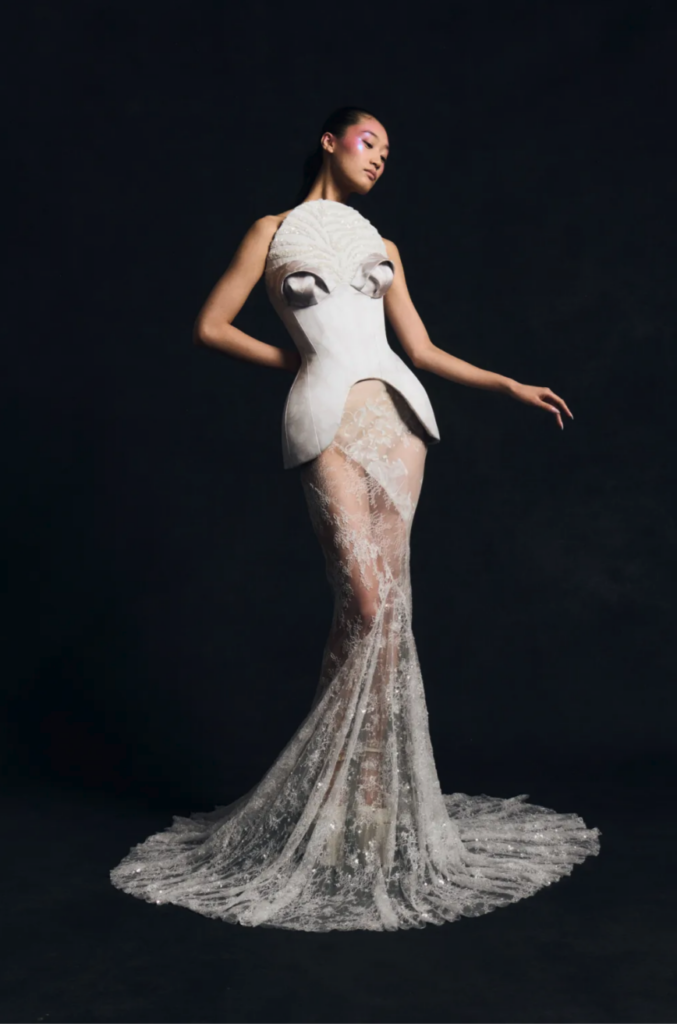
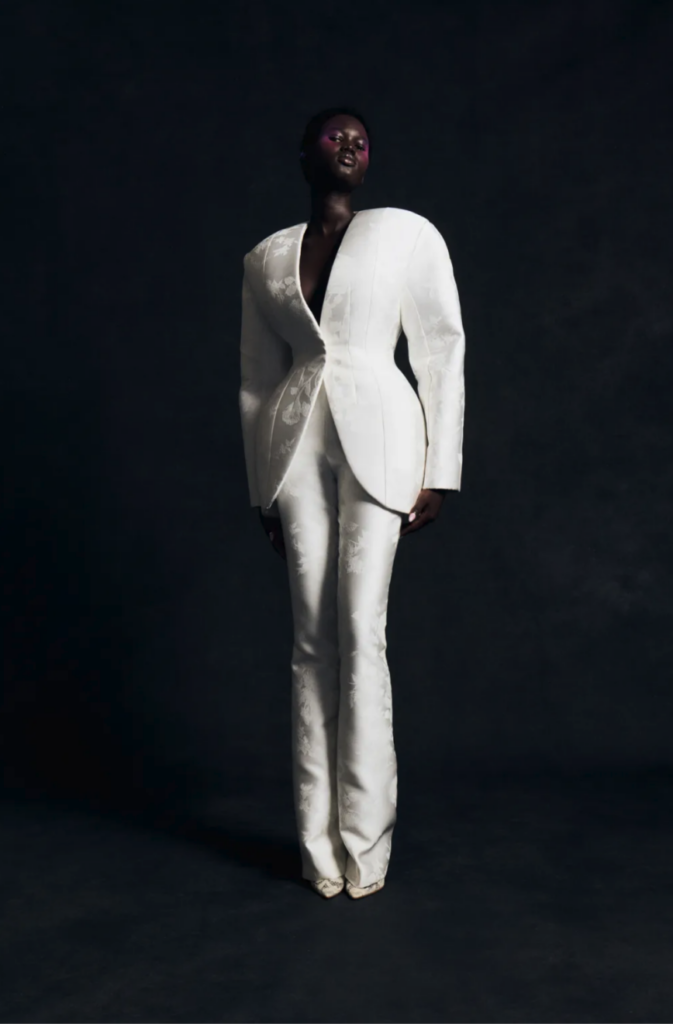
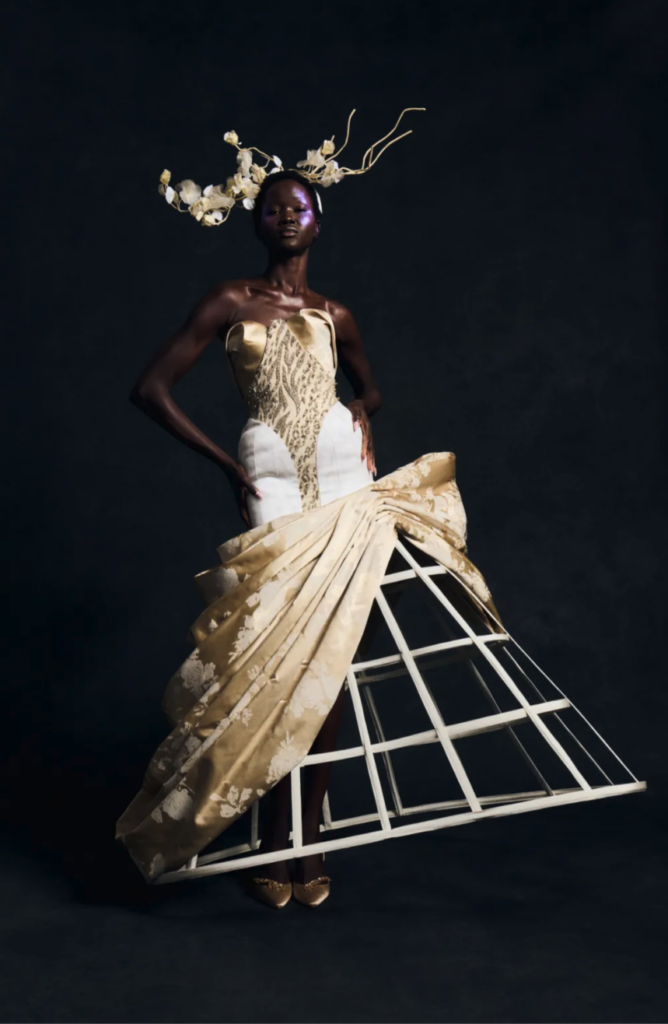
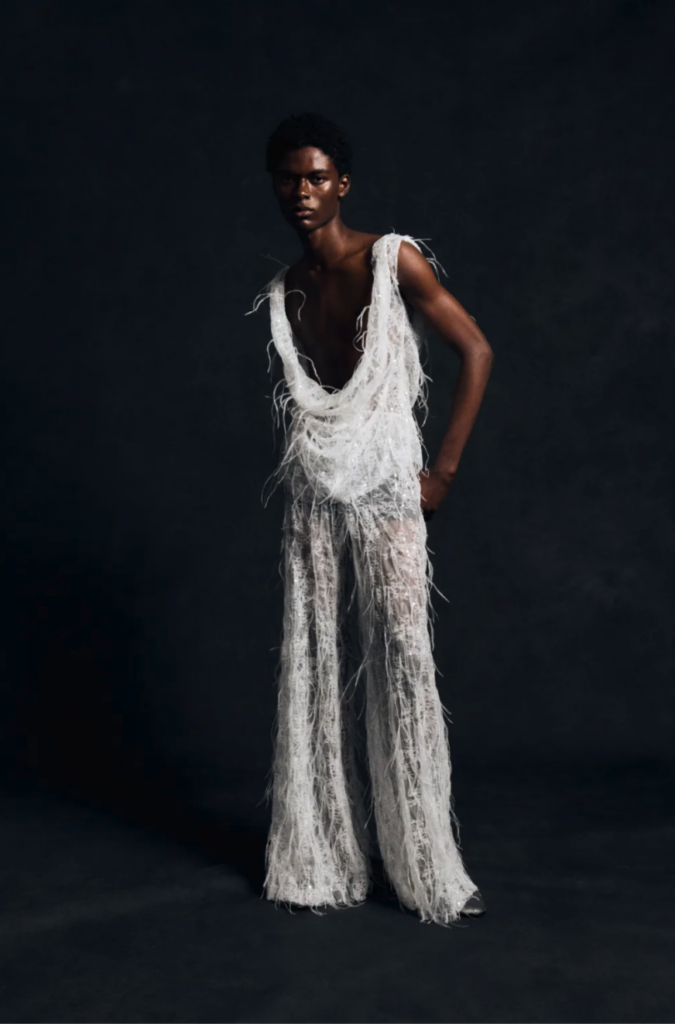
Reed described the collection as an almost “phantom collection”, and the idea was visible from the opening look. With the exception of a hand-painted creamy-gold duchesse satin jacket, a sequinned corset and the final bridal gown, the collection was overwhelmingly white. Rather than feeling stark, the restricted palette gave the clothes an almost spectral quality, allowing texture, construction and silhouette to do the talking.
Fifty shades of white
White became less of a colour choice and more of a design language.
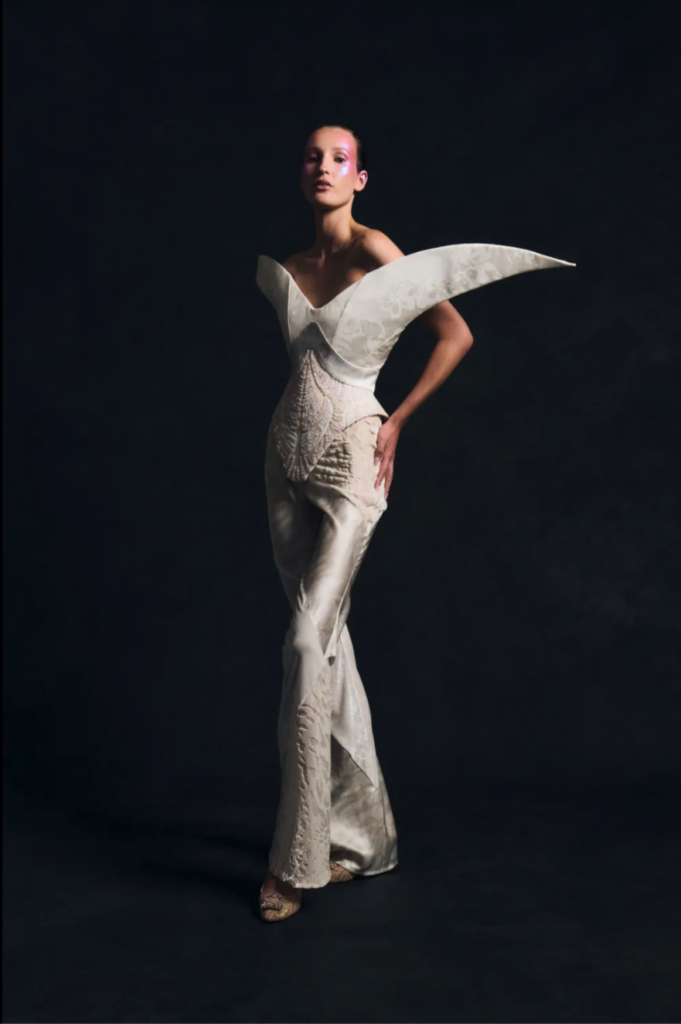
Organza was hand-painted with flowers and animal motifs, while duchesse satin, silk brocade and intricate jacquards appeared throughout the collection. Panels were patchworked into skirts and trousers, giving otherwise pared-back looks a sense of movement and craftsmanship.
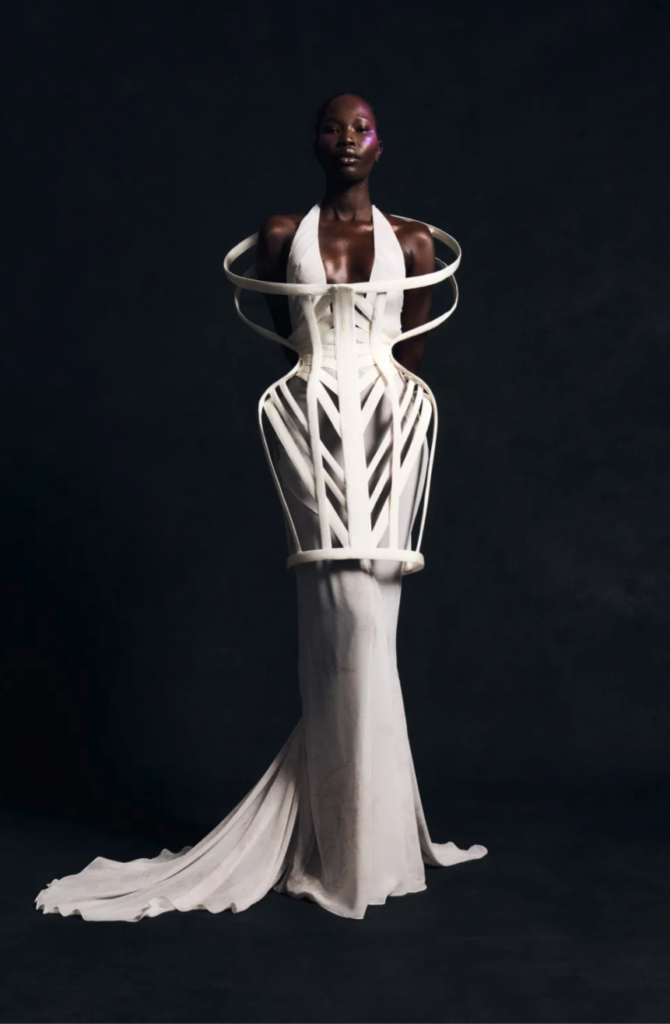
There was still plenty of Reed DNA. Corsetry remained, as did his distinctive architectural approach to the body, but the exaggeration felt more controlled. Structured tailoring arrived with dramatic shoulders, while ballooning proportions and sculptural forms gave the collection its characteristic sense of fantasy. British Vogue described the palette as “fifty shades of white”, with theatricality still present despite the noticeably more grounded direction.
Even the footwear marked a change. For the first time in years, Reed did not send his models down the presentation space in his signature 18-centimetre platforms. Instead, the collection featured a collaboration with Manolo Blahnik, bringing the drama closer to the ground.
From spectacle to customer
The change feels particularly significant given where Reed is in his career.
After dividing his time between London and Paris while leading both his own label and Nina Ricci, Reed departed the French house earlier this year to concentrate on his namesake brand. His SS27 collection was therefore not simply another season. It was an opportunity to reassess what Harris Reed should look like when the focus is entirely on Harris Reed.
This time, rather than beginning with a historical reference or a grand conceptual starting point, Reed said he began by asking a much more direct question: who is the customer?
That thinking shaped everything from the intimate salon presentation to the setting and even the pre-show cocktails. Reed’s stated customer is international, with a connection to London, and the designer is also preparing to open a London salon to serve that clientele more directly.
The result is a collection that feels less interested in proving what Harris Reed can do and more interested in establishing what the brand wants to become.
The drama is still there
For all its restraint, this is hardly minimalism.
The final bridal gown arrived with its crinoline exposed, while sequins, sculptural corsets and hand-painted surfaces ensured the collection retained its sense of occasion. Reed’s familiar caging appeared too, although Vogue noted that it felt more like one element within his design vocabulary rather than the central idea of the collection.
That distinction matters. Reed has not abandoned the fantasy that made his name. Instead, SS27 suggests that the fantasy is becoming more selective.
The collection feels like a designer taking some of his most recognisable signatures and stripping away the noise around them. What remains is the construction, the craft and the silhouette.
For Harris Reed, Spring/Summer 2027 is therefore less about reinvention than recalibration. The ghosts of his previous collections are still visible, but this time they are quieter, more refined and considerably closer to the ground.