



As the founder of DeCluttr Me, she approaches organisation as a necessary tool for mental clarity rather than a mere aesthetic pursuit. She has built a reputation for transforming everything from crowded wardrobes to chaotic workspaces and even digital desktops into systems that actually support daily life. Her approach goes beyond neat shelves and labelled boxes. In this conversation, we explore her methodology for reclaiming space within the home and the office and why creating order can have a tangible impact on mental clarity and overall wellbeing.

What is the biggest misconception people have about decluttering when they first reach out to you?
The biggest misconception is that decluttering means throwing everything away. People think I’m going to walk in with bin bags and force them to get rid of half their life. That couldn’t be further from the truth. Decluttering is about decision making, not deprivation. It is about keeping what truly serves you and removing what is creating friction. I’m not interested in empty homes. I’m interested in functional homes.
Another misconception is that we are going to pull everything out into a giant chaotic pile. I don’t work like that. It is overwhelming, exhausting and unnecessary. We work in calm, focused sections so that progress feels achievable rather than paralysing.
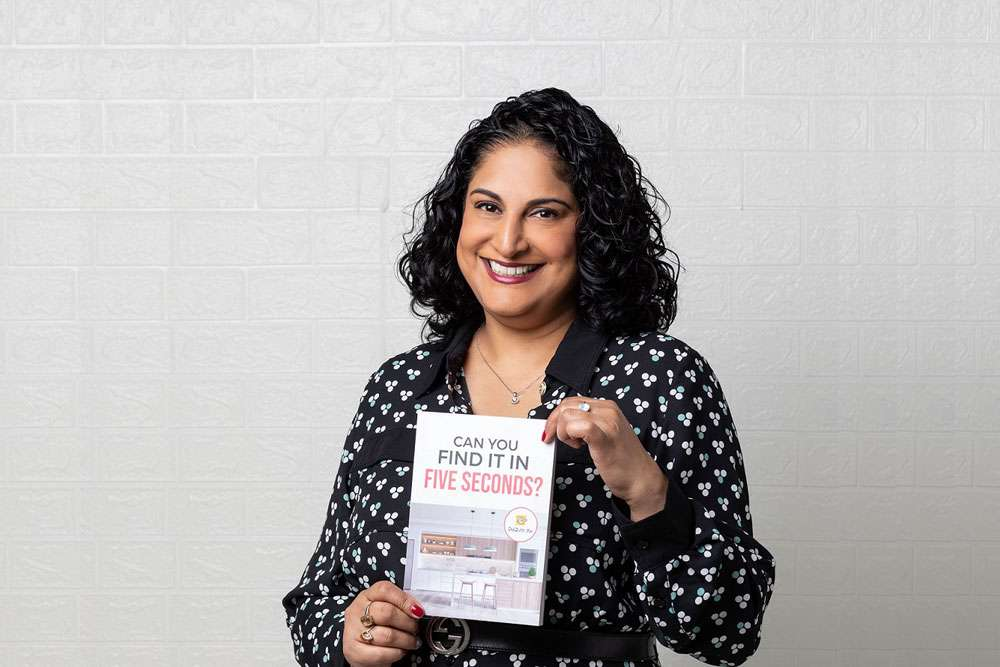
You often mention the Find it in Five Seconds rule. Beyond the obvious time saving benefit, what does that level of accessibility do for a person’s daily mental state?
When you can find something in five seconds, your nervous system relaxes. You stop second guessing yourself. You stop blaming yourself. You stop feeling behind. Micro stress disappears. People underestimate how much those tiny daily frustrations build up. Searching for keys, documents, chargers, paperwork. It chips away at your confidence.
When everything has a clear home, you feel capable. You feel in control. You move through your day with clarity. That changes your mental state far more than people realise.
You’ve recently written about how Japanese design philosophy influenced your perspective on ritualistic cleaning. How do you adapt those Zen principles to the fast paced, often maximalist lifestyle we see in the Middle East?
When I travelled to Japan, what struck me was intention. Everything had purpose. Cleaning was not punishment. It was respect for your space. In the Middle East, life is fast. Homes are large. Shopping culture is strong. Hospitality is generous. So we are not going to suddenly become minimal overnight.
Instead, I adapt the philosophy through small rituals. A five minute reset before bed. Taking off your shoes when you enter the house. Clearing surfaces each evening. Being thoughtful about what enters the home. It is not about copying aesthetic minimalism. It is about creating moments of calm within a fuller lifestyle.
When a client is emotionally attached to sentimental clutter, how do you help them detach?
I never force detachment. First, we separate memory from object. The memory is not inside the item. The memory is inside you. Also if they have photos of the items such as a dress, they can showcase the photos in an electronic photo album or photo album. Then we edit keeping the best, not all. A curated memory box is powerful. A cupboard of guilt is heavy.
Why is your mini decluttering approach more sustainable for those living with ADHD or chronic fatigue?
Marathon sessions are brutal. If you have ADHD, your brain already struggles with initiation and overwhelm. If you have chronic fatigue, your energy is precious. Mini decluttering works because it respects capacity. Ten to fifteen minutes. One drawer. One shelf. One category within a category.
Are there common mistakes people make when trying to organise a room on their own?
Yes. They buy storage first. Storage does not solve clutter. It hides decision avoidance. Another mistake is copying Pinterest and Instagram without considering their real life habits. Systems must match behaviour. If you never fold perfectly, create a system that works with that.
What are the first signs that a workspace is affecting productivity rather than supporting it?
Visual noise. Stacks of paper. No clear working surface. If you hesitate before sitting down, that is a sign. If you constantly move items around to create space, that is a sign. A productive workspace should reduce friction. You should know where tools live. Your desk should invite focus, not remind you of unfinished tasks.
Have you ever seen a client’s health or career change after decluttering?
Yes, many times. I love seeing my client’s shoulders drop from being mountain high when I first meet them to be relaxed when I leave. I have seen clients sleep better once bedrooms were cleared. I have seen stress levels visibly drop. One client told me she baked a cake that evening after we organised her kitchen. That was such a huge achievement for her and made me so happy!
Professionally, I have seen people negotiate promotions, launch businesses, restart their creative endeavours and apply for new roles once their environment matched the version of themselves they were stepping into.

Is there a decluttering rule or mindset shift you personally rely on?
Buy one, let go of two. That rule protects the future version of my home. But more importantly, I ask myself, would I buy this again today? If the answer is no, it tells me something.
If someone could only change one habit to live more organised, what should it be?
Reset before you rest. Five minutes at the end of the day. Clear surfaces. Return items home. Prepare tomorrow’s essentials. That tiny habit compounds into calm mornings and a lighter mind.
For someone who feels overwhelmed and cannot afford professional help, where should they start?
Start small enough that it feels almost too easy. One drawer. One shelf. One bag. Set a timer for ten minutes. Remove obvious rubbish. Return obvious items to their homes. Stop when the timer ends. Do it again tomorrow.