


In the early morning, before Dubai’s roads fill and the city begins to hum, the house is almost silent. Light enters slowly through a shaded courtyard, hitting limestone floors that stay cool beneath bare feet. There is no music playing, no television on. The architecture does not ask for attention. It allows the day to arrive gently.
This is a growing architectural approach across the UAE. Homes designed not around display, but around stillness.
A Different Kind of Luxury Home
For years, residential architecture in the Emirates has been defined by scale, height and visual impact. Grand entrances, double height foyers and statement staircases have been common markers of luxury. Today, a different priority is emerging.
Architects working in Dubai and Abu Dhabi are being asked to design homes that feel calm, private and emotionally grounding. The brief is no longer about how impressive a space looks on arrival, but how it feels to live in every day.
Stillness, in this context, is intentional. It is achieved through layout, material choice and how the home responds to light, heat and movement.

The Arrival Experience
In many of these homes, the transition from outside to inside is deliberately slowed. Rather than stepping straight into a living room, residents often move through a sequence of spaces.
A shaded entrance path.
A low ceilinged vestibule.
A courtyard open to the sky.
This architectural pacing creates a psychological shift. The outside world stays behind. The home begins to feel like a retreat.
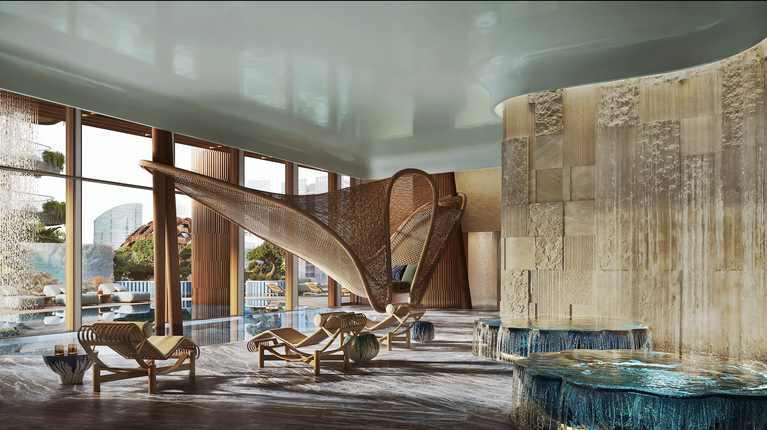
Courtyards play a central role in UAE residential design, particularly in homes inspired by traditional Emirati architecture. They allow light and air to enter without exposure, creating privacy while maintaining openness. In contemporary homes, courtyards are often stripped back to their essentials. Stone walls, a single tree, water that moves quietly.

Material Choices That Quiet the Space
Stillness is reinforced through materials that absorb rather than reflect excess light. Polished marble is often replaced with honed stone. Gloss finishes give way to plaster, timber and textured walls.
In many modern UAE homes designed for calm, the palette is intentionally narrow. Sand tones, soft greys, warm whites. The effect is not sterile. It is grounding.
Materials are allowed to age naturally. Timber darkens. Stone develops character. The house feels lived in rather than staged.


Rooms with Singular Purpose
Another defining feature of homes designed for stillness is clarity of use. Spaces are not overloaded with multiple functions.
A living room is for sitting.
A dining space is for gathering.
A bedroom is for rest.
Open plan living still exists, but zones are subtly defined through ceiling heights, wall placement or changes in flooring. This reduces visual noise and helps the home feel ordered without rigidity.
Storage is often hidden. Cupboards are flush. Handles are minimal or absent. The architecture supports everyday life by keeping distractions out of sight.

Light That Moves Throughout the Day
In the UAE climate, light must be controlled rather than maximised. Homes designed for stillness use light as a soft, moving presence.
Morning light enters through narrow openings.
Midday sun is filtered by screens and overhangs.
Evening light stretches across walls as the temperature drops.
Architects carefully orient rooms to avoid glare while maintaining a connection to the outdoors. Bedrooms are shielded. Living areas open to gardens or pools that reflect light gently back into the space.
Artificial lighting is equally restrained. Warm, indirect sources are favoured over statement fixtures. At night, the house settles rather than shines.

Living with Silence
Silence in these homes is not complete absence of sound. It is controlled sound.
Water moving in a courtyard.
Wind passing through screens.
Footsteps on stone.
Walls are thicker. Openings are positioned to protect privacy. Mechanical noise is minimised. The result is a house that supports slower routines and quieter moments.
Residents often describe these homes as places where time feels different. Mornings stretch. Evenings linger. The architecture allows for pause.


A Reflection of Contemporary UAE Living
This shift towards stillness reflects a broader change in how luxury is understood in the Emirates. As cities become denser and lives more connected, the home is increasingly seen as a place of restoration.
For many UAE residents, true luxury now means privacy, calm and control over one’s environment. Architecture that supports wellbeing rather than performance.
Homes designed for stillness do not announce themselves loudly. From the outside, they may appear modest. Their value is revealed slowly, through daily experience rather than immediate impact.
Why This Architecture Endures
Stillness is not a trend. It is a design philosophy that responds to climate, culture and contemporary life in the UAE.
These homes age well because they are not dependent on fashion. They are rooted in proportion, material honesty and human need. They allow space for life to unfold quietly.
In a region known for architectural ambition, the most powerful statement today may be restraint.