
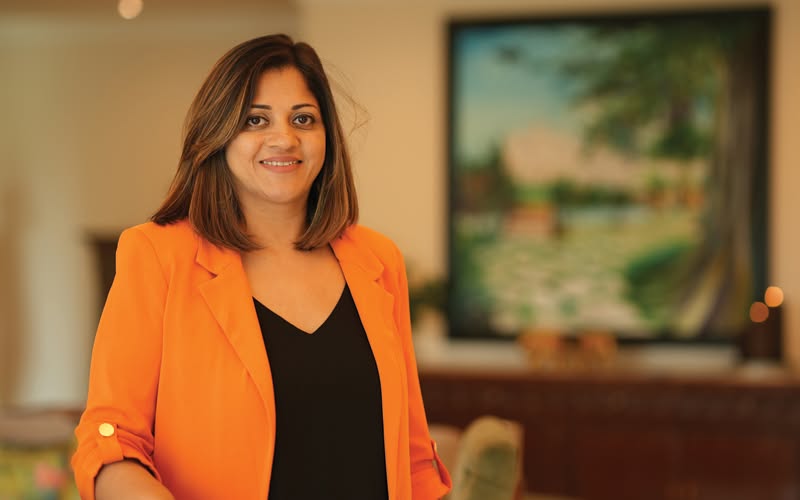

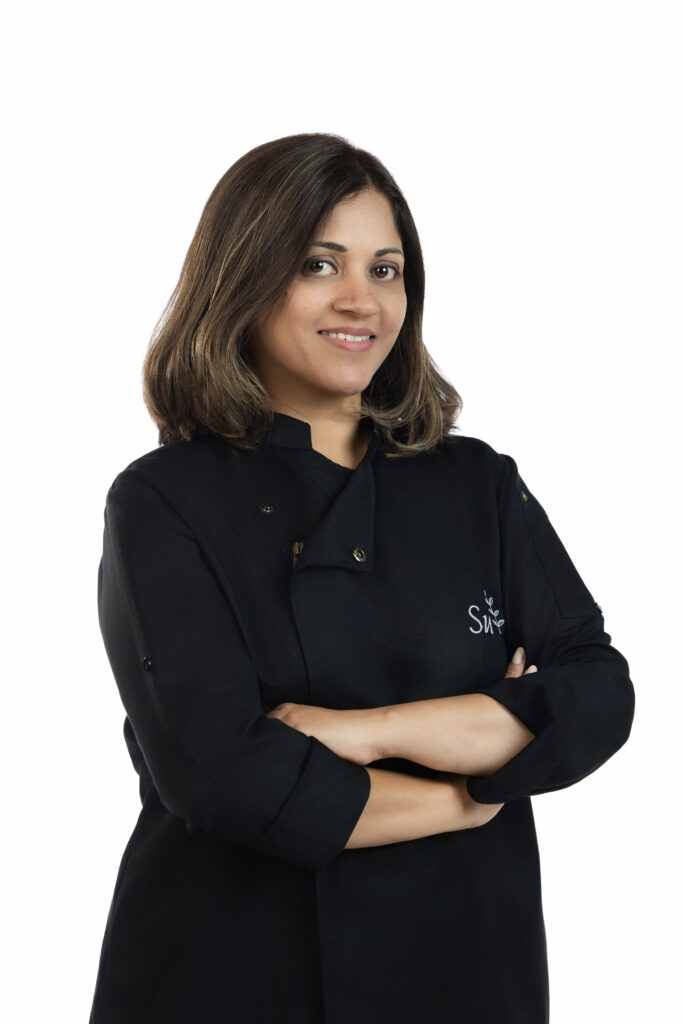
Through her Dubai-based supper club, Sebze, Chef Surabhi Suri has built a reputation for presenting Indian food in a way that is creative, contemporary and deeply personal. Now, after being crowned World Vegetarian Champion and finishing as first runner-up at the prestigious World Food Championships Final Table, she has brought both her cooking and her philosophy to the global stage. We caught up with Chef Surabhi to talk about competing against hundreds of chefs from around the world, representing plant-forward cuisine at the highest level, and why storytelling remains one of the most important ingredients in every dish she creates.
Was there a moment during the competition when you thought about giving up? What kept you going?
One of the moments when I genuinely felt like giving up was when we arrived at The Hive Restaurant in Bentonville and learned that the next challenge would involve grilling a large piece of meat.
As a vegetarian chef who has never cooked meat or used a grill, I felt completely overwhelmed. In that moment, I honestly didn’t think I would be able to execute the challenge well. It was intimidating, unfamiliar territory, and I remember feeling incredibly deflated. But instead of letting that moment define me, I rolled up my sleeves and got to work. I spent the entire night researching, learning, practicing, and preparing as best I could. It wasn’t easy, but I faced the challenge head-on.
Looking back, I’m so glad I didn’t give up. That experience taught me that growth happens when we’re pushed far outside our comfort zones, and sometimes the challenges that seem impossible at first become the ones we’re most proud of overcoming.
You’ve described the non-vegetarian rounds as emotionally challenging. What was going through your mind when you realised you’d have to step outside everything you’d built your career around?
It was incredibly confronting. I have spent my entire career championing vegetarian, plant-forward food and showing people just how exciting, creative, and satisfying it can be. So when I realised I would have to cook ingredients that sat completely outside my personal values and culinary identity, I felt a real sense of discomfort and uncertainty.
My first thought was, “How am I going to do justice to this challenge?” I wasn’t worried about hard work, I was worried about respect. If I was going to cook something I didn’t personally eat, I wanted to approach it with the same level of care, professionalism, and commitment that I bring to every dish.
At the same time, I reminded myself why I entered the competition. It was an opportunity to grow, to learn, and to test myself in ways I never had before. While those rounds were emotionally challenging, they also taught me resilience and adaptability. They reinforced something I have always believed, great cooking begins with curiosity, humility, and a willingness to keep learning.
And if anything, the experience strengthened my conviction in the kind of food I love to cook. It made me even more passionate about showcasing the depth, beauty, and possibilities of plant-forward cuisine.
Looking back now, do you think that experience changed your understanding of yourself as a chef?
Absolutely. Before the competition, I saw myself very much through the lens of a self-taught vegetarian chef. I was proud of what I had built, but I also carried the weight of being different in a profession that often places a lot of value on formal training and traditional culinary paths.
The competition forced me into situations I never would have chosen for myself. It pushed me beyond my comfort zone, challenged my confidence, and made me confront my own doubts. What I discovered was that being a chef is about much more than mastering specific ingredients or techniques, it’s about problem-solving, creativity, discipline, adaptability, and the willingness to learn under pressure.
The experience showed me that I am far more resilient than I had given myself credit for. It also reinforced that my perspective as a vegetarian chef is not a limitation, it’s actually a strength.
In the end, the competition didn’t change who I am as a chef, it deepened my understanding of it. It reminded me that I can stay true to my values while still embracing challenges, and that growth often comes from the moments that feel the most uncomfortable.
As a lifelong vegetarian, have people ever underestimated your abilities because they assumed plant-forward cooking was somehow limiting?
Many times. Early in my journey, I often felt that people viewed vegetarian cooking as somehow less technical, less creative, or less demanding than other forms of cuisine. There was also an assumption that because I was self-taught and chose to focus on plant-forward food, my skill set would be limited.
What people don’t always realise is that working with vegetables requires an incredible amount of creativity and understanding. You can’t rely on the richness of meat or seafood; every layer of flavour, texture, and balance has to be built thoughtfully. It pushes you to be resourceful and constantly innovate.
I also faced skepticism in professional kitchens. As a self-taught chef, it took years of hard work to earn the respect of trained chefs and establish credibility. Nothing was handed to me. I had to prove myself repeatedly through my work, my consistency, and my commitment to the craft.
Over time, however, I came to see those assumptions as motivation rather than obstacles. They pushed me to work harder and refine my voice as a chef. Today, I feel proud to be part of a movement that is showing just how exciting, sophisticated, and globally relevant plant-forward cuisine can be. If anything, my journey has taught me that limitations often exist more in people’s perceptions than in the food itself.
What’s the biggest misconception people have about vegetarian cuisine today?
The biggest misconception is that vegetarian cuisine is somehow imcomplete, restrictive, or secondary to other styles of cooking.
People often assume that if there’s no meat, there must be less depth, less technique, or less satisfaction on the plate. But in reality, plant-forward cooking demands the opposite. It requires you to build flavour from the ground up, through layering, seasoning, texture, fermentation, roasting, acidity, spice, and balance. There’s no single dominant element to rely on, so every component has to earn its place.
Another misconception is that vegetarian food is only about health or simplicity. In truth, it can be incredibly indulgent, complex, and celebratory. Across Indian and Mediterranean traditions especially, some of the most soulful, labour-intensive, and flavour-rich dishes are naturally plant-based.
For someone new to vegetarian cuisine, which dish would you serve them and why?
I would serve them my sesame-crusted eggplant, paired with a herb bulgur and a Kerala-style lemongrass curry.
I choose this dish because it represents everything I love about vegetarian cuisine. it is deeply flavourful, textural, and satisfying in a way that often surprises people who are newly exploring plant-forward food. The eggplant becomes almost “meaty” in its richness and bite once it is spiced, crusted and fried. While the herb bulgur brings freshness and grounding, and the lemongrass curry adds warmth, aroma, and gentle heat.
It’s exactly the kind of dish that tends to shift perceptions at my table. I’ve had guests at my suppers try it and be genuinely taken aback by its complexity, often telling me afterwards that they didn’t miss meat throughout the entire meal because dishes like this carried so much depth and satisfaction on their own.
For me, that is always the intention, to create food that doesn’t feel like it is missing anything, but instead feels complete, comforting, and memorable in its own right.
You started cooking with your grandmother at the age of 10. What’s one lesson from her that still guides you today?
My grandmother was the kind of cook who gave love and care to every single ingredient. Even something as simple as a squash curry was never treated as “simple” in her hands, it was cooked with patience, attention, and a quiet kind of devotion. And somehow, it always turned into something extraordinary.
That is the biggest lesson she left me with, that food responds to how it is treated. When it is handled with respect, time, and care, even the humblest ingredients can become deeply special.
That belief is at the core of how I cook today. I feel a deep sense of love and respect for every ingredient I work with. I don’t try to hide them or transform them beyond recognition. Instead, I want to highlight them, their natural colours, their textures, their individuality, and their inherent flavour.
What advice would you give to someone who dreams of becoming a chef but doesn’t have the traditional credentials?
I would honestly say that if you have the means and the time, it is worth pursuing a formal degree in this field. Because if you enter this industry without one, you should be prepared for a longer and more difficult journey. It will not be easy. People may not accept you immediately, and you may find yourself having to work twice or three times as hard to prove your place.
There will be setbacks, failures, and moments where you are constantly questioned simply because you did not come through a traditional path. That is the reality, and it is important to be aware of it.
However, if you do choose this path without a degree, whether because of timing, circumstance, or personal choice, then you must be prepared for that challenge. You will need resilience, consistency, and a strong sense of self-belief. You cannot allow other people’s opinions or doubts to define your confidence or your direction.
Ultimately, both paths are valid, but they come with very different journeys. What matters most is being honest about the effort and emotional strength it will require, and being prepared to keep going regardless.
Your dishes are known for being highly visual. Which comes first for you, flavour, emotion or presentation?
For me, flavour always comes first. Everything begins with how something tastes, its balance, its depth, its warmth, its acidity, its seasoning. If a dish doesn’t work on the palate, no amount of visual beauty can hold it together.
Emotion comes very closely after that. I think about what I want the dish to feel like, whether it should feel comforting, nostalgic, bright or celebratory. That emotional intention is what guides the direction of the flavours and the ingredients I choose.
Presentation is the final layer. It is important, because we eat with our eyes first, but for me it is never decoration for the sake of beauty. It is a reflection of everything that already exists in the dish, the ingredients, their colours, their natural forms, and the story they are telling together.
So I would say, flavour leads, emotion guides, and presentation expresses. When all three align, that is when a dish feels complete to me.
What’s the most unusual source of inspiration you’ve ever drawn from while creating a menu?
Inspiration, for me, comes from everywhere. It doesn’t just come from dining in fine restaurants or Michelin spaces, it comes just as much from street food, travel, everyday moments, or even something as simple as a video I might come across.
One of the best examples of this is my Karak chai Kulfi. I remember being in Karama one day, completely exhausted, and stopping to have a glass of strong Karak Chai. It was such a simple, grounding moment, but while I was sitting there, I started thinking about how those flavours would translate into a different form. Chai is such an integral part of Indian, Emirati, and broader Arabic culture, and I wanted to bring those threads together in a way that felt familiar yet unexpected.
That thought stayed with me, and that is how the Kadak chai kulfi came to life.
That experience is really how I approach cooking in general. I try to keep my mind open all the time, observing everything around me and allowing ideas to come from the most unexpected places.
What’s one thing you hope diners will be saying about vegetarian cuisine ten years from now?
I hope that ten years from now, diners are no longer saying “this is good for vegetarian food” or treating it as a separate category altogether.
I would love for the conversation to shift to simply, this is good food. No qualifiers, no comparisons, no sense of absence or substitution, just a genuine appreciation for flavour, craft, and creativity, regardless of whether a dish is plant-based or not.
If vegetarian cuisine can be seen as part of the mainstream culinary language rather than a niche or alternative, that would be a meaningful shift.
If your food could say one thing about you before you entered the room, what would you want it to say?
I would want it to say that this food was made with care, honesty, and attention to detail. That it reflects someone who respects ingredients deeply and doesn’t try to overpower them, but instead allows them to be seen, felt, and experienced in their most natural form. That every element on the plate has been thought through, not just for flavour, but for balance and texture as well.
I would also want it to say that the person behind it believes in warmth. Not just in taste, but in intention, the kind of food that feels comforting and generous.
Before I even enter the room, I would want the food to introduce me as someone who cooks with respect for tradition, curiosity for new ideas, and a constant desire to make people feel at home at the table.
Rapid Fire
One ingredient you couldn’t live without? SALT
Favourite Indian comfort food? RICE & LENTIL CURRY
Sweet or savoury? SAVOURY
Your dream dinner guest? His Highness Sheikh Mohammed Bin Rashid Al Maktoum, Vice President and Prime Minister of the UAE and Ruler of Dubai
One spice that deserves more appreciation? PIPPALI PEPPER/LONG PEPPER
The ingredient that intimidates you most? maybe KOMBU
If not a chef, what would you be? MUSICIAN
One food trend you don’t understand? Deconstructed everything
Your go-to midnight snack? ALMONDS
The best compliment someone can give your food? I came expecting a simple meal, and left rethinking everything I knew about plant-forward food.