


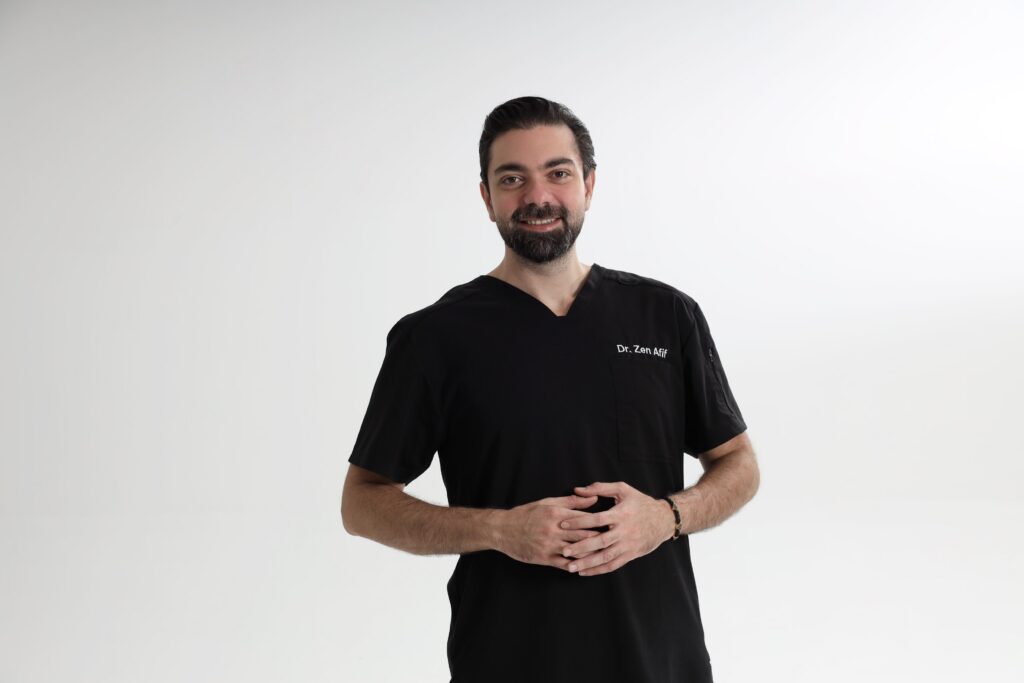
To help make sense of it all, we spoke with Dr. Zen Afif, Plastic and Reconstructive Surgeon at Evaya Clinic in Dubai, for his expert take on the treatments and trends everyone is talking about. With expertise spanning regenerative medicine, stem cell therapies and advanced aesthetic procedures, Dr. Zen shares what actually holds up under medical scrutiny, what’s still emerging, and which trends are truly worth paying attention to.
1. Regenerative medicine has become one of the most talked-about areas in aesthetics and longevity. What do you believe is driving this growing interest among both patients and practitioners?
I believe the growing interest comes from a fundamental shift in what patients are looking for. In the past, aesthetic medicine focused mainly on correcting visible signs of aging. Today, patients are increasingly interested in prevention, skin quality, tissue health, and long-term regeneration rather than simply adding volume or reducing wrinkles.
At the same time, advances in biotechnology have given practitioners access to treatments that work with the body’s natural healing and regenerative processes. Patients want results that look natural, maintain facial harmony, and support healthy aging. Regenerative medicine offers a bridge between aesthetics, wellness, and longevity, making it one of the most exciting areas in modern medicine.
2. Peptide therapies are increasingly being discussed in the wellness, anti-aging, and aesthetic medicine space. From your perspective, what role do peptides play in regenerative medicine, and what developments are you most excited about?
Peptides are essentially biological messengers that help regulate many important functions within the body. In regenerative medicine, they have the potential to support tissue repair, collagen production, cellular communication, recovery, and overall physiological balance.
What excites me most is the growing research into targeted peptide therapies that may influence healing, skin regeneration, muscle preservation, metabolic health, and healthy aging. While many applications are still being studied, I believe peptides will become an increasingly important component of personalized regenerative medicine. The future lies in combining scientific evidence with individualized treatment strategies to optimize both appearance and overall health.
3. We’ve seen a surge in treatments such as exosomes, polynucleotides (PN), skin boosters, and biostimulators. How are these innovations changing the way we approach facial rejuvenation and skin health compared to traditional aesthetic treatments?
These innovations have transformed the conversation from “filling” to “regenerating.”
Traditional aesthetic treatments often focused on replacing lost volume or relaxing muscles. While these remain valuable tools, regenerative treatments aim to improve the quality of the skin and underlying tissues themselves.
Exosomes, polynucleotides, skin boosters, and biostimulators can help stimulate collagen production, improve hydration, enhance skin texture, support tissue repair, and promote healthier-looking skin. Instead of simply masking signs of aging, we are increasingly working to improve the biological environment of the skin.
This shift allows us to achieve more natural results while preserving facial identity and avoiding the overfilled appearance that many patients wish to avoid.
4. Stem cell-based therapies are often described as the future of medicine. While the field is still evolving, what potential applications do you see for stem cell therapies in aesthetics, tissue regeneration, and longevity medicine over the next five to ten years?
Stem cell science has enormous potential, and I believe we are only at the beginning of understanding its full capabilities.
Over the next decade, we may see stem cell-based approaches contributing to improved wound healing, scar management, hair restoration, tissue regeneration, skin rejuvenation, and potentially the treatment of age-related degeneration. In reconstructive medicine, stem cell technologies may help improve tissue repair following trauma, surgery, or disease.
The most exciting aspect is not necessarily replacing tissues, but enhancing the body’s own ability to repair and regenerate itself. As research advances and regulatory frameworks mature, stem cell therapies could become an important part of both aesthetic and regenerative medicine. However, it is essential that clinical adoption remains evidence-based and patient safety remains the highest priority.
5. Looking ahead, what are the most promising trends in regenerative medicine that both patients and healthcare professionals should be paying attention to, and how do you see these innovations shaping the future of aesthetic and reconstructive medicine?
I believe the future will be driven by a combination of regenerative science, personalized medicine, and longevity-focused healthcare.
Some of the most promising areas include stem cell technologies, advanced peptide therapies, exosome research, next-generation biostimulators, tissue engineering, and AI-assisted personalized treatment planning. We are moving toward treatments that not only improve appearance but also support cellular health and long-term tissue function.
For aesthetic and reconstructive medicine, this means a transition from reactive treatments to proactive regeneration. The goal will increasingly be to preserve tissue quality, optimize healing, slow biological aging, and achieve natural, sustainable results.
Ultimately, the future of medicine is not simply about helping people look younger—it is about helping them remain healthier, more resilient, and maintain a better quality of life for longer. That is the true promise of regenerative medicine.