


The Strait of Hormuz is best known for its geopolitical weight, yet just offshore lies Hormuz Island, a place of startling, almost surreal beauty. Often referred to as Iran’s Rainbow Island, its landscape is marked by neon-red beaches, streaks of yellow-green and purple earth, jagged salt mountains and mineral-rich soil that shifts colour with the light.
It is within this extraordinary setting that Majara Residence takes shape. Designed by Tehran-based ZAV Architects, the project is not simply a place to stay, but a carefully considered experiment in how architecture can support community, economy and emotional wellbeing.
Completed in 2020, Majara sits on a beachfront site just beyond the island’s only settlement. Rather than presenting itself as a singular architectural statement, it unfolds as a village. A cluster of small-scale domes arranged in varying densities, responding intuitively to the terrain and encouraging movement, interaction and pause.

Architecture Drawn from the Land
Majara’s most immediate visual language is colour. Deep reds, yolk yellows, sky blues and sea greens coat the domes, mirroring the kaleidoscopic tones of Hormuz itself. The palette is expressive but grounded, never decorative for decoration’s sake. It acts as a visual extension of the island’s geology.
The structures are built using the Superadobe construction method, developed by Iranian architect Nader Khalili. Earth-filled bags are layered and compressed to form thick, load-bearing walls that spiral upwards into domes. The technique is low-cost, low-tech and highly climate-responsive, offering natural insulation against Hormuz’s intense heat while referencing a timeless, vernacular architectural language.
Importantly, while the colours reflect the island’s soil, naturally pigmented earth was not extracted due to its ecological impact. Instead, materials were sourced responsibly, including sand and gravel reclaimed during local dock dredging.
Local people were directly involved in the construction process and trained in building, craft and hospitality. This approach shifted the project’s economic model, with a significantly higher proportion of the budget allocated to labour rather than materials. The result is architecture that generates long-term value rather than short-term spectacle.
A Living, Working Community
Majara Residence forms part of a wider initiative known as Presence in Hormuz, a series of urban and social projects aimed at empowering the island’s population of approximately 6,500 residents. Many of whom have historically struggled economically despite the island’s strategic importance.
The development accommodates up to 84 guests and includes a café, restaurant, wellness centre, handicraft workshops, a cultural boutique and an art residency programme. These spaces are deliberately woven into the accommodation, blurring the line between visitor and resident, private stay and shared life.

Interior Spaces Designed for Calm and Connection
Inside the domes, the architecture softens further. Curved walls, built-in seating and textured finishes create interiors that feel cocooning and grounded. Light enters gently, filtered rather than framed, reinforcing a sense of calm that contrasts with the vivid exterior palette.
There is no excess here. Furnishings are minimal, materials tactile, and the experience intentionally slow. Guests move through shaded pathways and open courtyards, gathering organically rather than being directed. The absence of fences maintains open access to the beach, reinforcing the idea that Majara is part of the island, not separate from it.
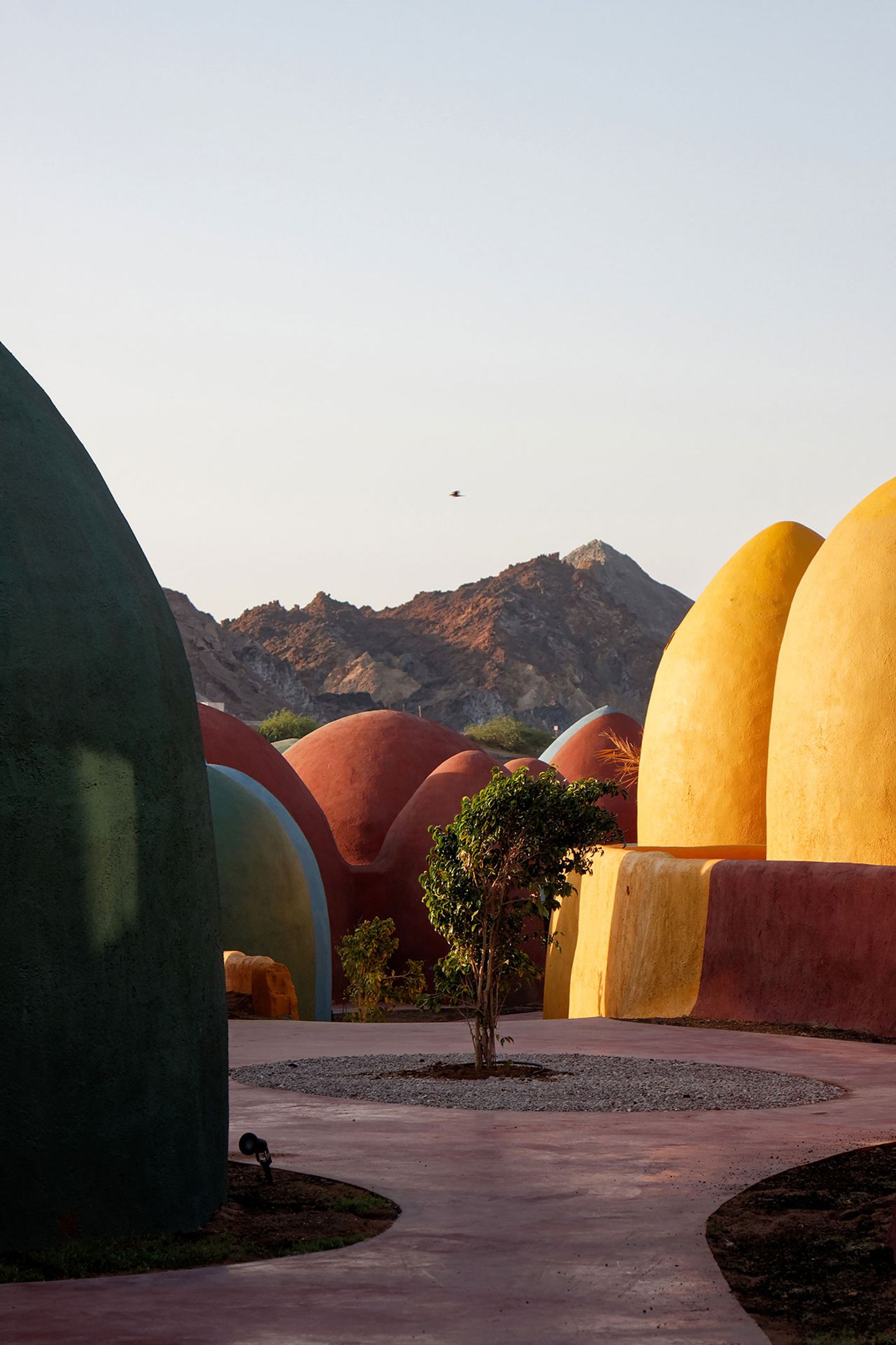
Photography by Payman Barkhordari.
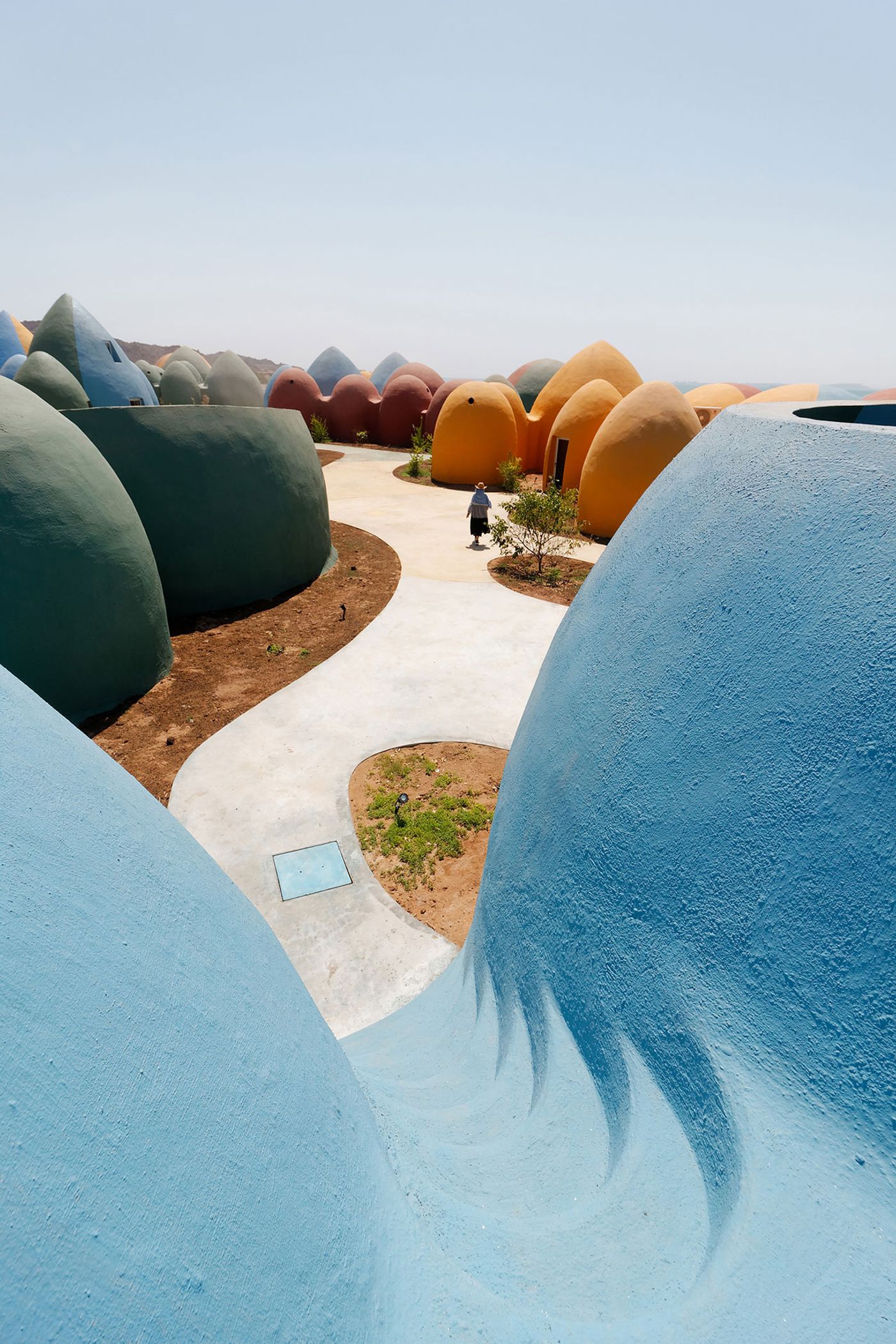
Photography by Payman Barkhordari.
A New Model for Eco-Tourism
Environmental sensitivity is embedded throughout the project. The dispersed layout reduces impact on the ecosystem, existing dirt tracks replace asphalt roads, and water troughs support local wildlife, including gazelles. Programming encourages visitors to engage with conservation efforts rather than simply consume the landscape.
More than a touristic development, Majara Residence asks larger questions about the role of architecture today. Can buildings elevate wellbeing by remaining deeply relevant to their context? Can design act as a social agent, fostering shared ownership and collective life?
On Hormuz Island, the answer feels tangible. Majara does not compete with its surroundings. It listens, responds and participates. In doing so, it offers a powerful blueprint for future developments across the region, where luxury is defined not by isolation, but by connection, care and colour rooted in place.