
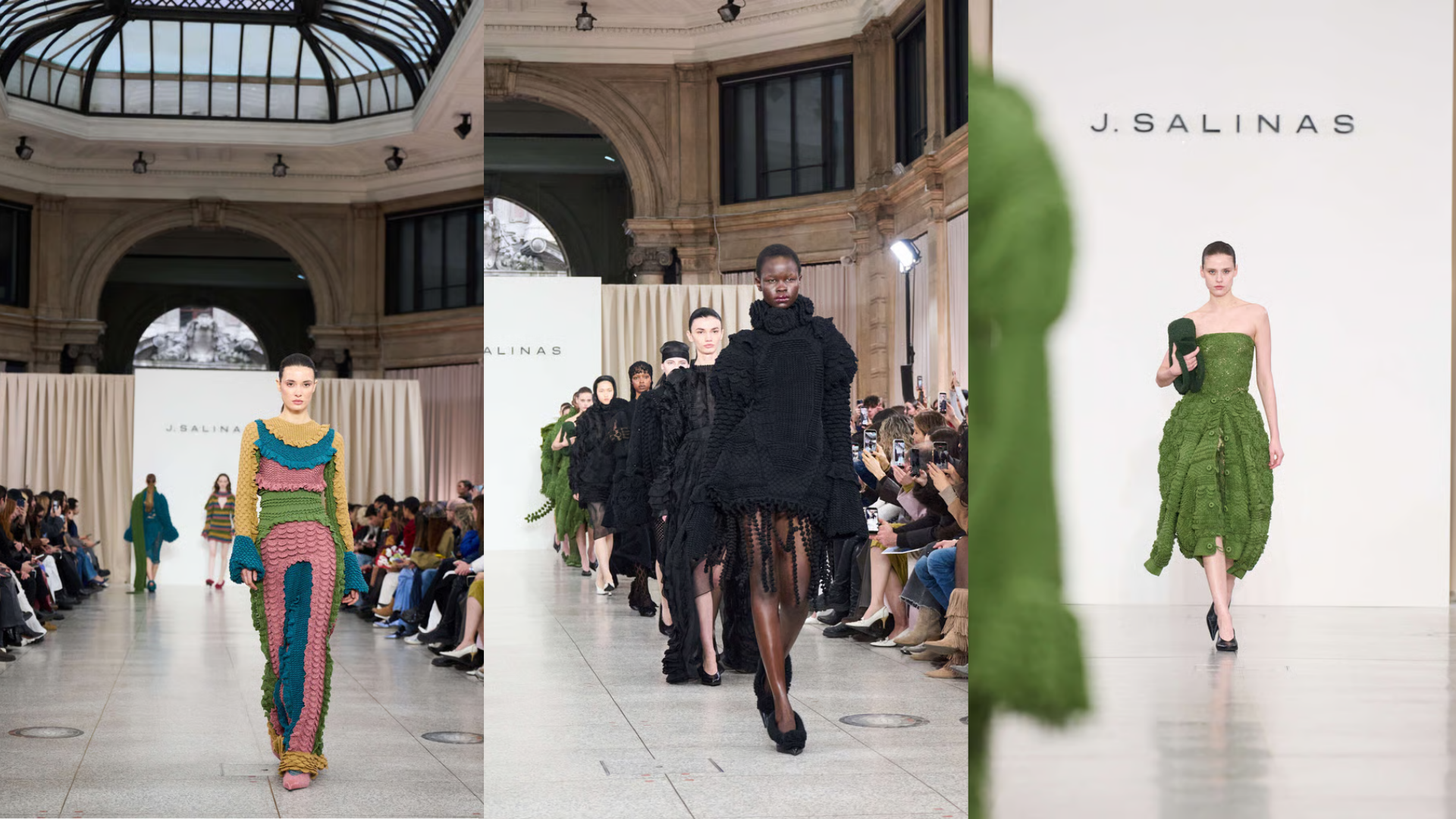

At Milan Fashion Week, where established fashion houses and emerging designers gather to define the season ahead, J. Salinas brought a distinctly Peruvian perspective to the Spring/Summer 2027 calendar.
Titled El Retablo, the collection draws from Peruvian culture and traditional craftsmanship, translating heritage into a contemporary wardrobe without separating the past from the present. At its centre is an exploration of memory, identity and the relationship between traditional techniques and modern fashion.
Rather than treating cultural references as decoration, J. Salinas builds the collection around the techniques, materials and stories that give those references meaning.
A Living Archive
The title El Retablo comes from the traditional Andean devotional box, a small wooden structure containing miniature scenes depicting religious processions, agricultural rituals, family life and other elements of community.
For J. Salinas, the Retablo becomes a metaphor for clothing itself.
Each garment acts as a vessel for memory, craftsmanship and cultural storytelling, allowing individual pieces to carry elements of Peruvian heritage into a contemporary fashion setting.
The approach gives the collection a sense of intimacy. Instead of presenting tradition as something fixed in the past, Salinas explores how it can continue to evolve through fashion.
Craftsmanship at the Centre
The SS27 collection places handmade craftsmanship firmly at its core.
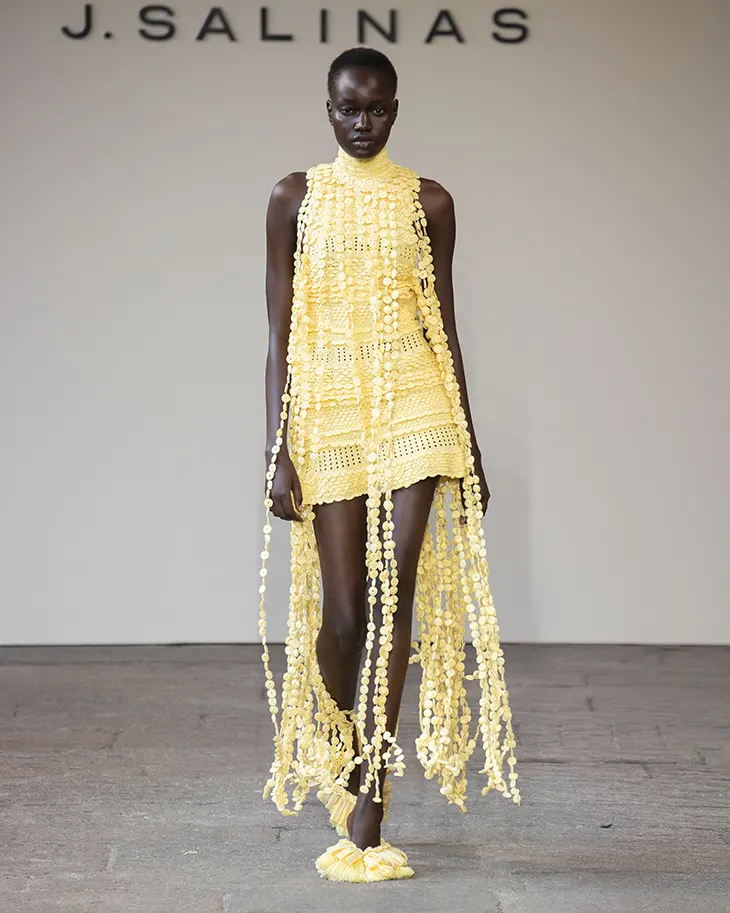
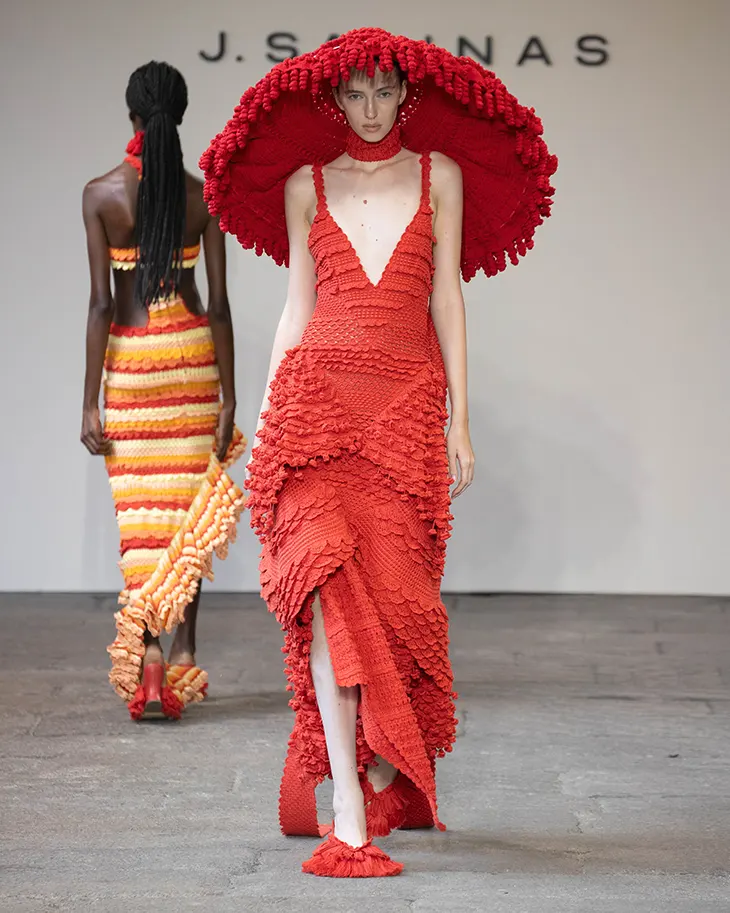
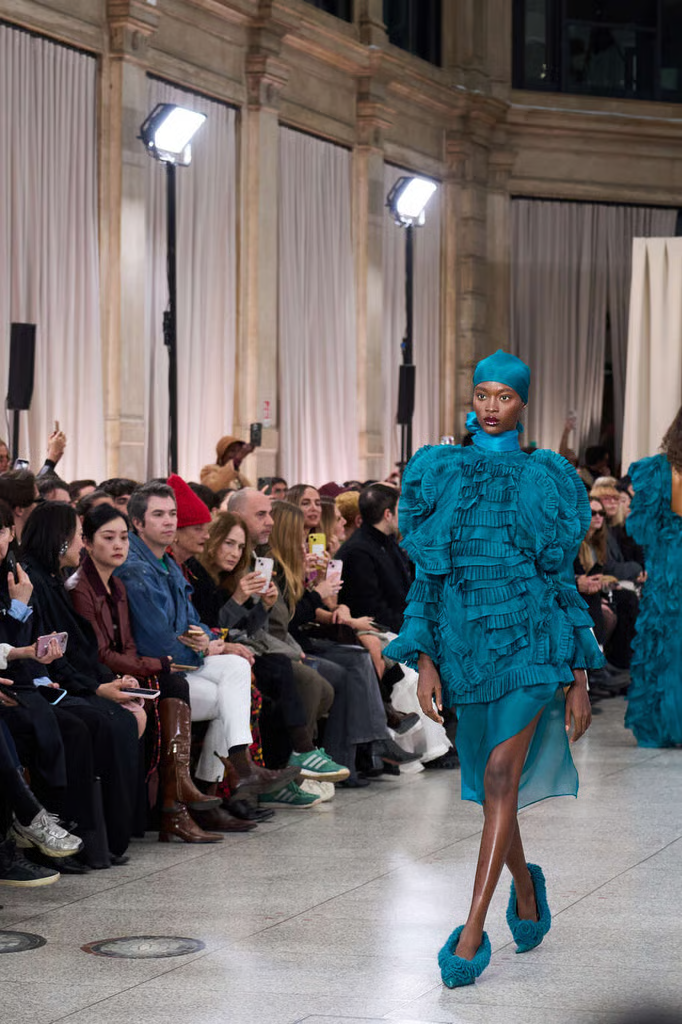
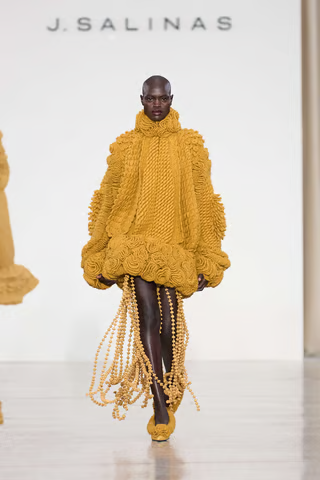
Organza and ultra-fine Pima cotton are layered with intricate crochet work, with the hand-stitching deliberately left visible. Rather than hiding the labour involved in creating each garment, Salinas allows the techniques to become part of the visual identity of the collection.
Short dresses sit alongside flowing capes, creating a contrast between structured silhouettes and lighter, more fluid forms.
The result is a collection where texture becomes as important as shape. Delicate fabrics meet dense handcrafted detailing, creating garments that carry both visual lightness and a sense of material depth.
The Colours of the Andes
Colour plays a central role throughout El Retablo.
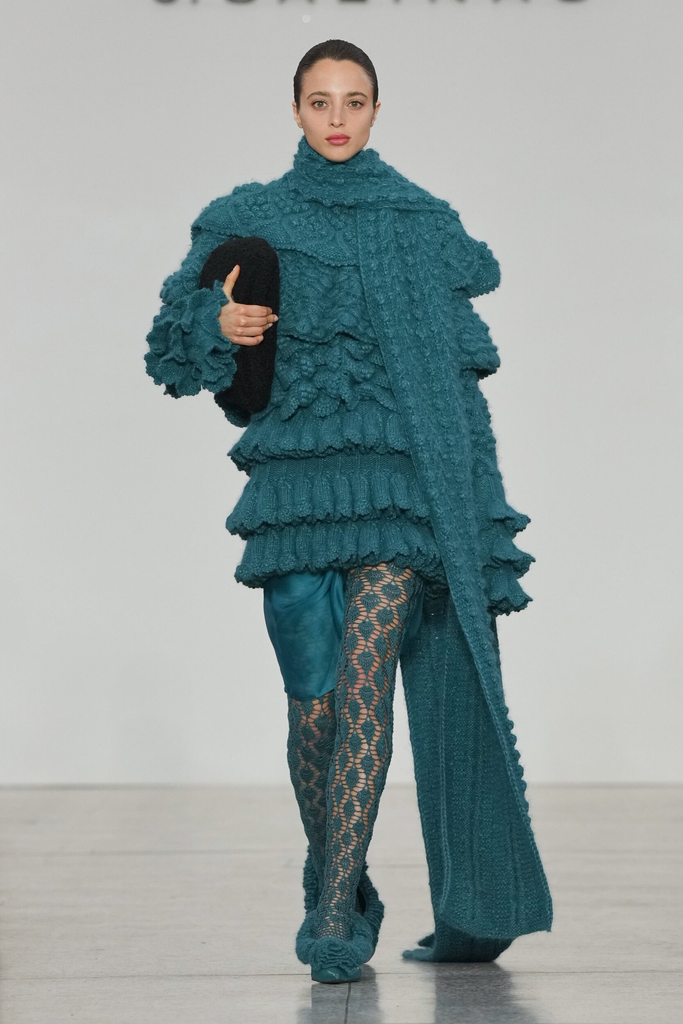
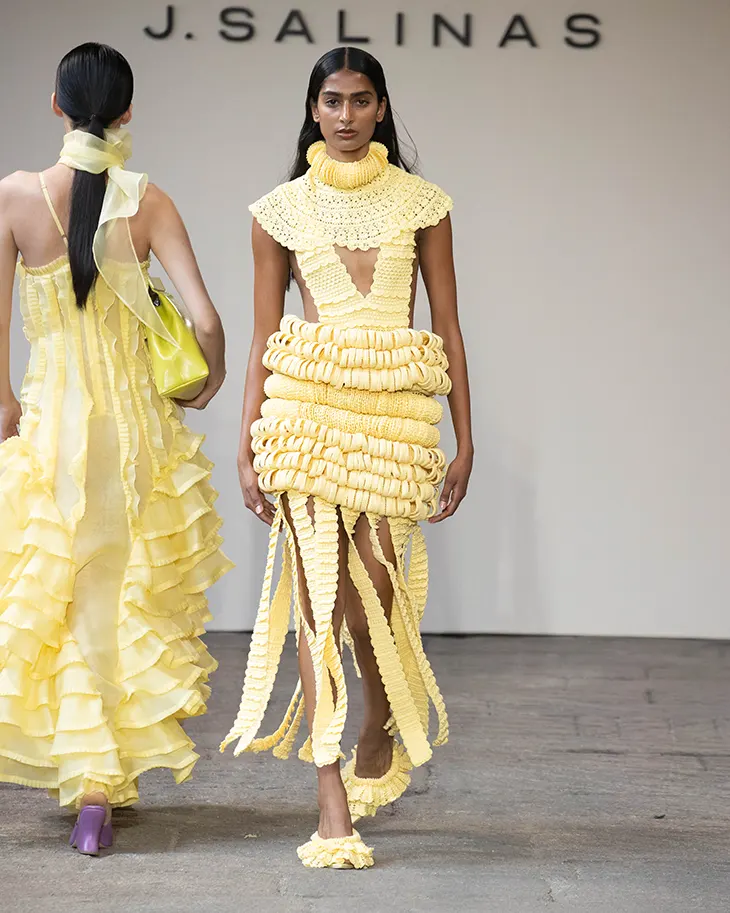
The palette draws from the visual richness of the Andes, bringing together pistachio, turquoise, coral, orange and carrot tones alongside lilac and violet.
Rather than relying on the restrained palette often associated with contemporary minimalism, Salinas embraces colour as a means of cultural expression.
The combinations create a vivid visual language, reflecting the landscapes and cultural memory that sit behind the collection.
Each shade contributes to the wider narrative, turning colour into another form of storytelling.
The Women Behind the Collection
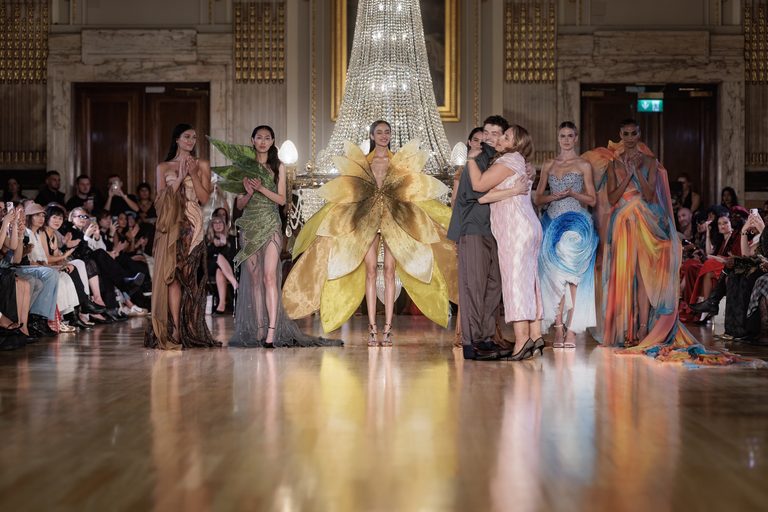
Perhaps the most significant element of the presentation came at its conclusion.
When J. Salinas took his bow, he was joined by the collective of Peruvian artisan women who contributed to the creation of the collection.
Their involvement placed craftsmanship and collaboration at the centre of the presentation.
The crochet techniques and weaving traditions used throughout the collection are connected to skills passed through generations, giving the garments a history that extends beyond the runway.