

It is the little things in life they say and they are not wrong.
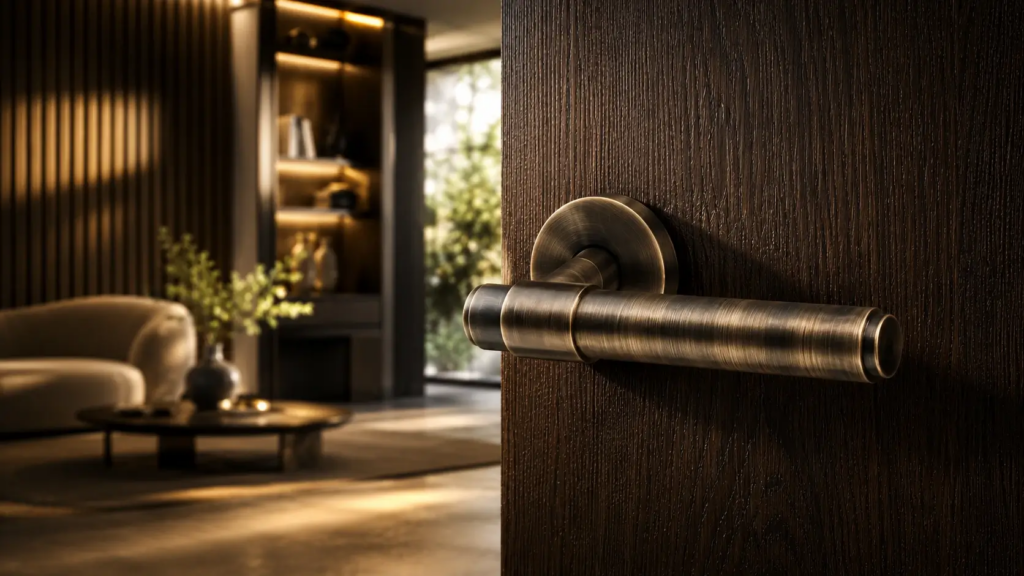
Picture entering a beautifully designed home. The lighting is warm, the stone has been carefully selected and every line feels considered. Yet before you have time to notice any of it, your hand has already formed its first impression. It has reached for the entrance handle.
Was it cool or warm to the touch? Did it feel reassuringly solid? Did it move with precision? Was opening the door effortless, or did something about the interaction interrupt the illusion?
We tend to describe interiors through what the eye can see: colour, proportion, light, material and form. But a space is never experienced by sight alone. We hear it, move through it and, constantly, touch it.
A hand closes a door, turns a lock, opens a wardrobe, pulls out a drawer and slides a glass panel aside. These gestures are so ordinary that we barely register them. Together, however, they create the rhythm of daily life.
This is where architectural hardware quietly becomes part of the story.
The room’s first handshake
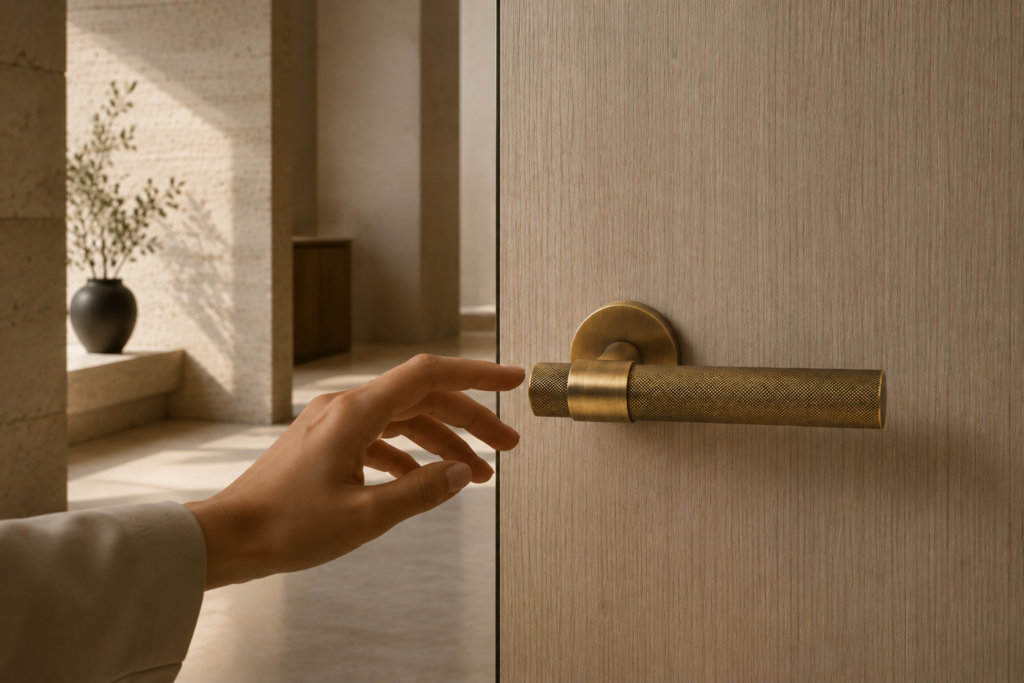
A door handle is often the first physical contact between a person and a space. In that sense, it is the room’s handshake: a small but revealing introduction to everything beyond it.
Yet when was the last time you genuinely admired one?
For years, hardware was treated as an afterthought – something functional to be selected after the larger design decisions had been made. But considered interiors understand that function and feeling are not opposing ideas. The weight of a lever, the curve of a pull handle, the texture beneath the fingers and the quiet click of a lock all influence whether a space feels refined.
Good hardware does not demand attention every time it is used. It rewards attention when it receives it.
At EuroArt, we often view hardware as the punctuation of an interior. It may not be the longest part of the sentence, but it can change how the whole thing reads. A sculptural
lever can bring character to a minimal door. A precisely recessed flush pull can preserve the clean plane of a sliding panel. A beautifully finished knob can give cabinetry the feeling of bespoke furniture.
And when the right piece does not yet exist, it need not remain imaginary. Handles can be customised in an extraordinary range of forms, scales, materials and finishes, allowing an architect’s sketch, a recurring motif or even the geometry of a building to become something held in the hand.
In this way, hardware moves beyond coordination and becomes a genuinely personal part of the architecture.
A thread through the interior
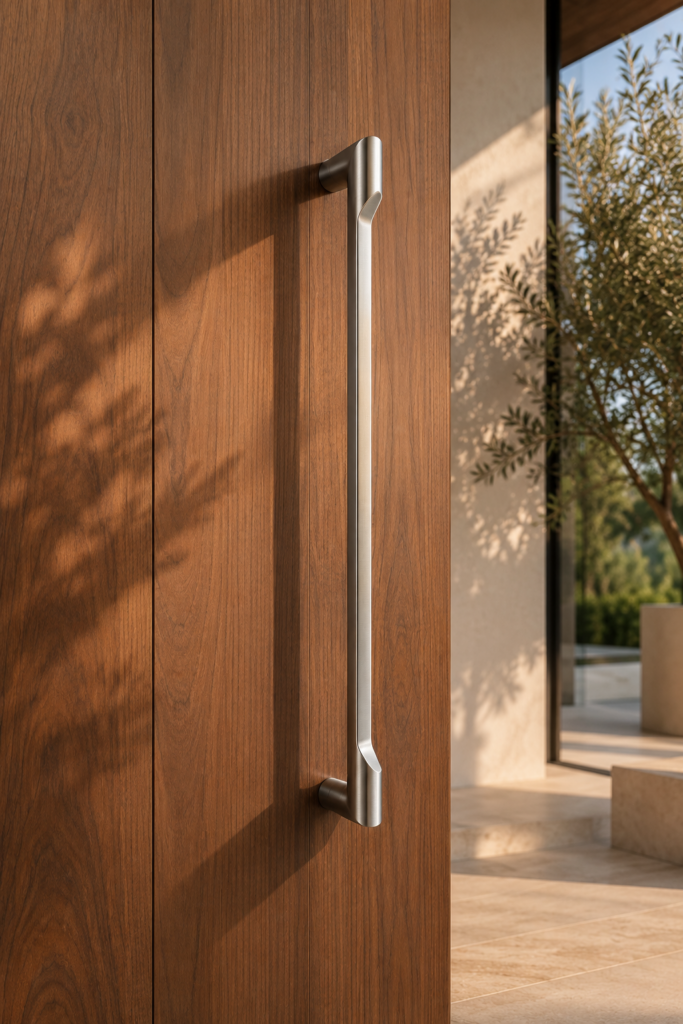
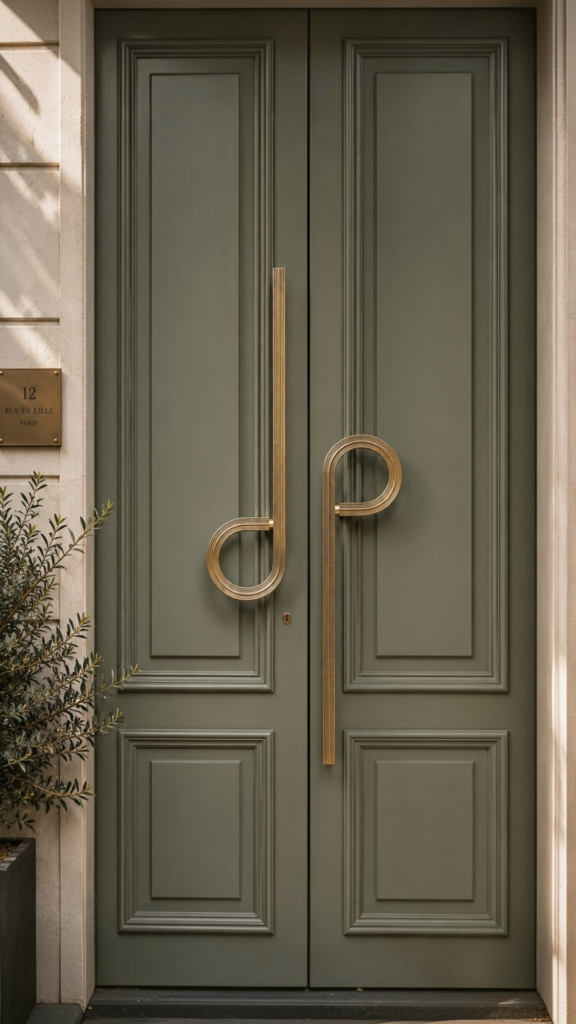
The sensory experience becomes more powerful when it remains consistent.
From the entrance door to the kitchen cabinetry, wardrobe, glass partition and digital access point, each interaction can belong to the same design language. A carefully selected finish acts as a thread running through the space, connecting objects that perform very different functions.
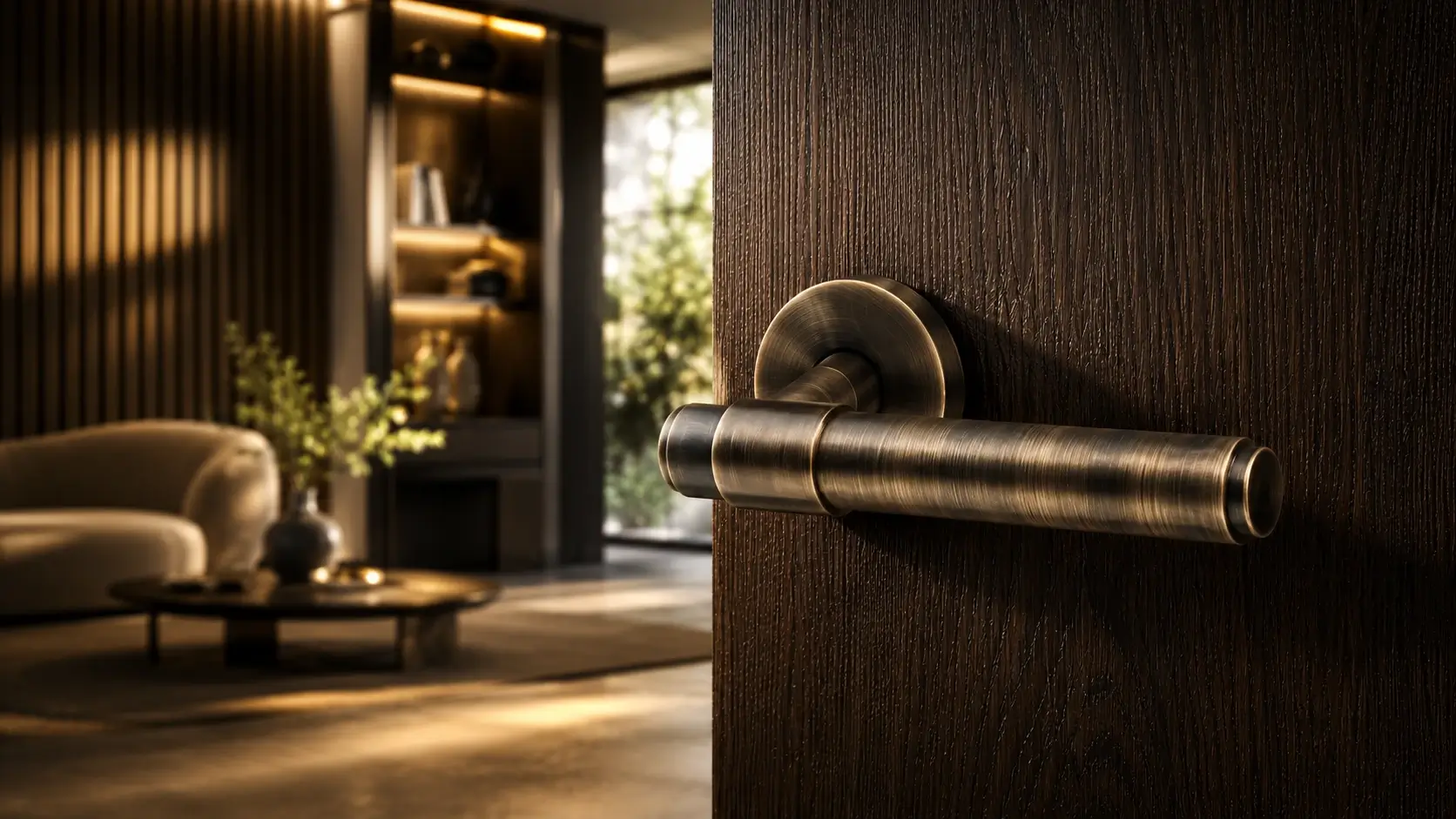
Matt Antique Brass can bring warmth and a sense of history to a contemporary interior without making it feel overly traditional. Satin Champagne Gold catches light more softly, lending quiet elegance rather than obvious glamour. Matt Black can sharpen a minimal space, while Gun Metal introduces depth without the severity of pure black.
When entrance handles, cabinet details, glass fittings and access hardware share a finish or belong to a thoughtfully coordinated finish family, the eye senses order, even if it cannot immediately explain why. Nothing appears to have arrived by accident.
Consistency does not mean repetition. The forms can change according to function: a bold entrance pull, a slender cabinet handle, a discreet glass fitting and a streamlined digital lock. The shared finish creates continuity while each object retains its own purpose and personality.
It is rather like tailoring an outfit. The pieces do not need to be identical; they simply need to belong to the same conversation.
Occasionally, one unexpected finish can become the signature. Titanium Blue, for example, can appear deep, smoky and almost neutral before revealing a cooler blue undertone as the light changes. Its appeal reflects a wider shift in luxury interiors, where refinement is not always expressed through gold, gloss or ornament. Sometimes, it is restraint interrupted by one surprising decision.
The luxury of what disappears
There is another side to sensory design: the things we feel working even when we cannot see them.
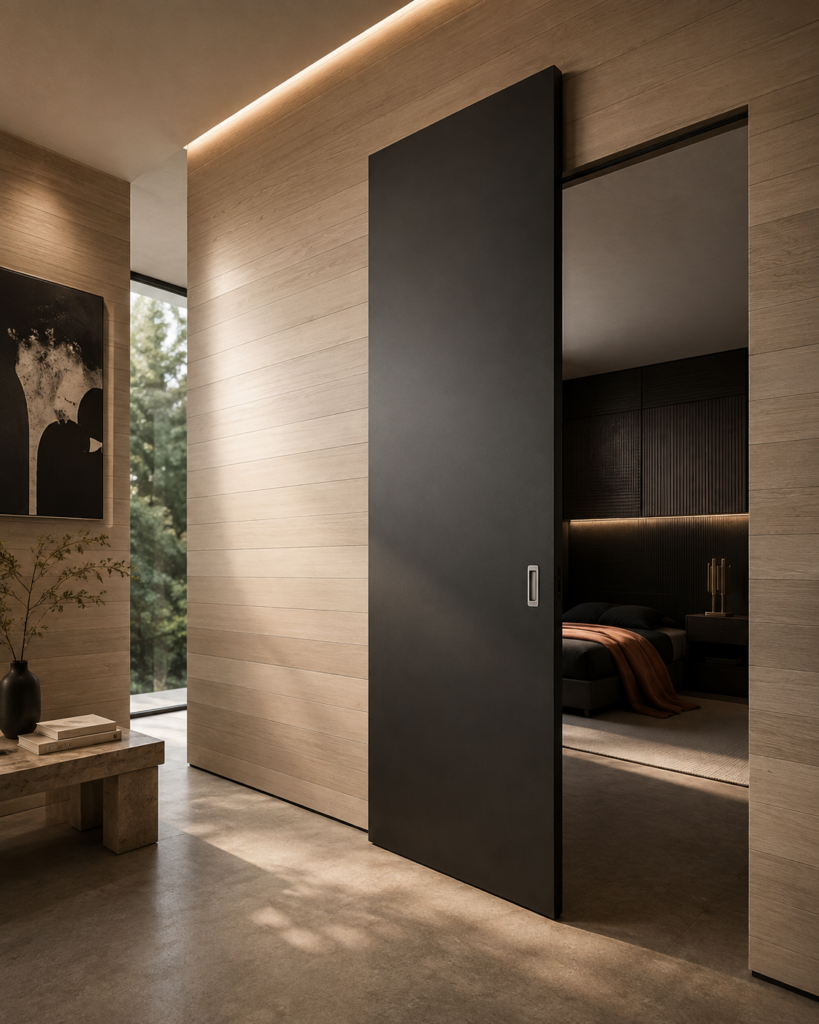
Some of the most sophisticated hardware is designed to disappear into the architecture. An invisible door such as EuroArt’s BOXKEL can sit almost silently within a wall, removing the visual interruption of a conventional frame. Concealed hydraulic hinges allow a door to close smoothly and under controlled conditions while the mechanism remains out of sight. Pivot systems can support generous doors while their engineering stays hidden, making a substantial panel appear almost weightless as it turns.
Sliding systems create a similar sense of effortlessness. Pocket and invisible sliding doors can retreat almost entirely from view, while recessed flush pulls and locks preserve an uninterrupted surface. What the user remembers is not the track, mechanism or technical calculation, but the ease of the movement.
Even the smallest interruptions can be resolved. A magnetic latch allows a door to close without the usual protruding latch tongue. The FANTOM magnetic door stopper remains discreetly integrated into the floor, activating only when the door passes above it and avoiding both visual clutter and the familiar trip hazard of a projecting stopper.
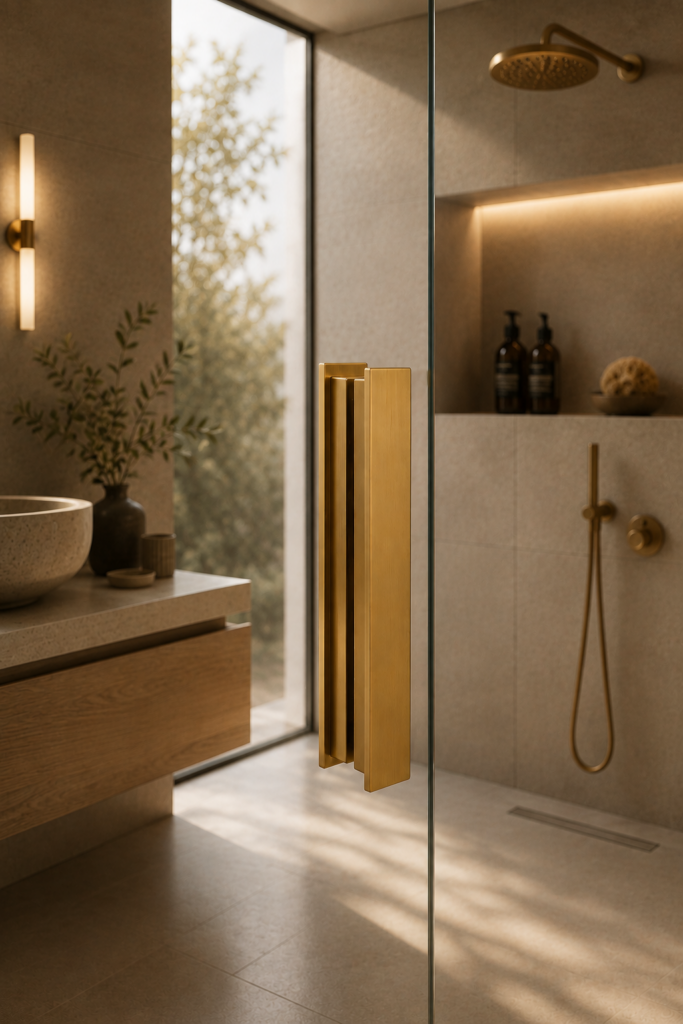
In glass applications, refinement lies in reducing what the eye has to process. Hinges with no visible screws allow the glass, light and surrounding materials to remain the focus. The hardware still performs its essential role, but it does so with restraint.
This is not minimalism for appearance’s sake. It is the careful removal of friction: fewer protrusions, fewer distractions, quieter movement and cleaner lines. The engineering may be complex, but the experience should feel instinctive.
When a space feels complete
There is a particular honesty to objects we use every day. A handle cannot rely on appearance alone. It has to perform repeatedly, comfortably and intuitively. Its beauty is tested every time a hand reaches for it.
This makes hardware one of the most intimate elements in an interior. Stone may be admired from across a room and lighting may shape the atmosphere from above, but hardware meets us at human scale. It responds to pressure and, over time, becomes connected to familiar gestures: arriving home, opening a wardrobe in the morning, preparing dinner or closing a bedroom door at night.
For designers, this presents an opportunity to think beyond the mood board. How does the object feel in the palm? Is the edge comfortable? Does the mechanism move smoothly? Is its scale appropriate for the door or drawer? Does the finish complement the materials around it?
The answers may be found in millimetres, weights and finishes, but their effect is emotional. They determine whether an interior merely looks complete or genuinely feels complete.
The finest spaces often leave us with a feeling before they leave us with an explanation. They seem calm, coherent and effortless – not because they are simple, but because every decision has been resolved.
So, the next time you enter a room, pause for half a second before letting go of the handle. Notice its temperature, its texture and the way it moves. Look at how its finish responds to the surrounding light and whether that detail reappears elsewhere.
You may discover that the smallest object in the room has been telling the story all along.
Sukayna Kazmi is the Regional Marketing Manager at EuroArt and former Digital Editor of Communicate Magazine. Her career began in journalism, with Khaleej Times and Arabian Radio Network, before expanding into digital storytelling, brand strategy and design-led marketing. A 2024 alumna of the CNN Academy, she has built her career around a simple idea: strong communication begins with understanding what makes a story worth telling – and how to make people care about it.