
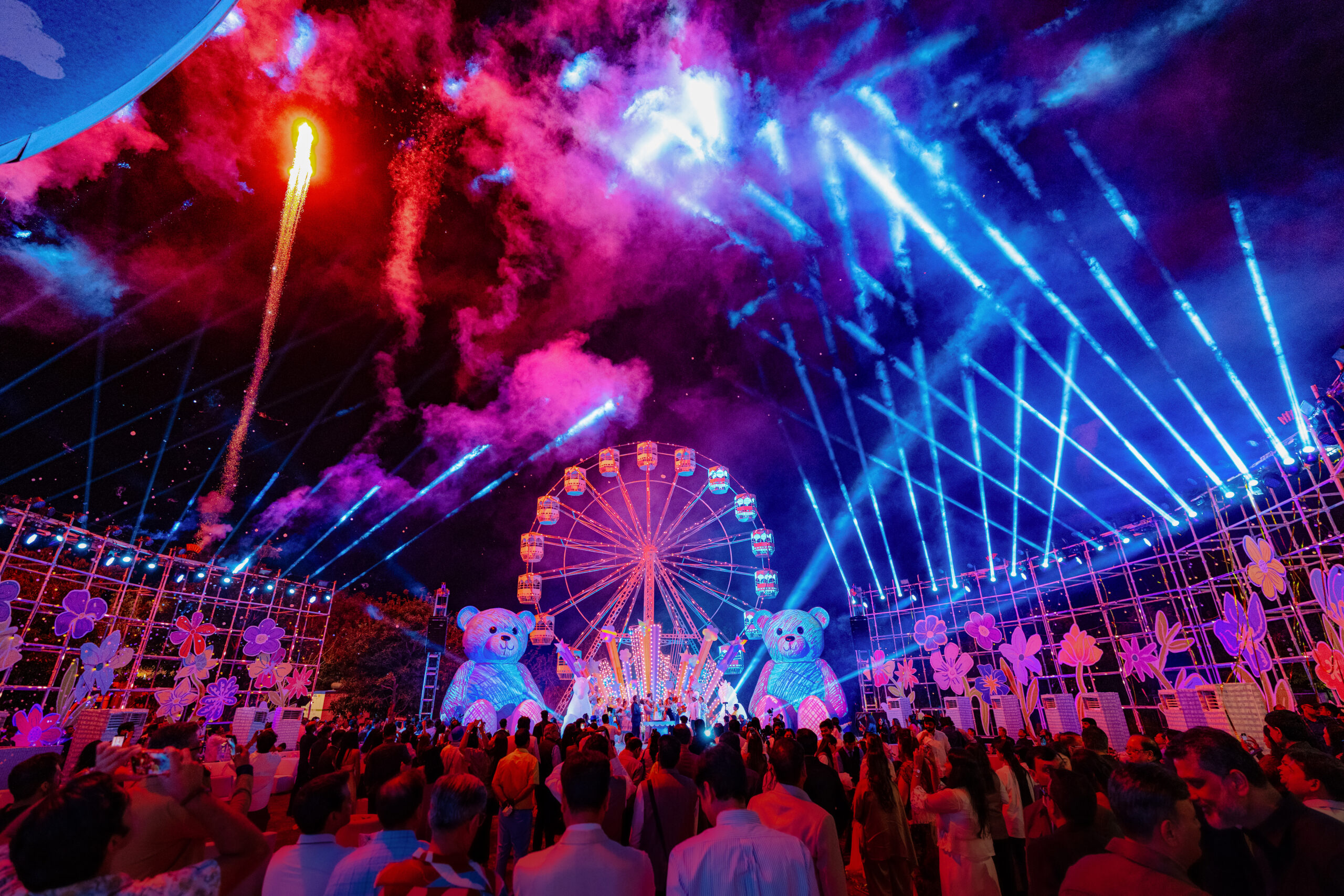

Jai Sharma approaches an event as a story told through sight, sound, taste, touch and scent.
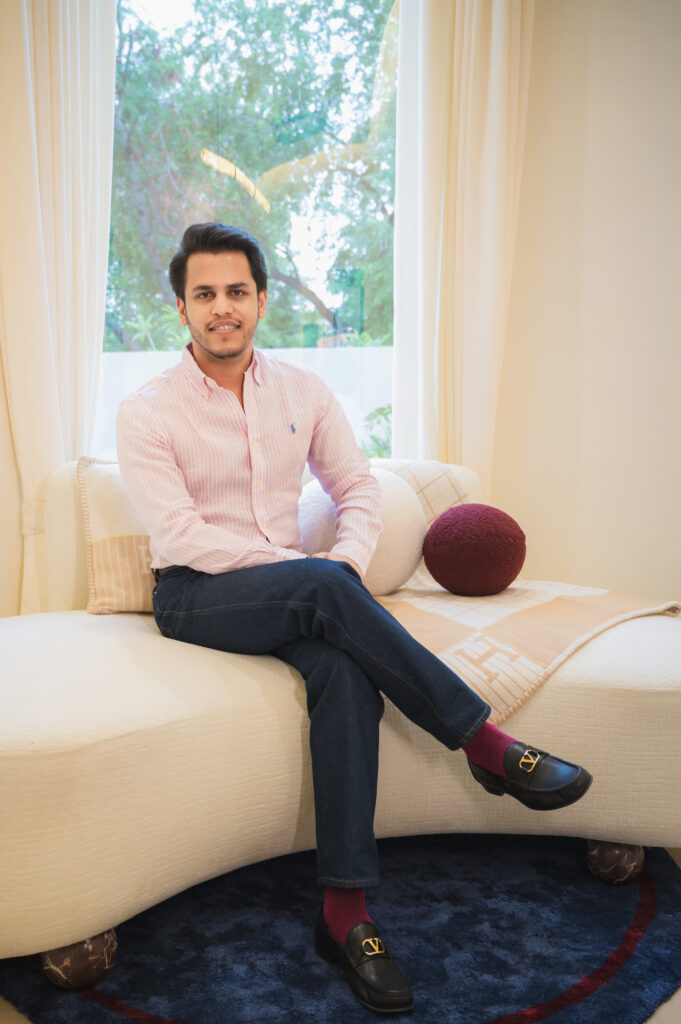
In 2020, he channelled that instinct into Envelop, an experience design studio working across luxury weddings, hospitality and brand activations. His projects combine large-scale spectacle with personal detail, using technology as an almost invisible part of the narrative. Zenith spoke to Jai about his unconventional career, the psychology behind memorable experiences and how Envelop turns ideas into immersive worlds.
1. When did you first realise that your career was going to move towards something as creative and subjective as experience design?
It really came from observing people around me rather than any one deciding moment. I noticed that people rarely recall every detail of an evening, they remember how it made them feel. That instinct started small, curating dinners during university, obsessing over the flow of the evening, the music, the conversations, how every element shaped the room.
Looking back, those gatherings were the earliest experiments in designing experiences, and it would be difficult not to say they laid the foundation for what Envelop eventually became. I didn’t set out with a plan to build a studio around that instinct. It was only once I saw how much a space could shape memory without a single word being said that it became difficult to imagine doing anything else.
2. Is there anything from your engineering background that still influences the way you design an experience?
When I was in college, I always loved hosting. I loved creating celebrations, being part of fests and bringing people together. That instinct to create moments where people could connect and have a great time has naturally translated into my love for designing experiences today.
Engineering gave me the other side of it. It taught me to think in systems, break down ambitious ideas into parts that work together, and approach challenges with a solution-oriented mindset. That discipline has stayed with me. Today, I bring both sides into the work: the love for creating celebrations and experiences, paired with the structure and problem-solving needed to make even the most ambitious ideas come together seamlessly.
3. You founded Envelop in 2020, at a moment when live events had essentially disappeared. Why did that particular moment make you want to build a company centred around physical experiences?
It was that absence that made everything clear. When gatherings stopped, you realised how much of our memory, our culture, our relationships are built around being physically present with each other. Screens couldn’t replace the feeling of being in a room together, and everyone knew it, even if nobody was saying it out loud.
I didn’t see that moment as the wrong time to build something centred on physical experiences. I saw it as proof of exactly why it mattered. The world was about to want that back more than ever, and we wanted to be ready to design it properly when it did.
4. You’ve said that you design through all five senses. Which sense do you think event designers most often neglect, and can you give me an example of how you’ve used it in a project?
I don’t believe any one sense is more important than another. A truly memorable experience is created when all the senses work in harmony, light shapes emotion, sound creates rhythm, scent evokes memory, texture invites touch, and even silence has a role to play.
If there’s one element that’s often overlooked, I’d say lighting. It has the power to completely transform how a space feels, yet is often treated as a finishing touch. We use lighting as an integral part of the experience, shaping mood, drawing attention to key moments and guiding how people move through a space. When done thoughtfully, it becomes part of the memory people take away from it.
5. Your work can be incredibly large in scale, but you’ve spoken about anchoring spectacle in very small, personal details. What’s an example of a detail that guests might barely have noticed, but that you considered essential to the experience?
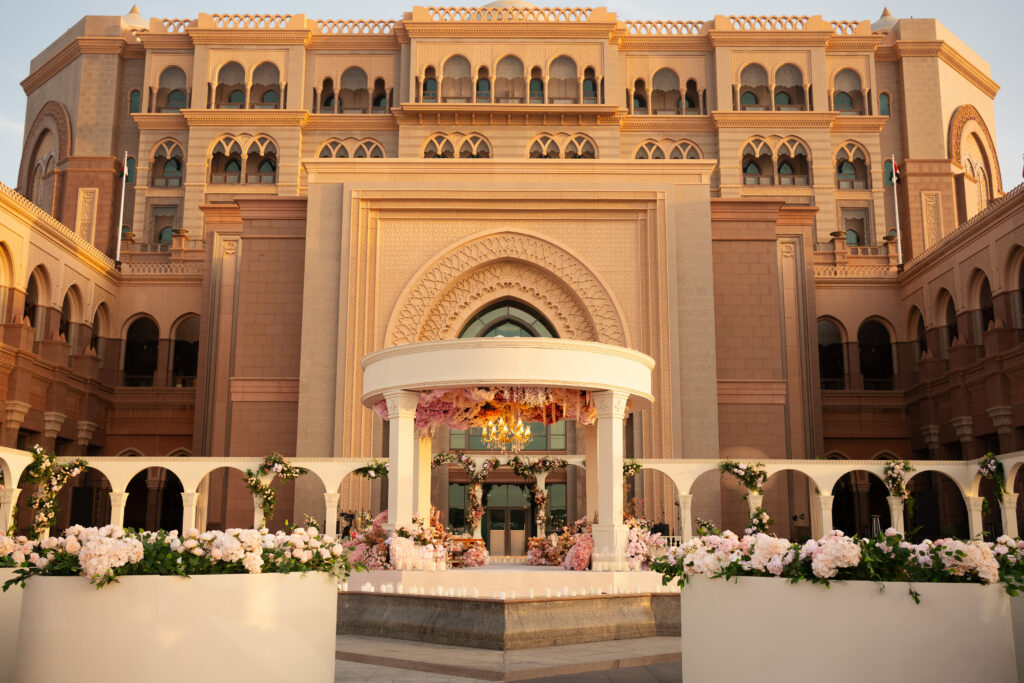
At Emirates Palace, the piece everyone remembers is the Carousel Symphony, wrought iron, layered with florals, set to a live Italian symphony, a sculptural centrepiece built to hold a moment rather than move through it. That’s the detail people photograph and talk about.
But what mattered just as much to us was something most guests would never clock, the way the gardens, arches and restrained grandeur of the space echoed the couple’s own proposal at Villa del Balbianello on Lake Como. Nobody needed to know that to feel the evening was intimate and considered, but it’s exactly why it worked. The scale gets remembered. The reason behind it is what makes it theirs.
6. You’ve worked with fashion names including Michael Cinco, Falguni Shane Peacock, Masaba, Shivan & Narresh and Shantanu & Nikhil. How different is designing an experience around somebody else’s creative language from developing one entirely from your own imagination?
It’s a different kind of listening, but the process starts the same way. Before we think about the space or the visual language, we want to understand the story, whether that story belongs to a couple or to a designer’s body of work.
With a couple, we’re uncovering something personal that doesn’t exist anywhere yet. With a designer, the story already exists in the work itself, so our role shifts to translation, understanding what’s underneath the aesthetic and building an environment that speaks the same language rather than competing with it. Either way, we’re designing for emotions and characters first, and the visual comes after.
7. Fashion designers already have such distinctive visual identities. How do you translate that identity into a physical environment without simply reproducing the clothes or the collection around the room?
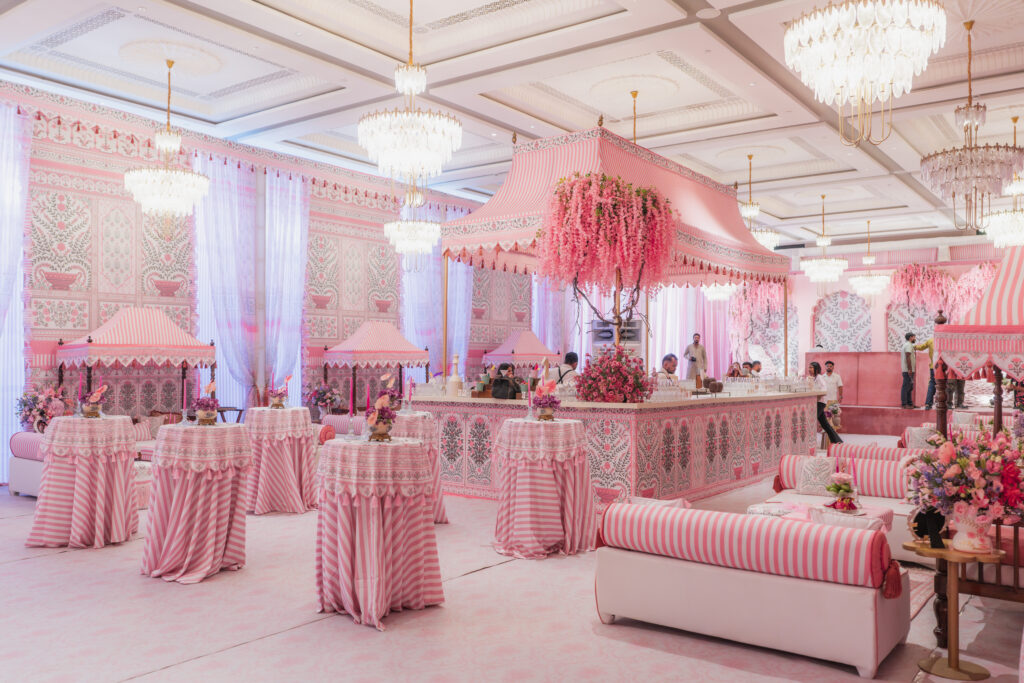
We never recreate, we reinterpret. Instead of replicating a print, a silhouette or an obvious signature, we look for the emotional and philosophical idea underneath the designer’s work and translate that through spatial design and storytelling.
The goal is a room that feels like an extension of their world, not a backdrop built to match the clothes on the runway. If we’ve done our job, guests should feel the designer’s point of view before they consciously notice a single visual reference.
8. Luxury events increasingly compete to become bigger and more elaborate. Do you think we’ve reached a point where scale can become the enemy of good experience design?
Much of the industry has been built around production and décor, and scale is often used as a stand-in for meaning. That’s really where it becomes a problem. Scale on its own was never the goal for us, we start from a different question, not what a space should look like, but how it should make guests feel.
When scale is in service of a story, it earns its place, the Carousel Symphony only worked because it held the couple’s narrative, not because it was large. When scale is used to compensate for the absence of a story, people feel that too, even if they can’t articulate why.
9. Envelop deliberately limits itself to seven or eight social projects a year, despite some projects ranging from roughly AED 8.8 million to AED 22 million in scale. Why impose that limit when the commercial temptation would presumably be to take on more?
Because depth takes time, and that’s not something we’re willing to trade for volume. Every project we take on begins the same way, with listening, understanding our clients beyond the brief, their journeys, values, relationships, traditions and aspirations. Only after we uncover the emotional core of a celebration do we start building the narrative, and that process simply cannot be rushed or run in parallel across too many projects at once.
The limit isn’t a constraint on the business, it’s what protects the work. A discipline of depth over volume shapes every project we accept, and I’d rather do fewer things at the level we believe in than dilute what Envelop actually stands for.
10. The UAE already has an extraordinarily sophisticated luxury events industry. Where do you think there is still creative territory that hasn’t been fully explored?
We didn’t come to the UAE because it was the obvious next step. We came because I believe this region understands what it means to design a moment rather than just produce an event. There’s a real appetite here for depth, for culture, for experiences that are felt rather than simply seen.
Much of the region’s event industry has been built around production and décor, and it’s genuinely excellent at that. Where I think there’s still room to grow is in starting from a different question entirely, not what a space should look like, but how it should make guests feel, reading psychology, pacing and emotion as real materials of design, alongside light, sound and space. That’s what we’re building through Envelop Designs Arabia, and Rayqube, with nearly a decade of expertise in events, exhibition build-ups and technology-driven experiences, is the right partner to help us do it properly here.
11. You’re now looking beyond weddings towards brand experiences and potentially Dubai’s real estate sector. How does your approach change when the “person” whose story you’re telling is a brand or a development rather than a bride and groom?
The process doesn’t change, the questions do. Whether we’re designing a wedding, a brand launch or a real estate experience, people ultimately remember how something made them feel, that’s the common thread across all of it. We think of this as the memory economy. A couple wants their guests to leave with a memory of their celebration, a brand or a developer wants people to remember what they experienced and associate that feeling with the brand.
We’re already engaged in conversations for potential pitches with Dubai’s rapidly evolving real estate sector, and the months ahead will see us curating several brand experiences alongside a select number of social events. The story changes, but our role stays the same, creating that memory through space, storytelling and experience.
12. After more than 200 experiences across eight-plus countries, is there an idea you’ve been carrying around for years that nobody has yet given you the opportunity, space or budget to execute?
There are many ideas we haven’t built yet, but what excites us most is the idea of creating an experience at the scale of a city, where architecture, culture, technology, performance and human interaction become part of one evolving narrative.
With Envelop Designs Arabia, the Middle East gives us an interesting canvas for that ambition. We would love to create something that isn’t experienced from a single stage or space, but unfolds as people move through it, where the city, desert or landscape itself becomes part of the storytelling.
For us, the dream isn’t necessarily to create the biggest experience. It is to create a world people can genuinely step into, influence and remember differently depending on how they experienced it.