

It is not a hotel in the traditional sense. It is a world. A shifting ecosystem of architecture, ritual, art and landscape that refuses the clean lines of modern luxury in favour of something more instinctive, more primal.
Designed by Roth Architecture and founded by Eduardo Neira, AZULIK has become one of Tulum’s most recognisable cultural landmarks, but also one of its most divisive. For some, it is paradise. For others, performance. Either way, it is impossible to ignore.

Architecture That Refuses Straight Lines
There is no symmetry at AZULIK. No glass boxes. No polished steel minimalism.
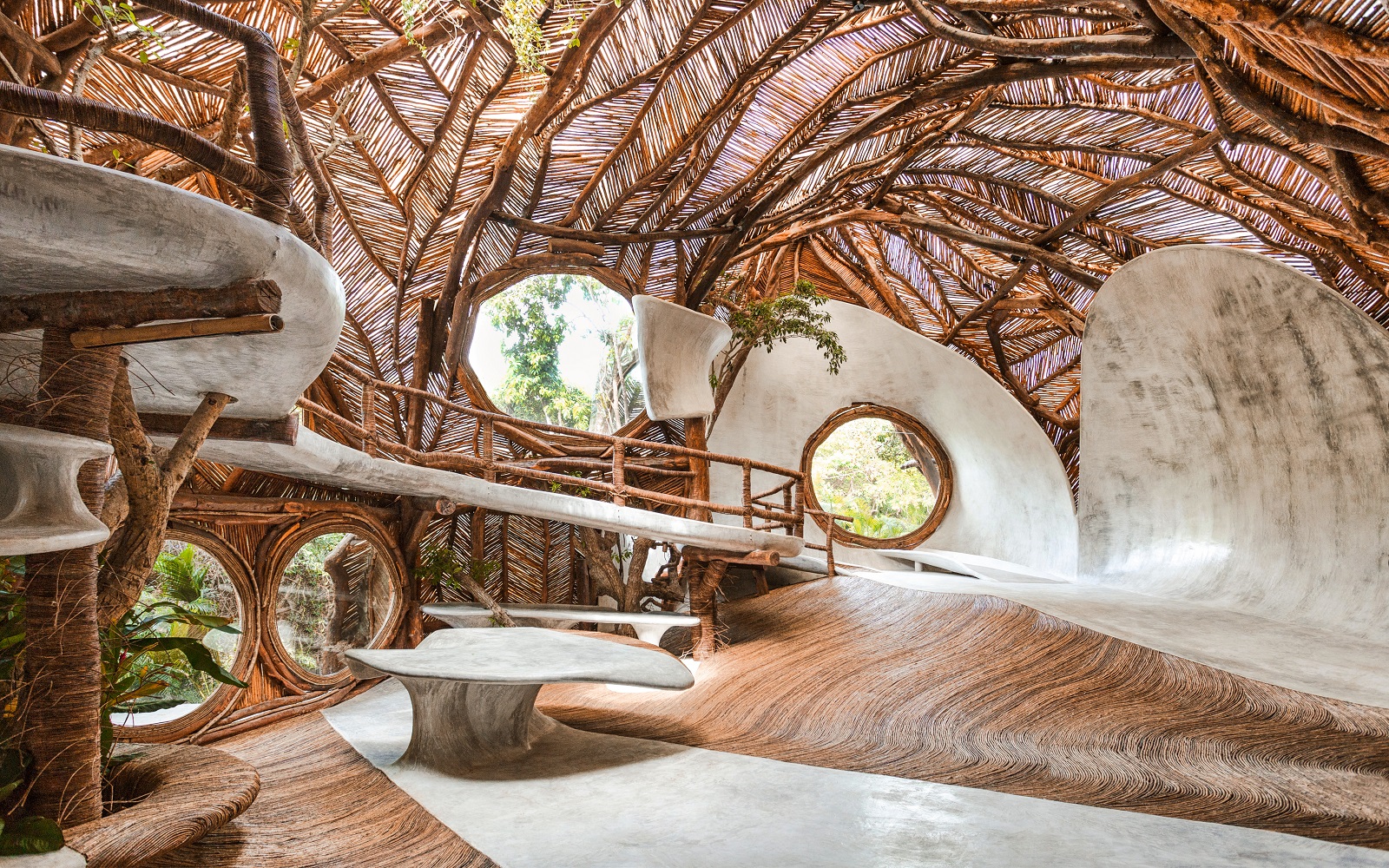
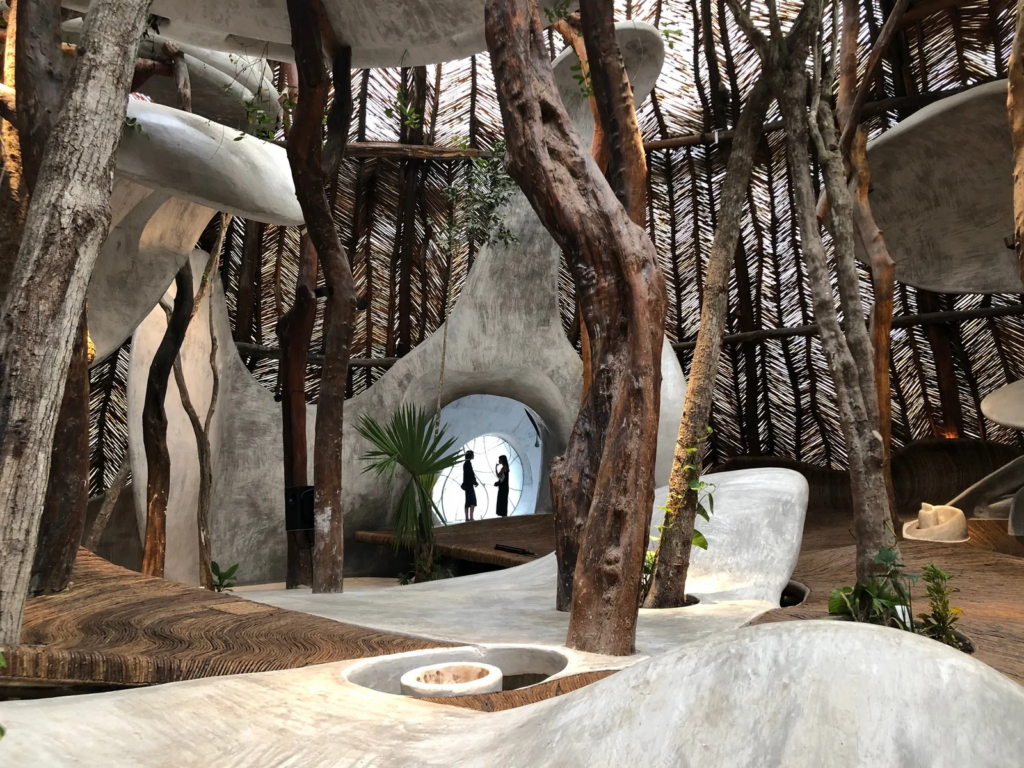
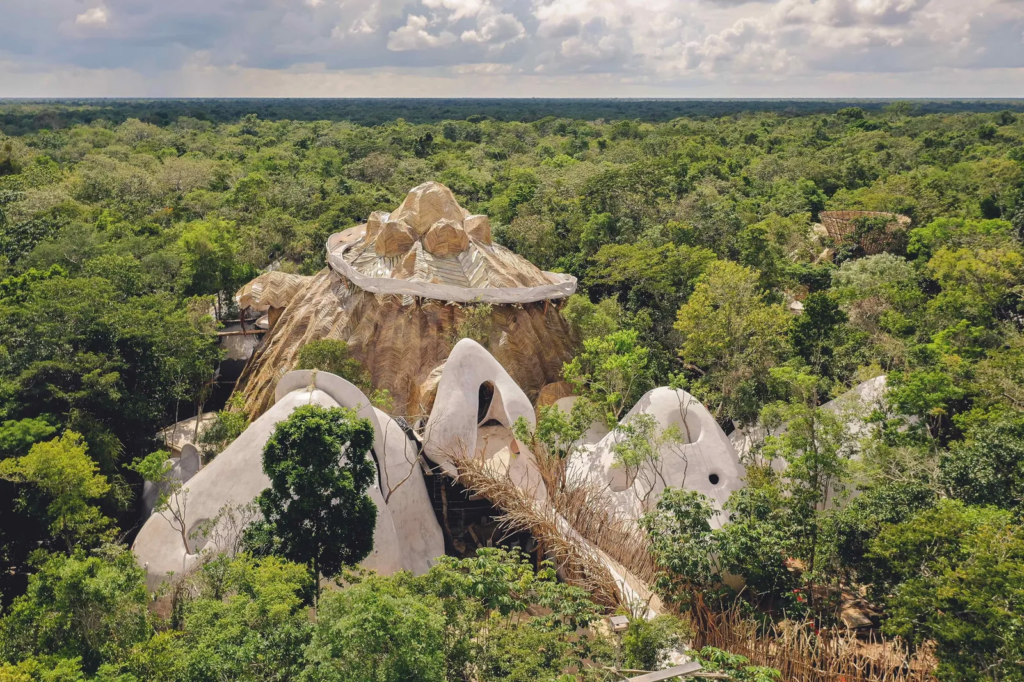
Instead, villas are raised above the jungle floor on stilts, constructed from locally sourced wood, bejuco vines and hand-shaped organic forms that seem to grow rather than be built. Walkways twist through the trees like roots in reverse, guiding guests between villas, restaurants and cultural spaces in a constant state of gentle disorientation.
The design philosophy is simple but radical: do not impose on the landscape, but disappear into it. According to architectural documentation of the project, the structures were elevated specifically to protect the ecosystem beneath, allowing wildlife to move freely while the buildings hover above like a second canopy.
There are no conventional corridors. No bright artificial lighting. At night, the resort becomes a network of candlelit paths and silhouettes, where sound carries differently and time feels less linear.
A Village Rather Than a Resort
AZULIK is often described less as a hotel and more as a village. Spread across its jungle-meets-sea site are villas, restaurants, wellness spaces, fashion ateliers and immersive art installations, all connected by wooden pathways and open-air architecture.
The idea is not simply accommodation, but immersion.
Guests move between spaces like participants rather than visitors, drifting from ocean-facing dining nests to jungle spas, from galleries to open-air bars shaped like sculptural nests suspended in the trees.
At the centre of this ecosystem is SFER IK, an immersive art space where exhibitions unfold without traditional gallery walls. Here, architecture and exhibition merge completely, with installations responding to light, wind and the surrounding jungle rather than fixed frames or white cubes.
It is a place that treats nature not as backdrop, but as co-author.

Luxury Rewritten as Experience
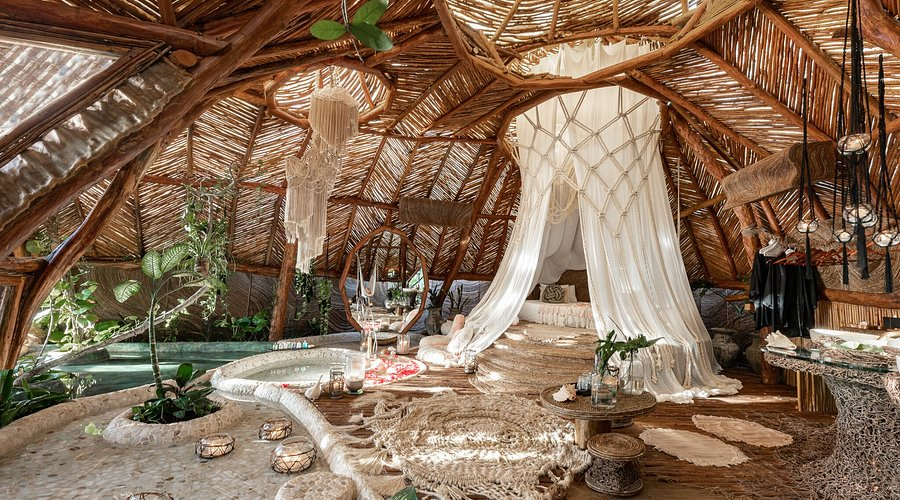
AZULIK resists the language of conventional luxury. There are no marble lobbies or uniformed reception desks. Instead, barefoot pathways, open-air structures, and spaces designed to unsettle the boundaries between indoors and outdoors.
Rooms vary dramatically, but many lean towards minimal intervention: mosquito nets, hand-crafted furniture, open-air bathing spaces and limited artificial lighting. The experience is intentionally stripped back in ways that feel both liberating and disorienting.
This is luxury defined not by comfort alone, but by intensity of environment.
Between Myth and Reality
Part of AZULIK’s power is its mythology. It is one of the most photographed properties in Tulum, frequently appearing across travel and design media as an icon of “eco-luxury”.
But it is also polarising.
Some guests describe it as transformative, even spiritual. Others point to inconsistencies in service, privacy concerns, and a sense that aesthetics sometimes outweigh function. It exists in that rare space where architecture becomes cultural theatre as much as hospitality.
What is undeniable, however, is its influence. AZULIK helped define the visual identity of modern Tulum: organic architecture, barefoot luxury, and an almost ritualistic relationship to space and nature.
Final Impressions
To stay at AZULIK is to move through a world that does not behave like a hotel at all. It behaves like a constructed ecosystem with its own logic, its own rhythm, and its own idea of beauty.
It is not trying to be universally comfortable.
It is trying to be unforgettable.
And in that sense, it succeeds completely.