

For centuries, that emotional pull has been one of fragrance’s most fascinating qualities. Perfume has long been tied to memory and nostalgia, becoming part of how we remember people, places and moments in our lives. Fragrance may not exist to preserve memories, but memories have a habit of attaching themselves to scent.
But while scent has always helped us look backwards, the way we use fragrance in the present is changing.
For years, perfume was marketed around the idea of the signature scent. One fragrance, worn so consistently that it became synonymous with its wearer. Today, that concept feels increasingly outdated. Instead, people are building fragrance wardrobes, choosing scents to suit their mood, environment, occasion and even the version of themselves they want to embody on any given day.
Together, these two realities reveal something fascinating about our relationship with fragrance. The connection between scent and memory is longstanding, but it is no longer the only lens through which we understand perfume. Today, perfume is just as likely to be chosen for how it makes us feel in the present as for the memories it may one day hold.
According to Anis Abdul Razak Kalsekar, Co-Owner of the Rasasi Group and Founder of Canéza, younger consumers are the ones leading this evolution. Rather than looking for one perfume to define them for years, they’re choosing fragrances that reflect different aspects of their lives, from a light citrus for a morning meeting, to a clean musk for everyday wear or a richer oud-based fragrance for an evening gathering.

Anis Abdul Razak Kalsekar
“People move across environments, moods and seasons and scent naturally follows those transitions,” he says. “Fragrance has increasingly become part of a wider cultural language along with fashion, music, skincare and self expression. The focus has extended to what scents communicate, the mood it evokes, the aesthetic it aligns with, how it develops on the skin and whether it reflects the version of self a person wants to express in a specific moment.”
Anis also believes social media has accelerated this change and played a significant role in this transformation. Fragrance discussions that were once limited to beauty counters and niche enthusiast communities now take place across TikTok, Instagram and YouTube. Conversations around notes, layering, longevity and projection take place almost on an hourly basis.
Environmental factors also influence how fragrance is worn and experienced. Climate has a direct impact on how scents develop on the skin, particularly in regions like the Gulf.
“In warmer conditions, fresher compositions such as citrus, airy musks, soft florals and clean woods tend to sit more comfortably,” Anis explains. “Cooler seasons naturally support deeper structures such as amber, oud, spice, vanilla and richer woody accords.”
As consumers become more knowledgeable about fragrance, they are also paying closer attention to quality. There is growing demand for fragrances that feel luxurious and accessible, underscoring changing expectations around beauty and lifestyle products among younger consumers.
Yet while the way people wear fragrance may be changing, the emotional role scent plays in our lives still remains remarkably consistent.
For children’s author Salha Obaid, scent functions as a form of personal storytelling.
“Scent is deeply tied to personal human experience, we perceive smells differently based on our individual memories and lived experiences,” she says. “No scent truly affects us in the same way it affects someone else with a different background.”
A scent that feels comforting to one person may carry entirely different associations for someone else. Memory still shapes how we interpret fragrance, attaching emotions, people and places to specific smells over time.
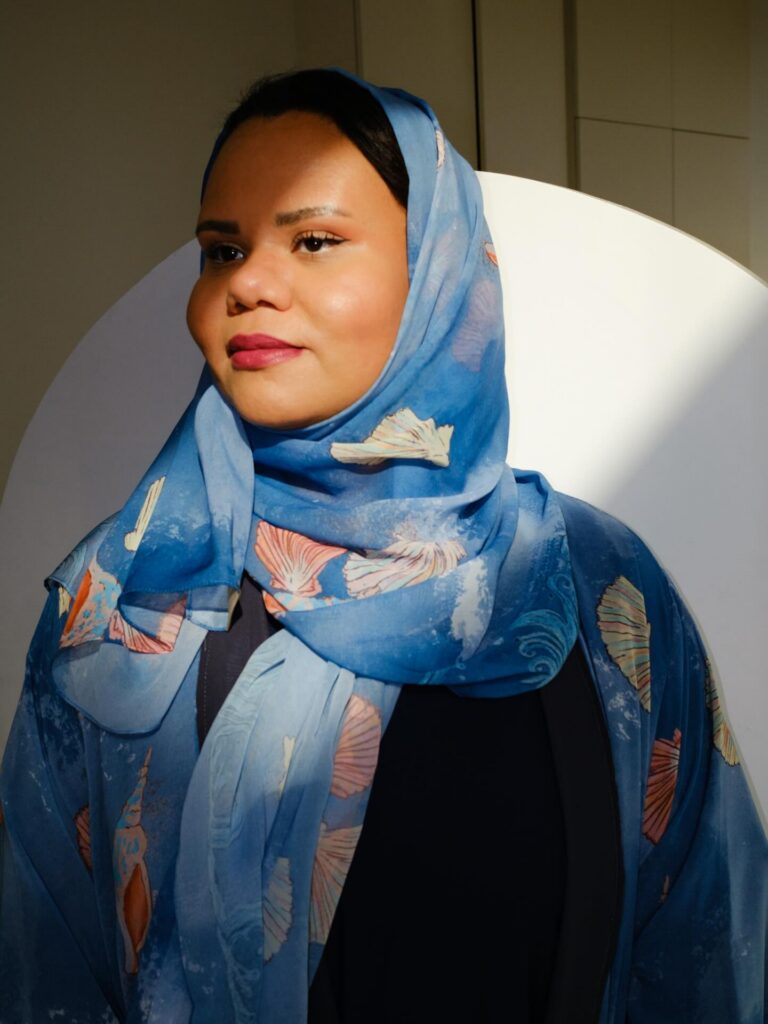
Salha Obaid
“A single fragrance can carry entirely different meanings from one person to another, comfort to one, discomfort to another, depending on what it has come to represent in their private emotional archive,” says Salha.
But scent is not only personal. It also shapes collective identity.
“Entire cultures are marked by olfactory signatures that define belonging and familiarity,” says Salha.
Throughout history, fragrance has travelled with people, traditions and trade. The ancient spice routes carried more than goods between continents. They transported sensory experiences that influenced cultures, cuisines, rituals and economies for generations.
In the Gulf, scent remains deeply woven into everyday life. The smell of bukhoor and incense is present in homes, celebrations, religious occasions and social gatherings. For many people, these scents are inseparable from the feeling of home itself.
“The scent of incense is deeply embedded in daily life and social rituals,” Salha explains. “Memory here is inseparable from scent, occasions are not only remembered visually or emotionally, but also olfactorily.”
The most interesting thing about fragrance is that we rarely know, in the moment, which scents will stay with us. A perfume bought on a whim might become forever tied to a particular season of life. The bukhoor drifting through family gatherings may one day remind us of home. Even the fragrance chosen simply because it suited the occasion can take on a meaning we never anticipated.
At the same time, the way we approach perfume has become far more intentional. The pressure to find a single signature scent has eased, replaced by the freedom to experiment, layer, revisit old favourites and choose fragrances that reflect how we want to feel on any given day.
Perhaps that’s why fragrance continues to hold such a unique place in our lives. We choose it in the present, often for practical or personal reasons, but over time it becomes woven into our experiences in ways we can’t predict.