

Our itinerary took us far beyond the places I’d explored during my first visit and it didn’t take long to realise how much I’d missed the first time around. Every morning introduced us to a different landscape, another experience and another reason to realise just how much this relatively small country packs into its borders.
We left Tbilisi for Kakheti’s vineyards, swapped mountain lakes for underground caves, cycled across a canyon and found ourselves stopping in little towns that looked nothing like the places we’d visited the day before. The further we travelled, the more I realised that one trip simply isn’t enough to understand the diversity of Georgia.
Rediscovering Tbilisi
That’s probably what impressed me most. Every region felt like a completely different experience but for all the new places I discovered, coming back to Tbilisi still felt like meeting an old friend.
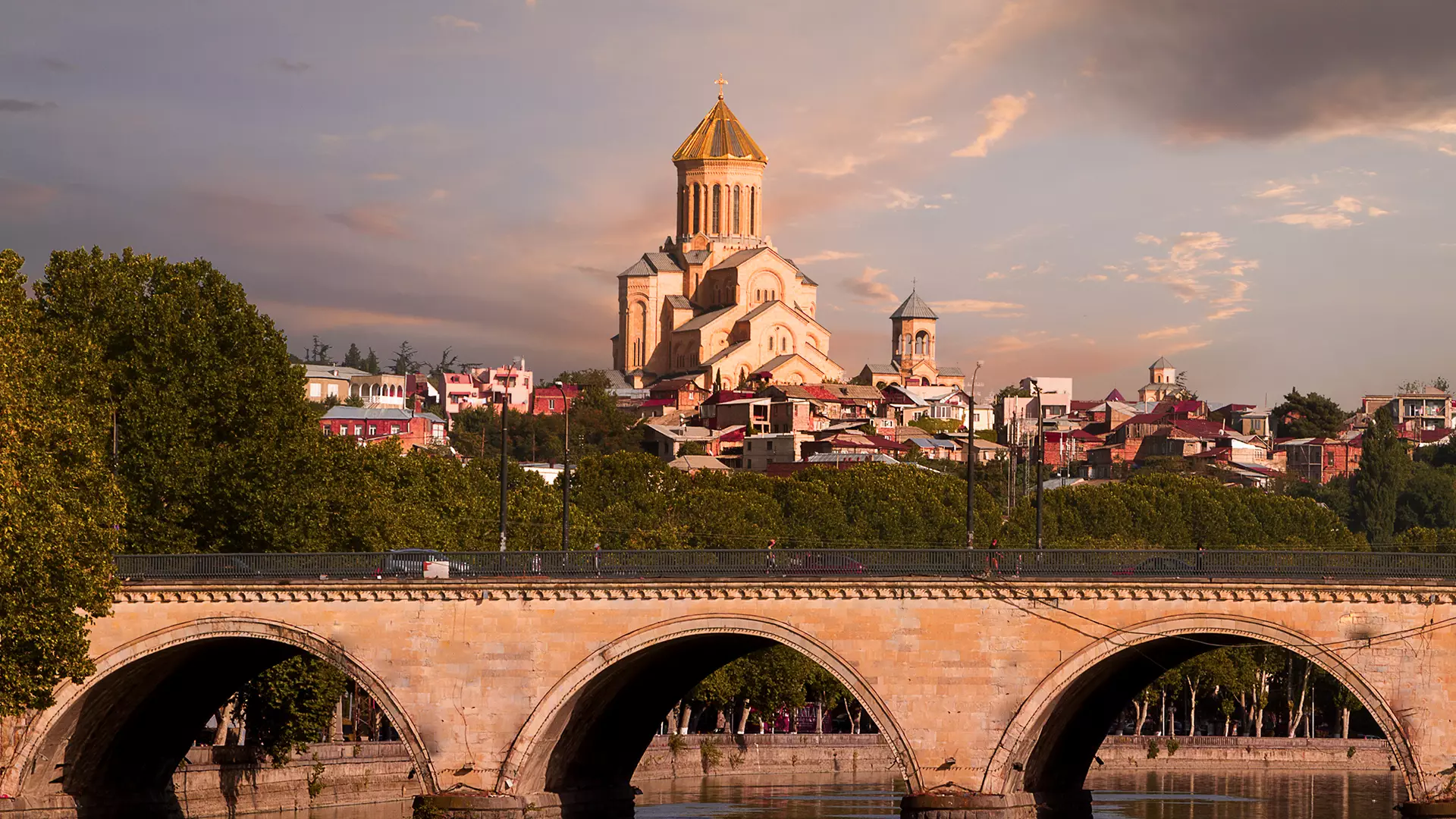
The city still had the same colourful wooden balconies, winding cobbled streets and hidden courtyards that I’d remembered from my first visit. I also rediscovered a slightly unusual fascination with Georgian doors. Somewhere between exploring Old Tbilisi and stopping for coffee, I realised I’d taken an alarming number of photographs of beautifully painted doors, weathered wooden entrances and intricate ironwork. Every street seemed to have another one worth photographing.
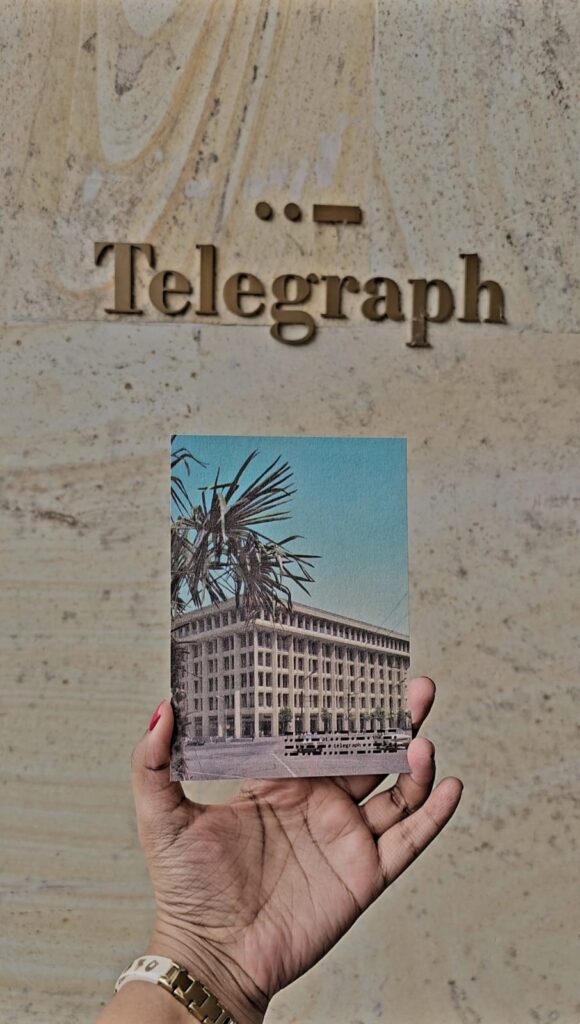
Whenever our itinerary brought us back to Tbilisi, we stayed at Telegraph Hotel. Housed inside a beautifully restored historic building in the heart of Tbilisi, the hotel balances its heritage with contemporary interiors, giving it plenty of character. Its central location also meant that stepping outside immediately placed us within quick reach of the city’s cafés, shops and Old Town.
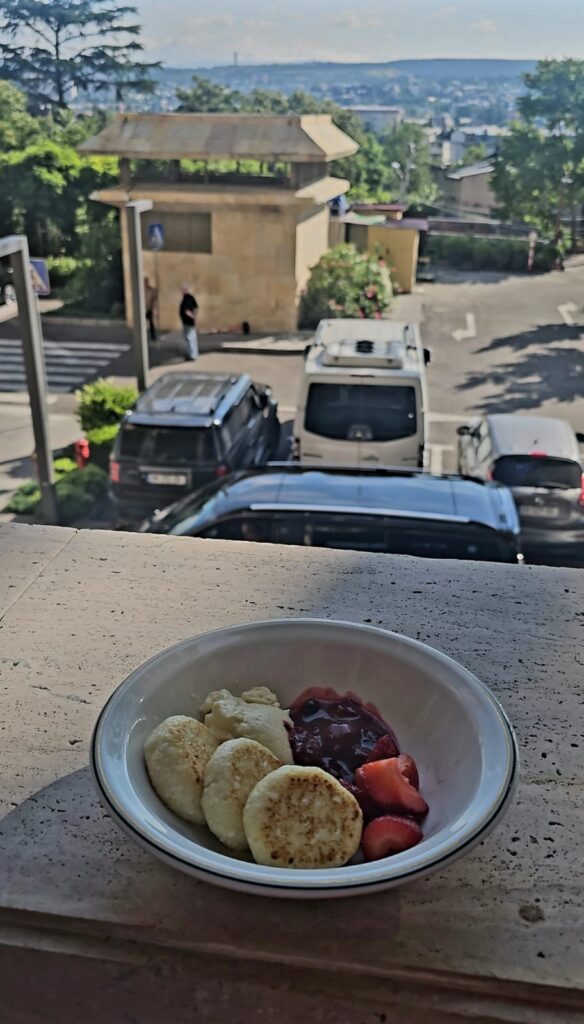
Breakfast was one of the highlights of every stay. The spread was generous. Every morning offered an extensive spread of fresh pastries, local cheeses, fruit and hot dishes, but there was one thing I reached for before anything else, the cottage cheese pancakes. They were so good that I’d go to sleep already knowing exactly what I was going to order the following morning. It sounds ridiculous, but I looked forward to waking up just for those pancakes.
A Country Best Explored Through Its Food
I knew I was going to eat well in Georgia because I’d fallen in love with the food during my first visit but this trip introduced me to just how much variety there is across the country.
Breakfast was usually at whichever hotel we were staying in before we headed off for the day, while lunch and dinner took us to restaurants in different cities and regions, each putting its own spin on Georgian cuisine. The dishes change as you travel across the country, shaped by local ingredients, traditions and generations of family recipes. Every part of the country has its own specialities, so in a way eating your way through Georgia becomes part of your journey rather than simply something you do between sightseeing.
Khachapuri appeared in countless forms, which makes perfect sense once you learn there are more than 40 regional variations. We enjoyed plenty of khinkali, lobiani, beautifully cooked fish and colourful salads piled high with tomatoes, cucumbers and handfuls of fresh herbs
Sharing food is deeply woven into Georgian culture. Rather than everyone ordering their own meal, the table is filled with dishes that everyone helps themselves to, making every meal communal. That same spirit is at the heart of the traditional supra, a Georgian feast where hospitality, storytelling and bringing people together are just as important as what’s on the table.
While the dishes themselves were memorable, I found myself becoming just as fascinated by the sauces that accompanied them. I don’t think I’ve ever paid so much attention to condiments.
Every restaurant seemed to have its own collection waiting on the table. Walnut-based sauces, bright herb sauces, roasted pepper blends and creamy garlic accompaniments all brought something different to the meal.
The trip wasn’t limited to tasting Georgian food, we were also invited to experience how it’s made. Our appreciation for Georgian cuisine deepened further when we tried our hand at it.
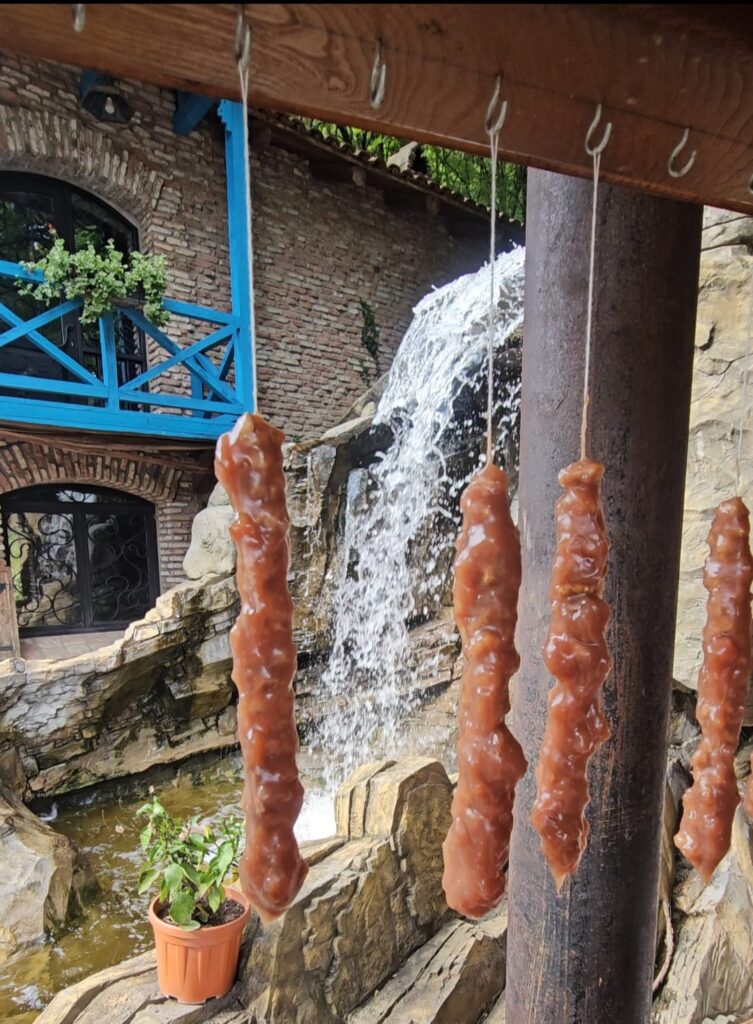
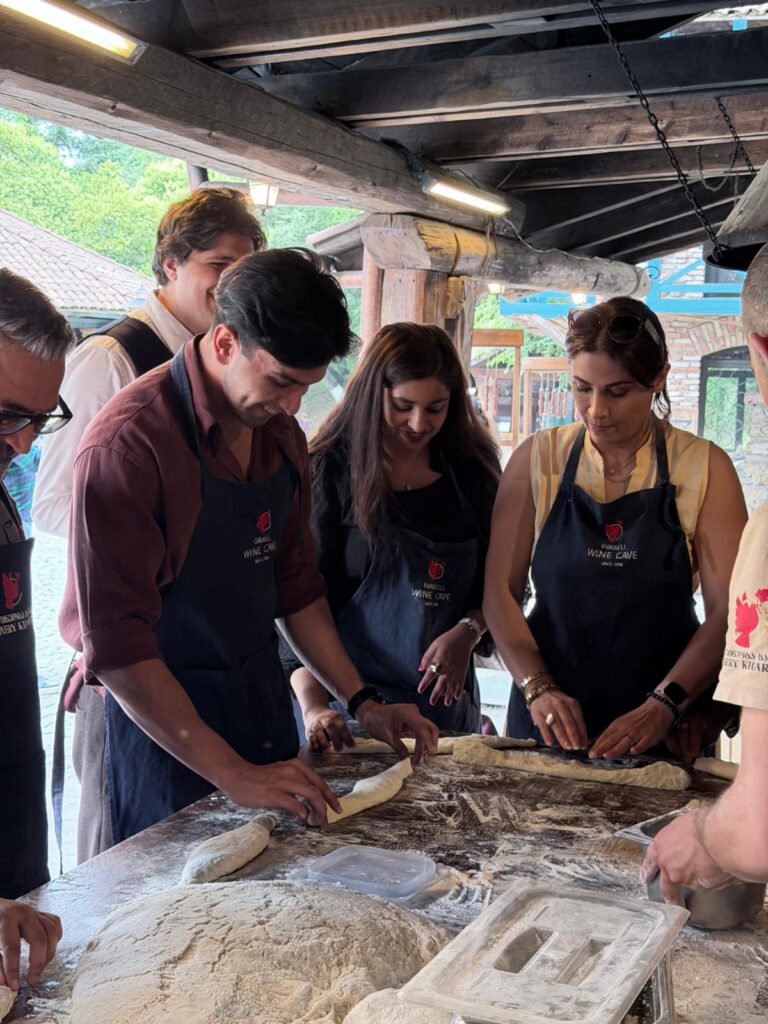
One of the experiences on our itinerary had us gathered around long tables to make churchkhela, one of Georgia’s best-known traditional sweets. Made by dipping strings of walnuts repeatedly into a thick mixture made from concentrated grape juice before being hung to dry, creating the candle-shaped treats you’ll find hanging in markets all over the country.
We also tried our hand at making shoti puri, the long, canoe-shaped bread with a crisp golden crust and soft, chewy centre that you’ll find in bakeries and on dining tables across Georgia. Shaping the dough was the easy part. The real skill came in pressing it onto the walls of a traditional clay tone oven.
We sampled tklapi too, Georgia’s traditional fruit leather, made by slowly drying puréed fruit into thin sheets that can be rolled up and eaten as a snack. It’s simple, naturally sweet and another reminder of how closely Georgian cooking is tied to seasonal produce.
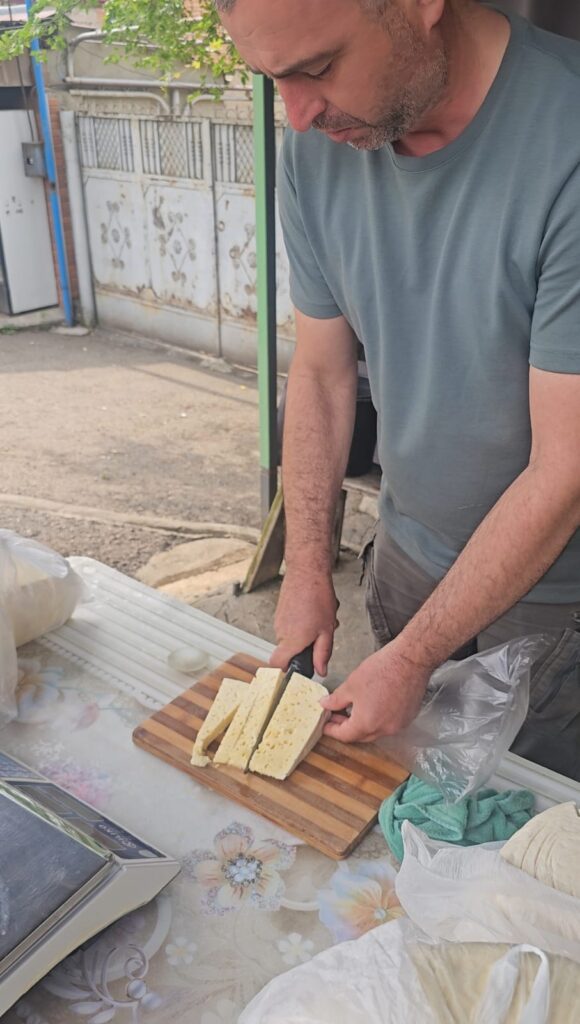
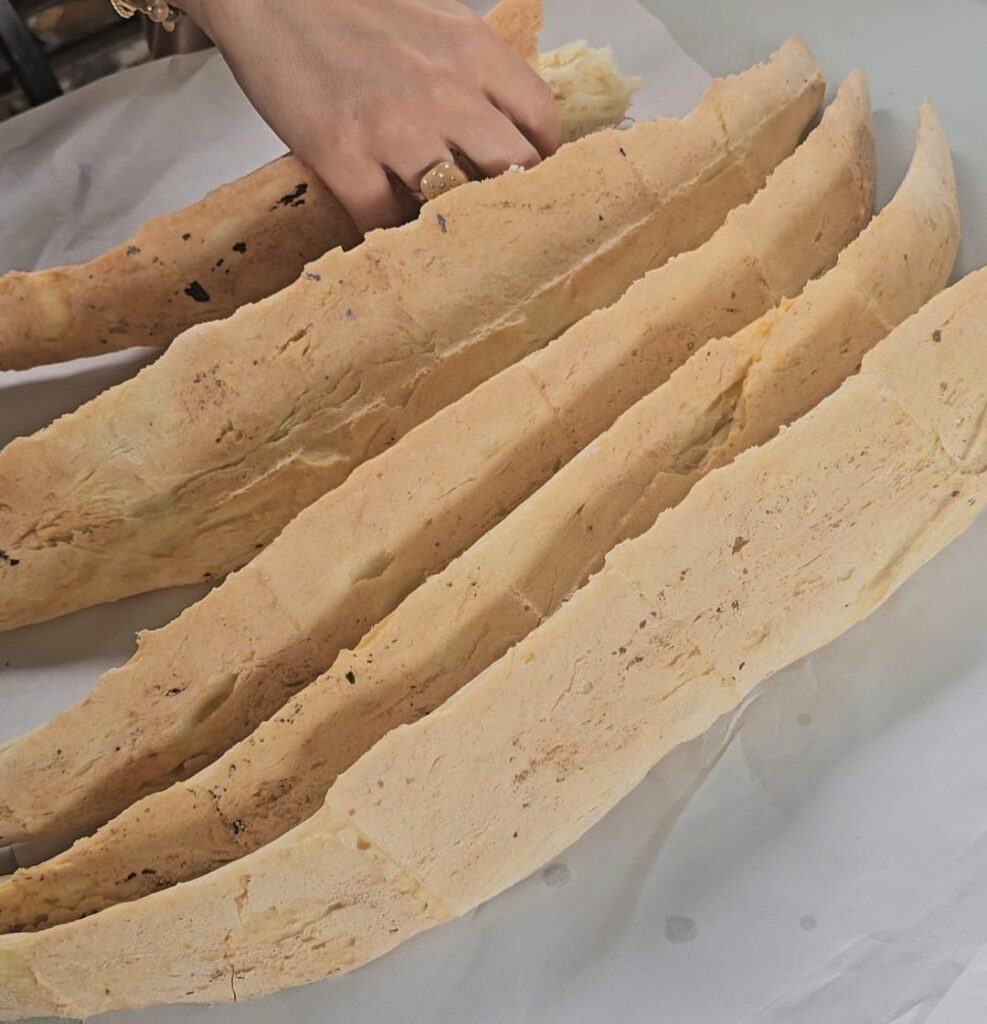
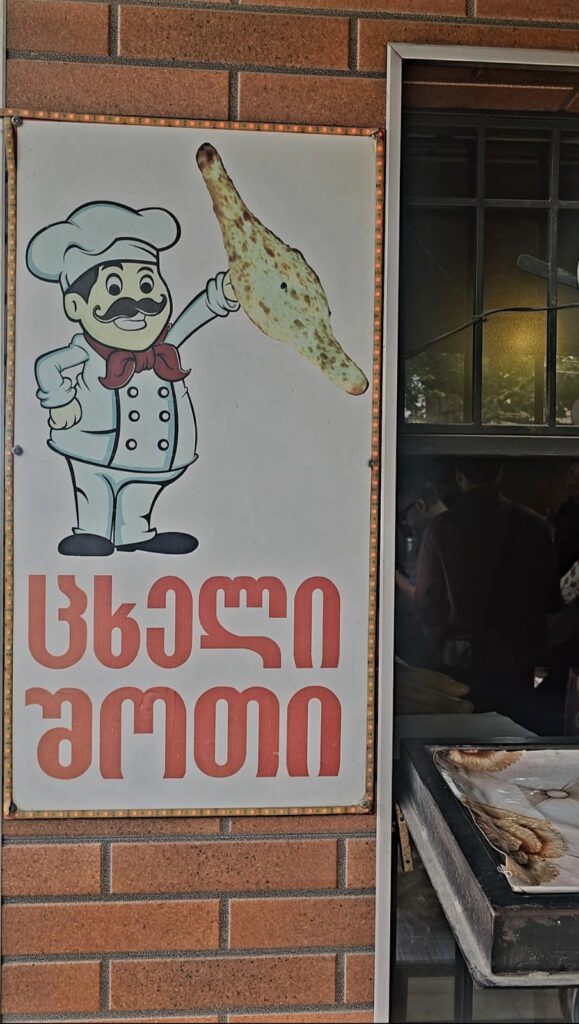
As much as I enjoyed the cooking demonstrations, one of my favourite food memories happened completely by chance, on the way to one of our excursions.This was before we even learnt how to make shoti puri ourselves, our guide, Kartlos, spotted a roadside bakery and immediately pulled over. “You have to try this,” he insisted. Within minutes, we were standing outside with warm loaves that had only just come out of the clay oven, tearing off pieces and eating them with fresh local cheese and ripe tomatoes.
The Heart of Georgia’s Wine Country
Our time in Kakheti brought together many of the experiences that make this region so special. Along with learning to make traditional churchkhela and shoti puri,
One of the highlights was the Khareba Wine Tunnel, a vast underground network originally carved into the mountainside by the Soviet military before being transformed into one of one of the country’s most fascinating wine cellars. The naturally cool temperature inside provides ideal conditions for ageing wine, a fitting setting in a country widely recognised as the birthplace of wine, with an uninterrupted winemaking tradition dating back around 8,000 years.
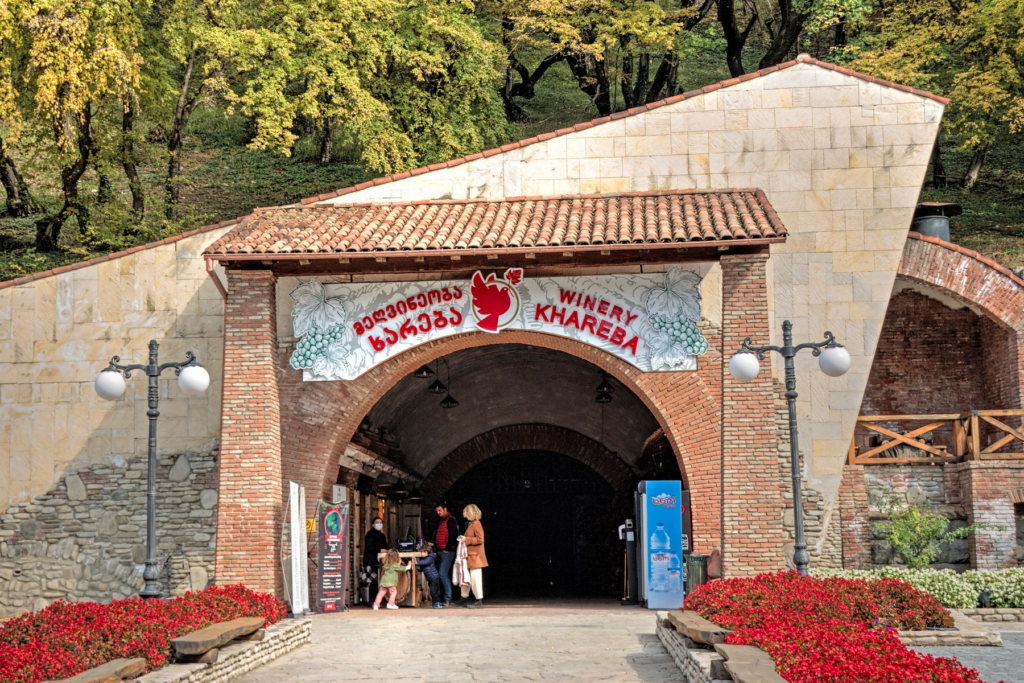
As someone who doesn’t drink alcohol, I wasn’t sure how much I’d take away from the experience, but it turned out to be one of the most interesting cultural experiences of the trip.
As we walked through the seemingly endless tunnels, the cellar guide explained how deeply wine is woven into Georgian history and identity. He showed us the traditional qvevri, large earthenware vessels buried underground and used to ferment and age wine using techniques that have been passed down through generations and are now recognised by UNESCO. The conversation gradually moved away from production and towards tradition.
As we made our way through the tunnel, the cellar guide also shared some of Georgia’s winemaking traditions. He told us that, unlike in many other cultures, saying “cheers” in Georgia is really only the beginning of a toast. What follows can be a story, a memory, words of gratitude or a conversation that brings everyone around the table into the moment
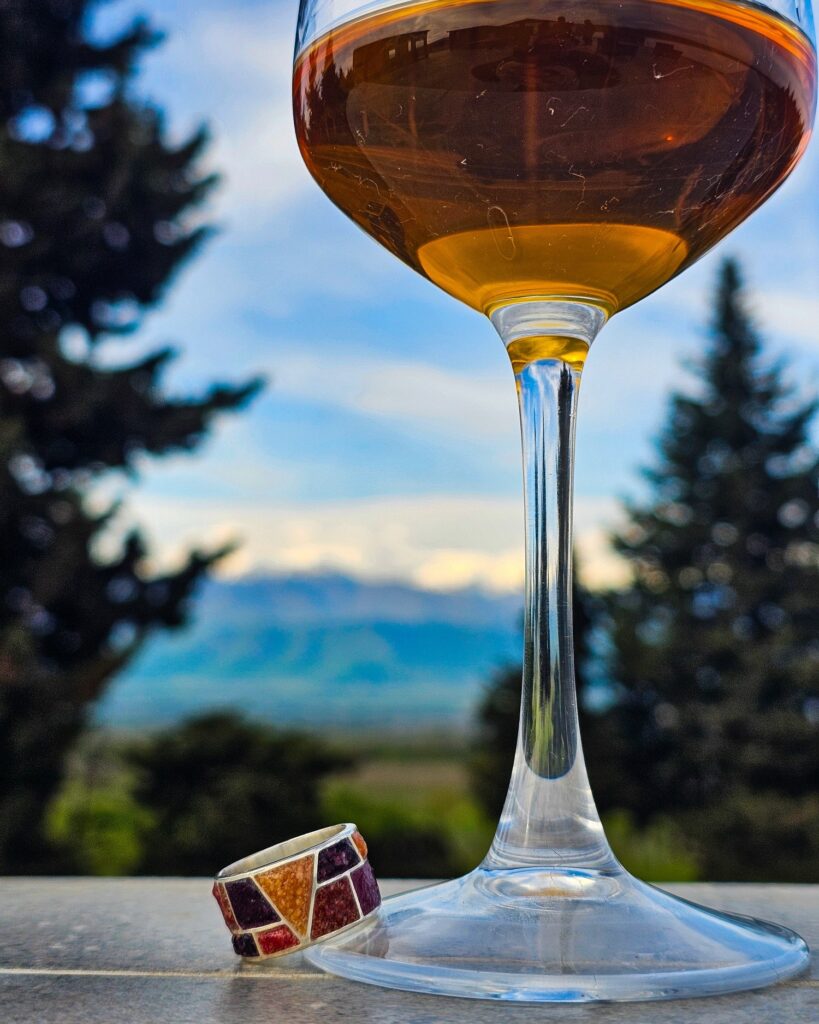
A fun fact I discovered after the trip is that the tiny tartrate crystals that naturally form during the winemaking process, often nicknamed wine diamonds, have inspired a uniquely Georgian souvenir. Some local artisans transform these naturally occurring crystals into jewellery, giving wine lovers an unusual way to take a small piece of Georgia’s 8,000-year winemaking heritage home.
Lopota Lake Resort & Spa
Without question, my favourite place we stayed was Lopota Lake Resort & Spa. I could quite happily have cancelled the rest of the itinerary and spent my entire trip there. In fact, I’d go as far as saying the resort alone is reason enough to plan a holiday to Kakheti.
Tucked away in the heart of Kakheti and framed by vineyards with the Caucasus Mountains rising in the distance, the resort is far more than somewhere to spend the night. In fact, I almost think describing it as a hotel does it a disservice. It’s a destination in its own right.
The resort is spread across an enormous estate. There are bicycles to hire, boat rides across the water, horseback riding, a beautiful spa, several restaurants and its own organic winery, Château Buera.
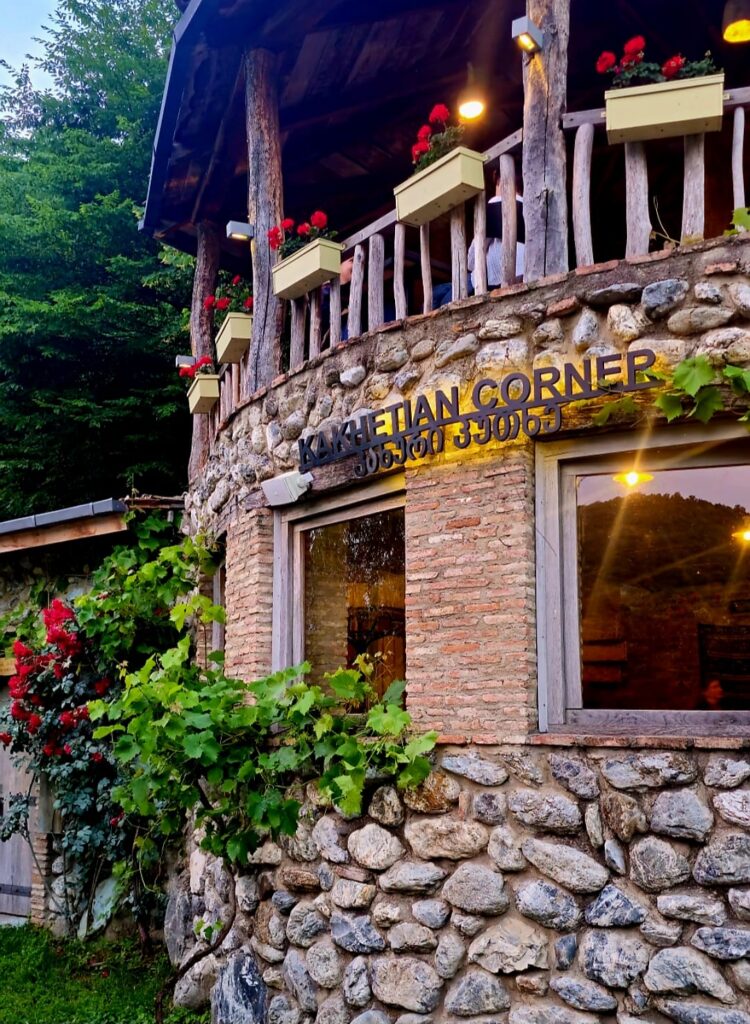
I don’t think a single part of Lopota disappointed me. We only had a couple of hours between checking in and meeting for dinner at Kakhetian Corner, the resort’s traditional Georgian restaurant overlooking Lopota Lake, but there was no chance I was going to spend them resting in my room.
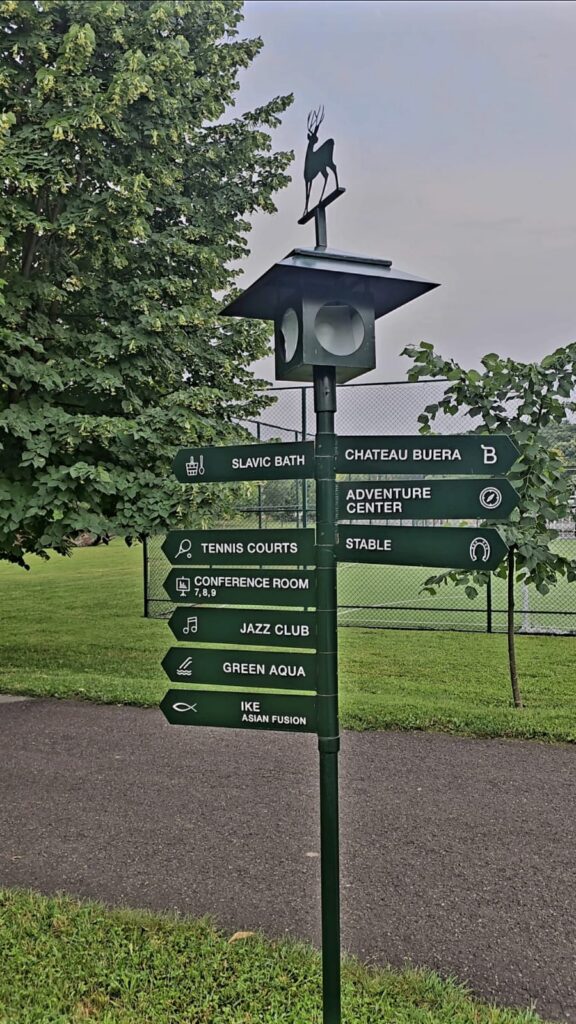
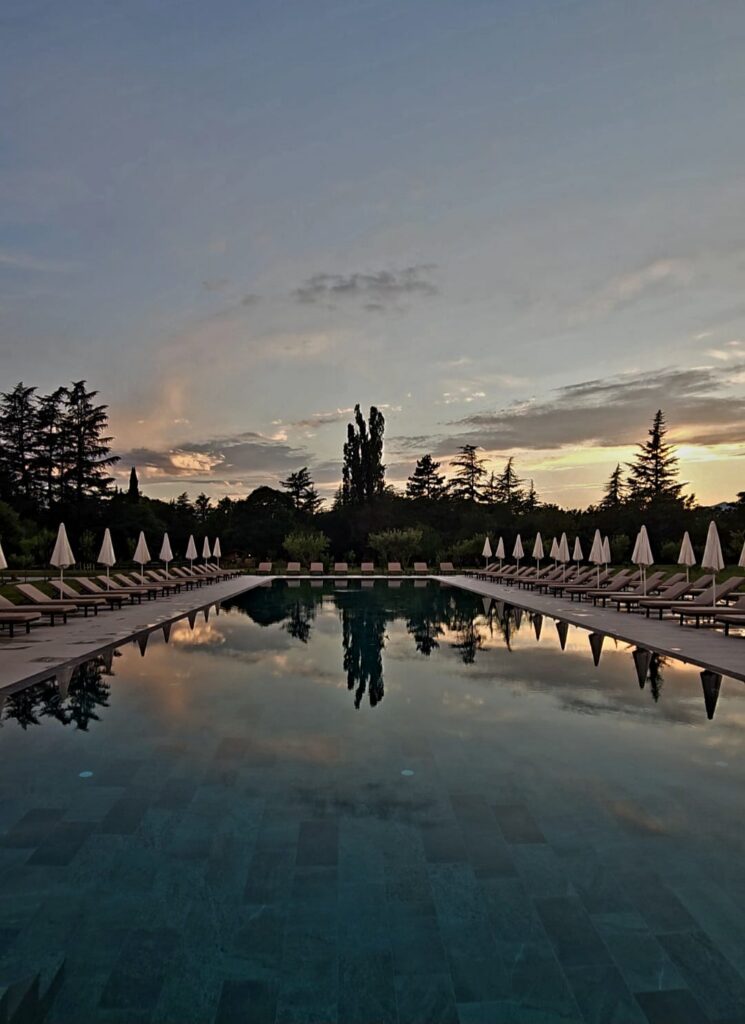
The room itself was lovely, with warm wooden finishes, soft neutral colours and a balcony that looked out across the beautifully maintained grounds, but I was far too excited to stay indoors when the entire resort was waiting to be explored. After dropping off my bags and taking a quick look around, I grabbed my phone and headed straight back outside.
From that moment on, I don’t think I walked more than a few steps without stopping to take another photograph.
Golden hour had just begun, and the entire resort seemed to change every few minutes with the hues of the shifting lights. The grounds were lined with beautiful roses in full bloom, little bridges connected different parts of the estate, and every path seemed to lead to another view of the lake or another corner that looked even prettier than the last. I would stop to photograph a cluster of roses, turn around and suddenly the mountains behind them had taken on a completely different colour.
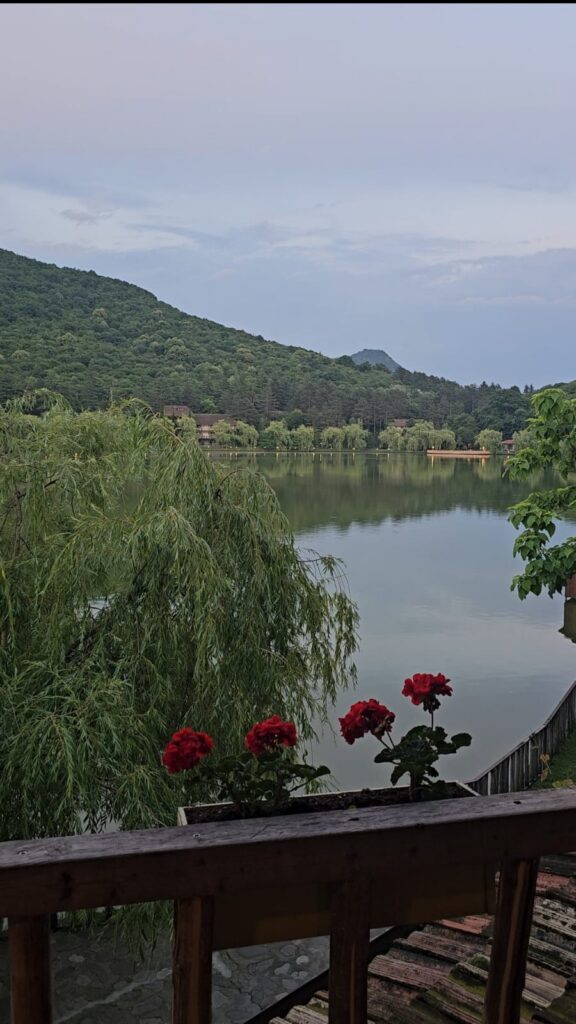
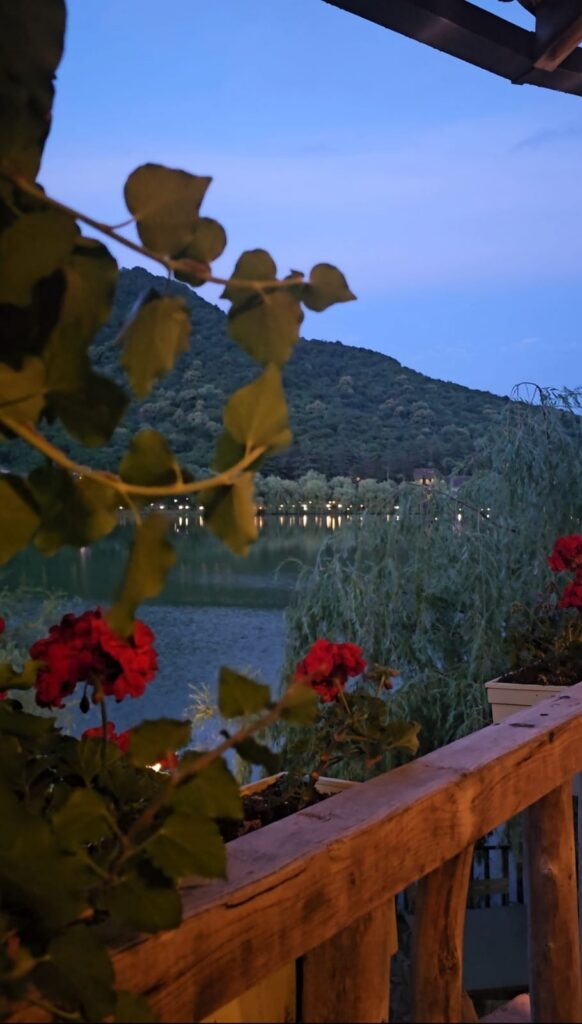
A few minutes later, the lake reflected another shade of the evening sky, and I found myself taking exactly the same photograph again because it looked completely different from the one I’d taken moments earlier. I must have spent the entire couple of hours simply wandering around with my phone, photographing every corner I could find. By the time I reached Kakhetian Corner, I was convinced I couldn’t possibly take another photograph. I was dead wrong.
The restaurant overlooks Lopota Lake, and from our table I could see the water stretching out in front of us, framed by rose gardens with the Caucasus Mountains beyond. As dinner went on, the same view kept transforming. The soft golden light gradually gave way to pinks, purples and deeper shades of blue, and I found myself reaching for my phone all over again. If I ever go back to Kakheti, and I sincerely hope I do, I’d happily stay at Lopota again without planning anything else.
Dashbashi Canyon
After checking out of Lopota, we set off for what was hands down the most exciting days of the trip. A visit to Dashbashi Canyon in Georgia’s Kvemo Kartli region. Carved through volcanic rock by the Khrami River, the canyon is known for its steep cliffs, dense greenery and waterfalls hidden below. Its most striking feature is the Diamond Bridge, a glass-and-steel walkway suspended high above the gorge, with a diamond-shaped viewing platform at its centre.
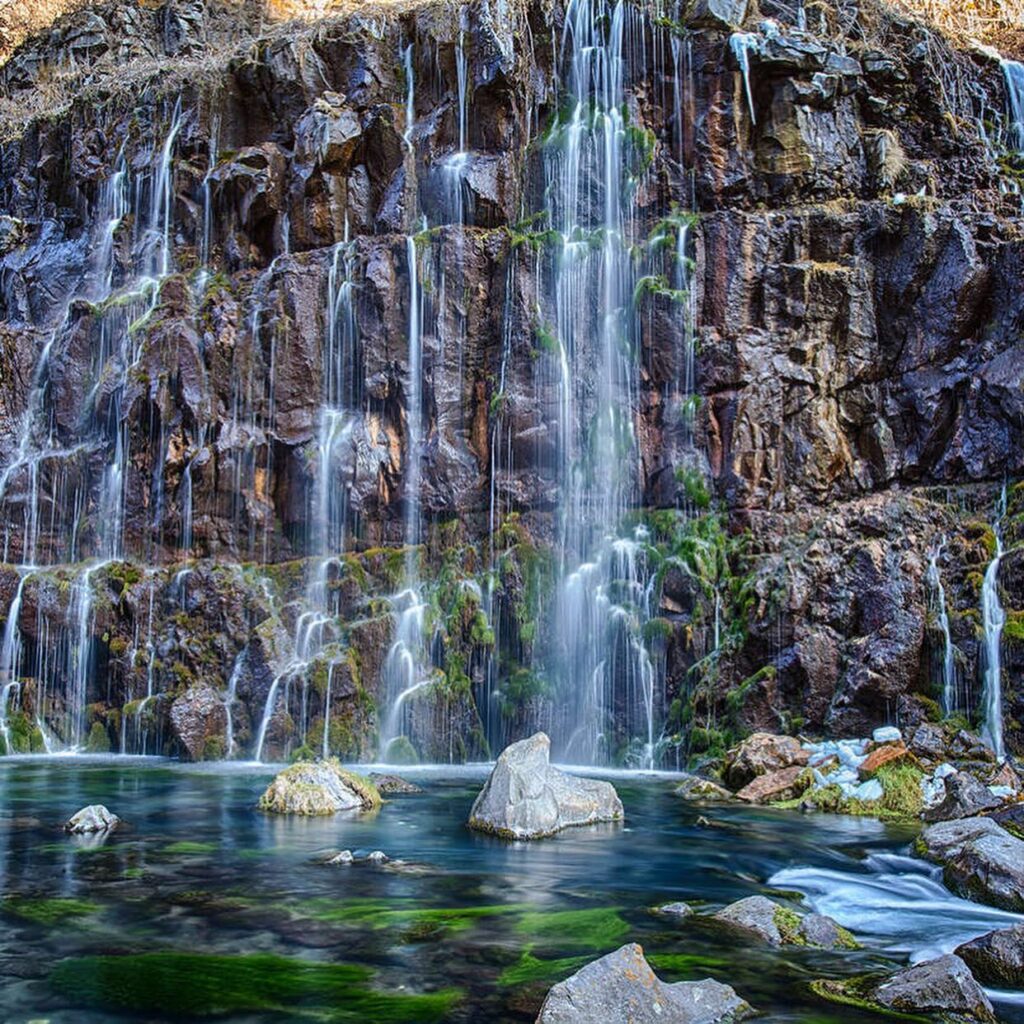
The bridge is impressive enough on its own, but the canyon also offers a bicycle ride suspended on cables above the gorge. Riders sit on a specially designed bike and cross from one platform to another with the canyon stretching beneath them and the Diamond Bridge running along the side. Once I understood exactly what the experience involved, my excitement was immediately mixed with fear.
I’ll admit I am a complete wimp when it comes to rides. My idea of an adventurous ride is a good old merry-go-round. Under normal circumstances, the sight of a bicycle hanging above a canyon would have been enough to make me turn around. But the setting was so beautiful, and the ride looked so unusual and fun, that despite my fear, I couldn’t help wanting to try it.
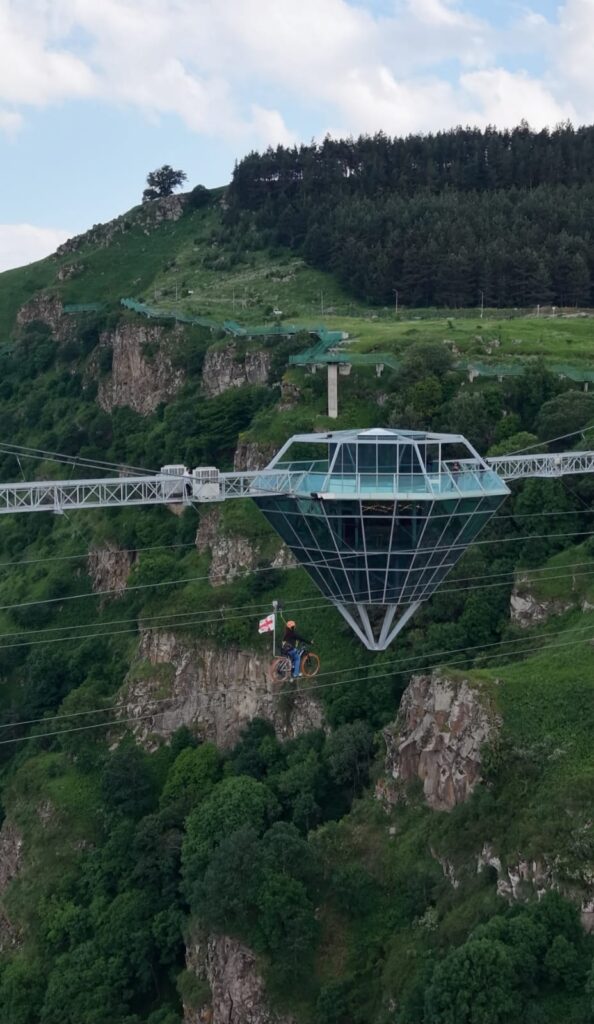
There are two ways to cross. You can press a button and let the bike move automatically, or you can pedal at your own pace. I chose to pedal, and I would recommend doing the same. It gives you time to look across the canyon, take in the scale of the gorge below and admire the Diamond Bridge from a completely different angle. The ride only lasts a couple of minutes each way, but I was so glad I had done it that, by the time I reached the platform, I wanted to go straight back across again.
Gemo Fest
Our stay in Kutaisi coincided with Gemo Fest, one of Georgia’s annual celebrations of regional food, wine and local producers. If I’d needed any more convincing that food is central to Georgian culture, this certainly did the job.
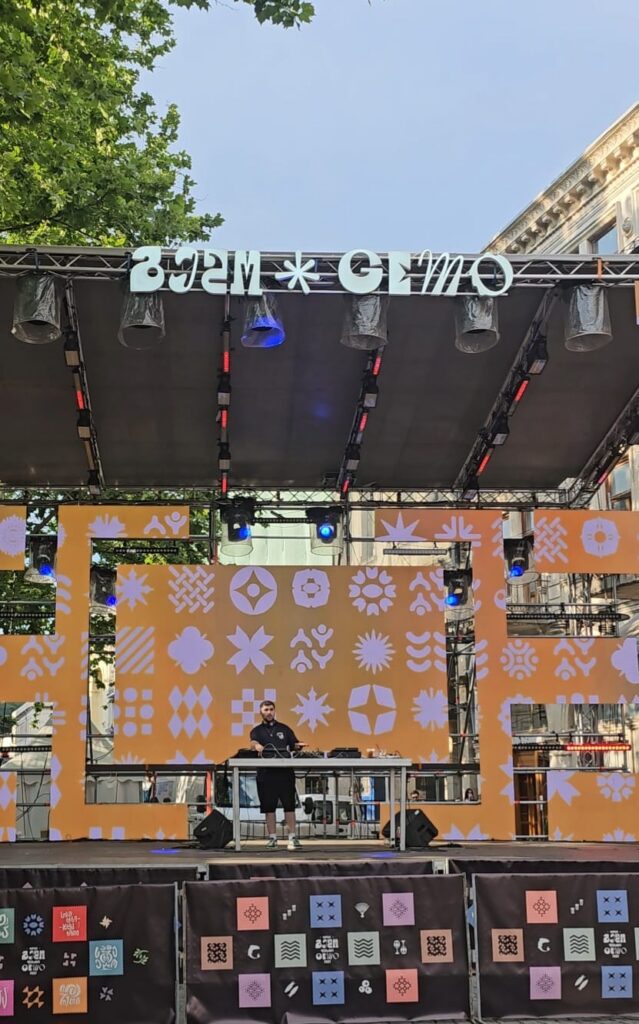
Stalls stretched across the festival grounds, each introducing something different. Local cheesemakers stood beside honey producers, family wineries poured tastings, bakers pulled fresh bread from their ovens and artisans displayed everything from handmade preserves to traditional sweets. It wasn’t simply somewhere to stop for lunch. It was another opportunity to discover just how diverse Georgia’s regional produce really is.
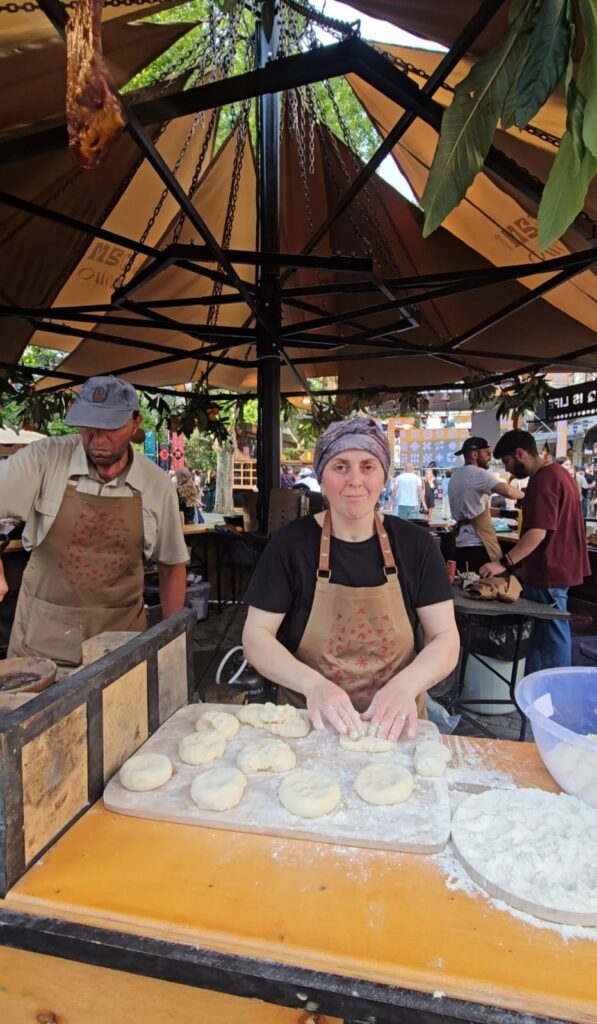
If you’re planning a visit, I’d recommend checking whether your dates coincide with Gemo Fest. My fellow foodies, you can quite easily build an entire holiday around Georgia’s food alone. Even after almost a week of eating my way across the country, I came home with a list of dishes I still wanted to try
Prometheus Cave
Our journey also took us west to Prometheus Cave, one of the country’s best-known natural attractions near Kutaisi. I’d seen photographs beforehand, but nothing really prepares you for the scale of it. The further we walked underground, the larger the chambers became, each revealing a completely different landscape shaped over millions of years.
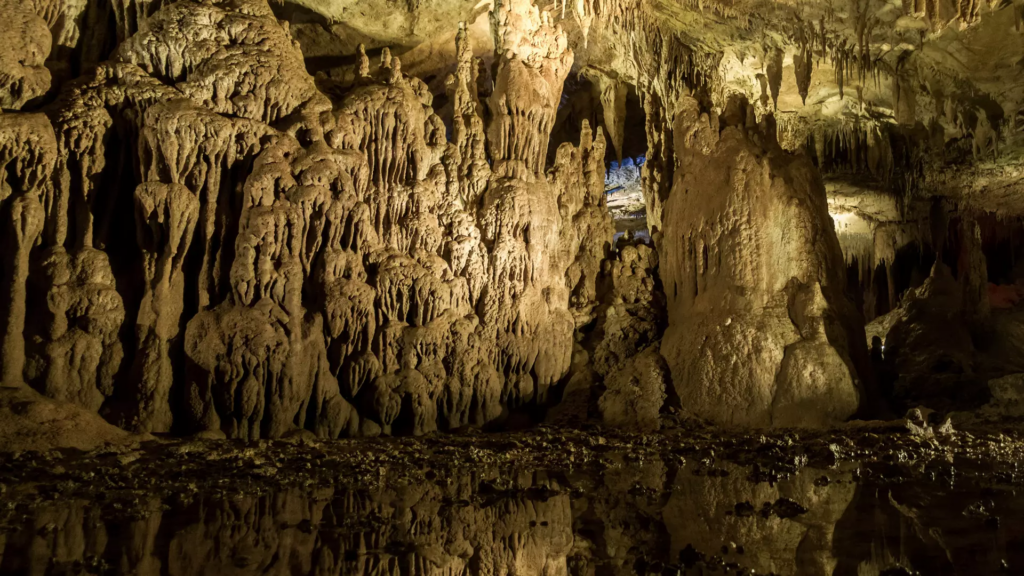
Getting to see it all, however, required a fair bit of effort. Exploring the cave involves a surprisingly long walk and there were far more steps to climb than I’d anticipated but every time the path curved into another vast cavern, the effort immediately felt worthwhile.
Towering stalactites hung from the ceiling, enormous stalagmites rose from the cave floor and coloured lighting gently highlighted the dramatic rock formations without taking away from their natural beauty. It felt less like walking through a cave and more like moving through a series of underground cathedrals, each with its own character.
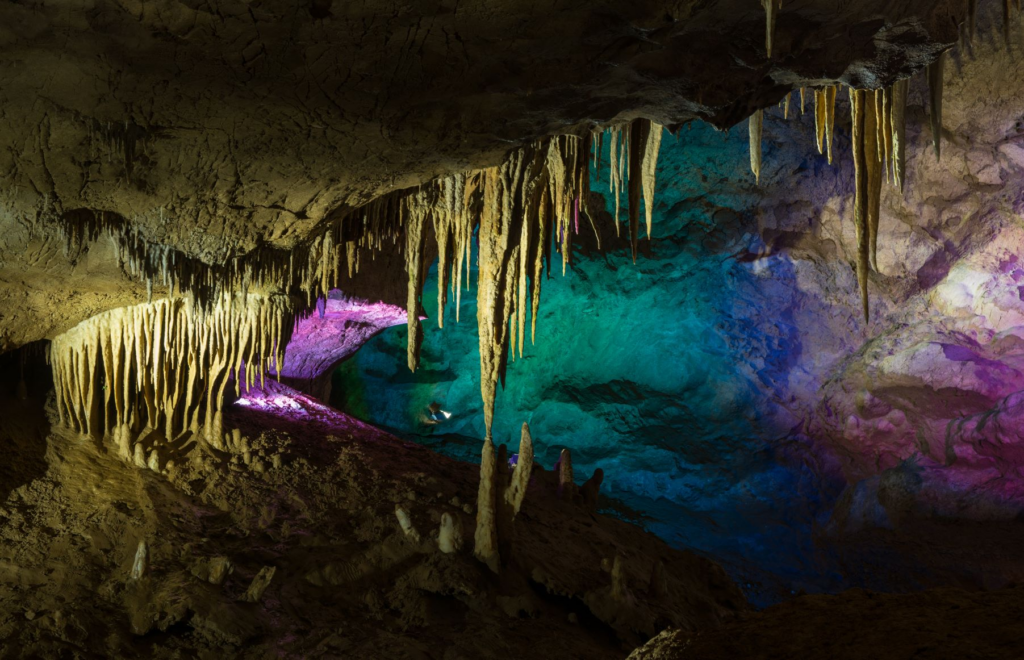
The most unexpected discovery of the cave was learning that part of it is licensed to host wedding ceremonies. Standing there, surrounded by rock formations that have taken millions of years to form, it immediately struck me what an extraordinary place it would be to exchange vows. Combined with Signagi, Georgia’s much-loved City of Love, it’s easy to see why the country has become increasingly popular for destination weddings and honeymoons.
Sulfur Baths
An experience I’d recommend ticking off while you’re in Georgia is visiting Abanotubani, Tbilisi’s historic sulphur bath district. With its distinctive brick domes rising from the ground, it’s one of the city’s most recognisable landmarks and has been part of Tbilisi’s identity for centuries. In fact, the city’s name is believed to come from the Georgian word tbili, meaning “warm”, a reference to the natural hot springs that first drew people to the area.
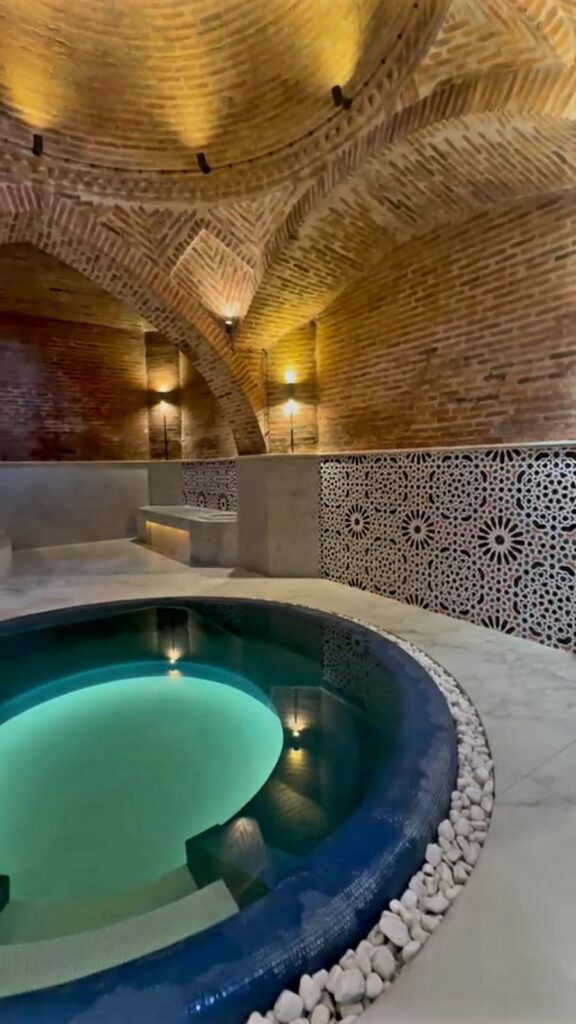
Although I didn’t partake in the experience, I can fully understand why it has become such a rite of passage for visitors. Many people book private bathing rooms followed by the famous kisa scrub and massage, emerging looking considerably more refreshed than when they went in. It’s firmly on my list for next time.
The Restaurants That Defined the Trip
We ate at countless restaurants over the course of the trip, and every meal seemed to introduce a reason to fall a little more in love with Georgian cuisine but five stayed with me in particular, Kakhetian Corner, Lilestan, Otsy 20, Kneina and Georgian House.
Trying to choose a favourite would be impossible. It wasn’t just the food that made these restaurants stand out, although every meal was excellent. Each offered something completely different, whether it was the setting, the history behind the restaurant or the experience that came with dining there.
Kakhetian Corner, overlooking Lopota Lake, combined wonderful food with one of the most beautiful dinner settings of the trip. Watching the evening light change over the water while working our way through traditional Georgian dishes made it a memorable introduction to Kakheti.
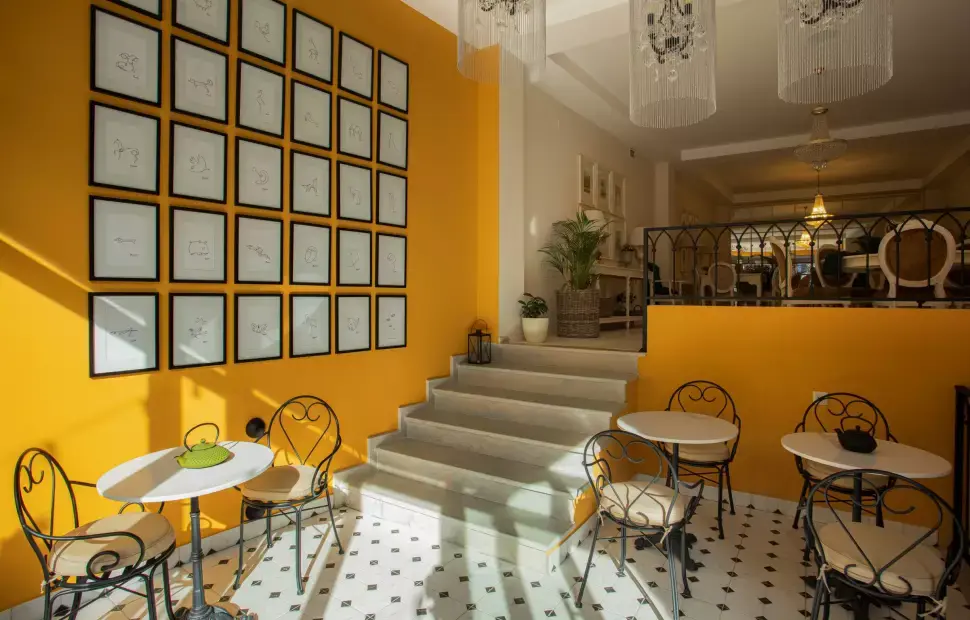
Lilestan was completely different from anywhere else we ate during the trip. While introducing us to the rich flavours of Imeretian cuisine, the restaurant also had a wonderfully artistic almost gallery-like feel that immediately caught my fancy. One entire wall was covered with framed Picasso animal line drawings, and I spent almost as much time looking at those as I did savouring the food. It’s those little details, paired with excellent food, that made the meal so memorable.
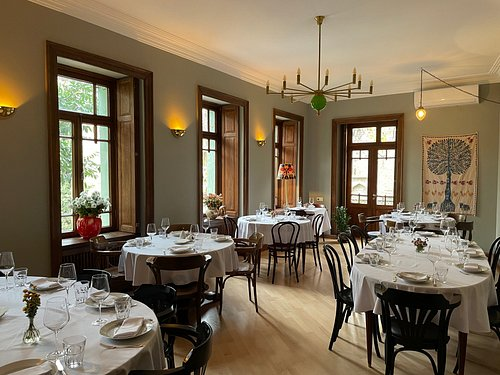
OtsY 20 brought something completely different to the table. Set inside a beautifully restored old house opposite the Rezo Gabriadze Theatre, the restaurant takes classic Georgian recipes and gives them a contemporary edge
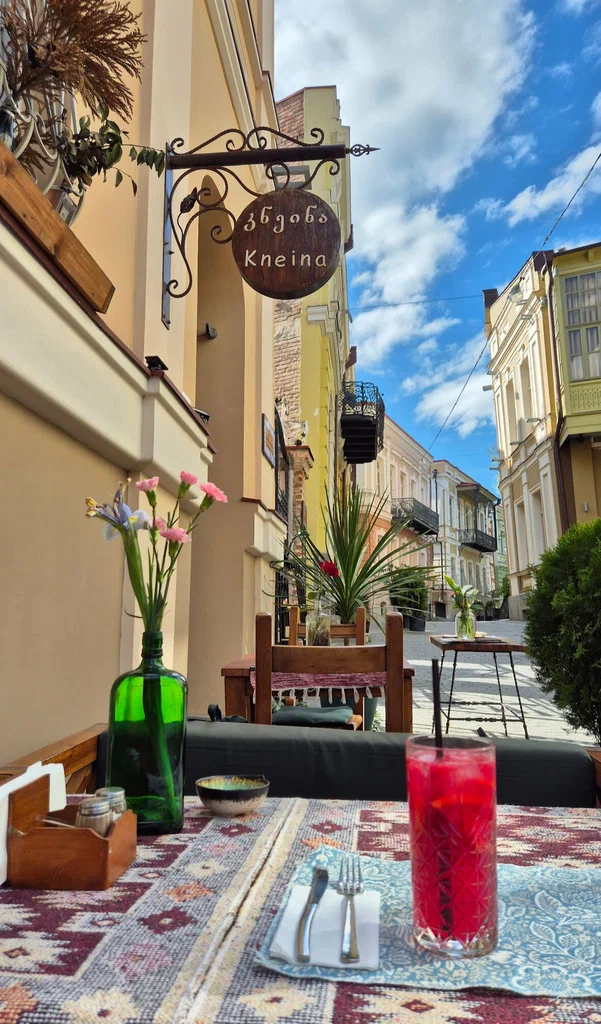
Perhaps the most personal meal was at Kneina, a family-run restaurant created inside the owners’ former home. The house belonged to the family’s grandmother, and rather than stripping away its history during the restoration, the owners chose to preserve it. Today, alongside the dining rooms, you’ll find archaeological discoveries uncovered on the property, including the remains of a centuries-old bakery, connecting diners with the building’s past. Gathering around a table that had belonged to the family’s grandmother for well over a century added something no carefully designed restaurant could ever recreate. It was as though we had been welcomed into a family home with generations of stories still living within its walls.
Our final evening was spent with dinner in Georgian House, and I honestly can’t imagine a better way to end the trip. Painted ceilings, glittering chandeliers and walls covered in artwork gave the restaurant the atmosphere of a grand gallery, while traditional music and dance performances unfolded around us throughout the evening. It was dinner and a cultural performance rolled into one, bringing together the food, music and hospitality that had defined our week in Georgia.
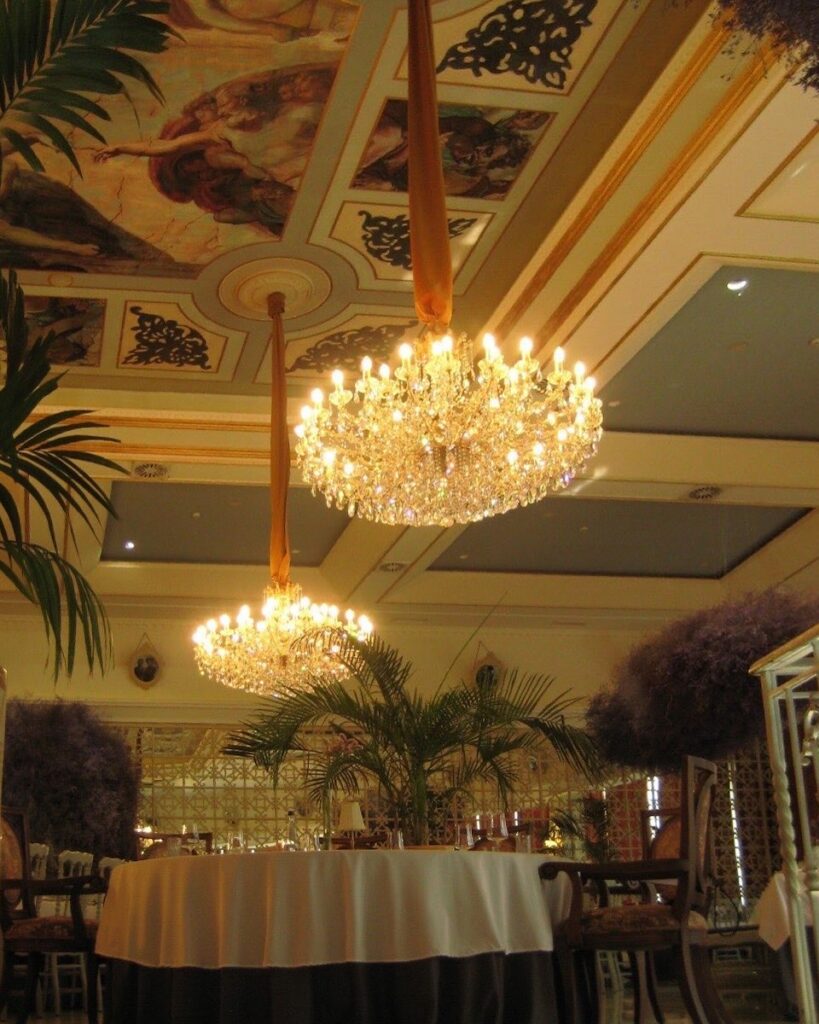
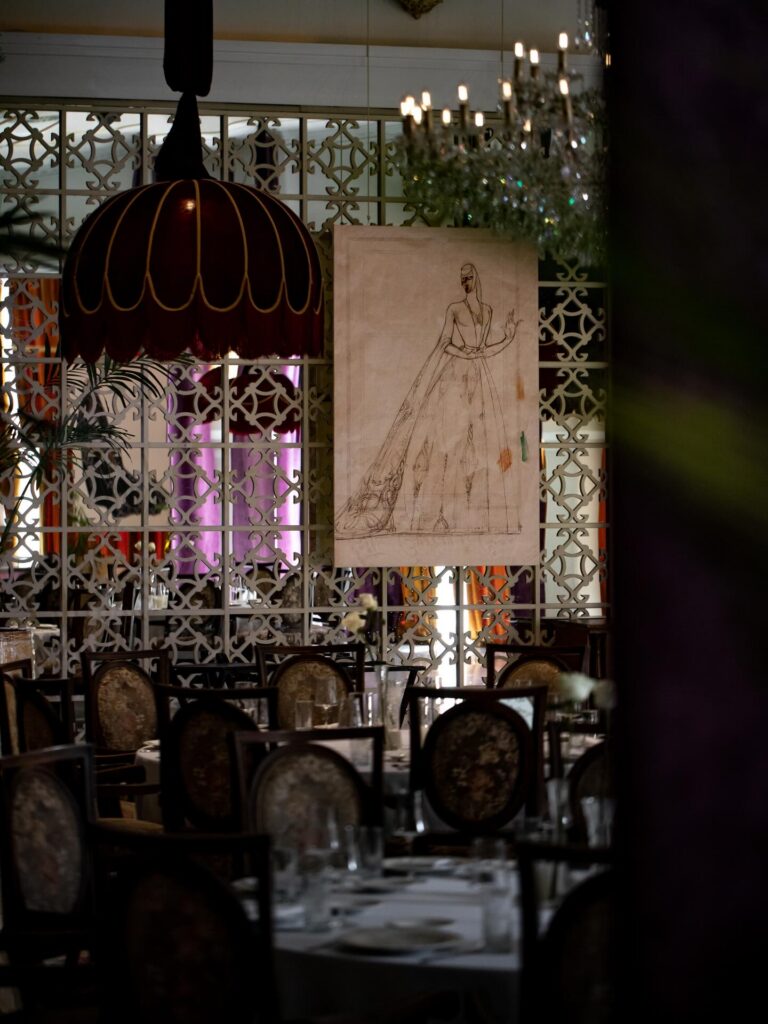
Our final evening was spent at Georgian House, and I honestly can’t imagine a more fitting farewell. By then, we’d spent almost a week discovering Georgia through its landscapes, history and food. That evening seemed to bring all of it together under one roof. The restaurant is truly spectacular. I insist everyone visiting Tbilisi to make a stop here.
Everything about Georgian House lends itself to celebrate the country’s heritage. Intricately painted ceilings, carved woodwork, glittering chandeliers and traditional artwork laden throughout the space transformed the dining room into a showcase of Georgian craftsmanship.
As the evening progressed, our table filled with dish after dish in classic supra fashion, while traditional polyphonic singers filled the space with music before making way for dancers dressed in beautifully embroidered national costumes, whose performances unfolded between the tables throughout the evening. Rather than watching from a stage at the end of the room, we were surrounded by it all, making the performances wonderfully immersive
Nakhvamdis, Georgia
Later that night, after returning to Telegraph Hotel to finish packing, I happened to look out of my window just as fireworks lit up the sky. They weren’t organised for our group, and I have no idea what they were celebrating, but they were a wonderfully timed final surprise.
A conversation with our guide, Kartlos, stayed with me. He explained that Georgians feel honoured to have guests. When someone visits their home, it’s considered a blessing and hosts go out of their way to make visitors feel comfortable, well-fed and looked after. Looking back, that perfectly described every experience we had throughout the week.
Kartlos also shared something else that I found rather beautiful. Georgians often refer to Georgia as their motherland, not their homeland. “Your country can change,” he told us, “but your motherland never changes.” It was a simple explanation, but it summed up the pride people have in their land and the deep connection they feel towards it.
As the flight home took off the following morning, I realised I’d come back to Georgia expecting to revisit somewhere I already loved. Instead, I discovered a country that felt entirely new all over again. Nakhvamdis, Georgia. Until we meet again.
to discover more about Georgia Tourism visit, https://georgia.travel