
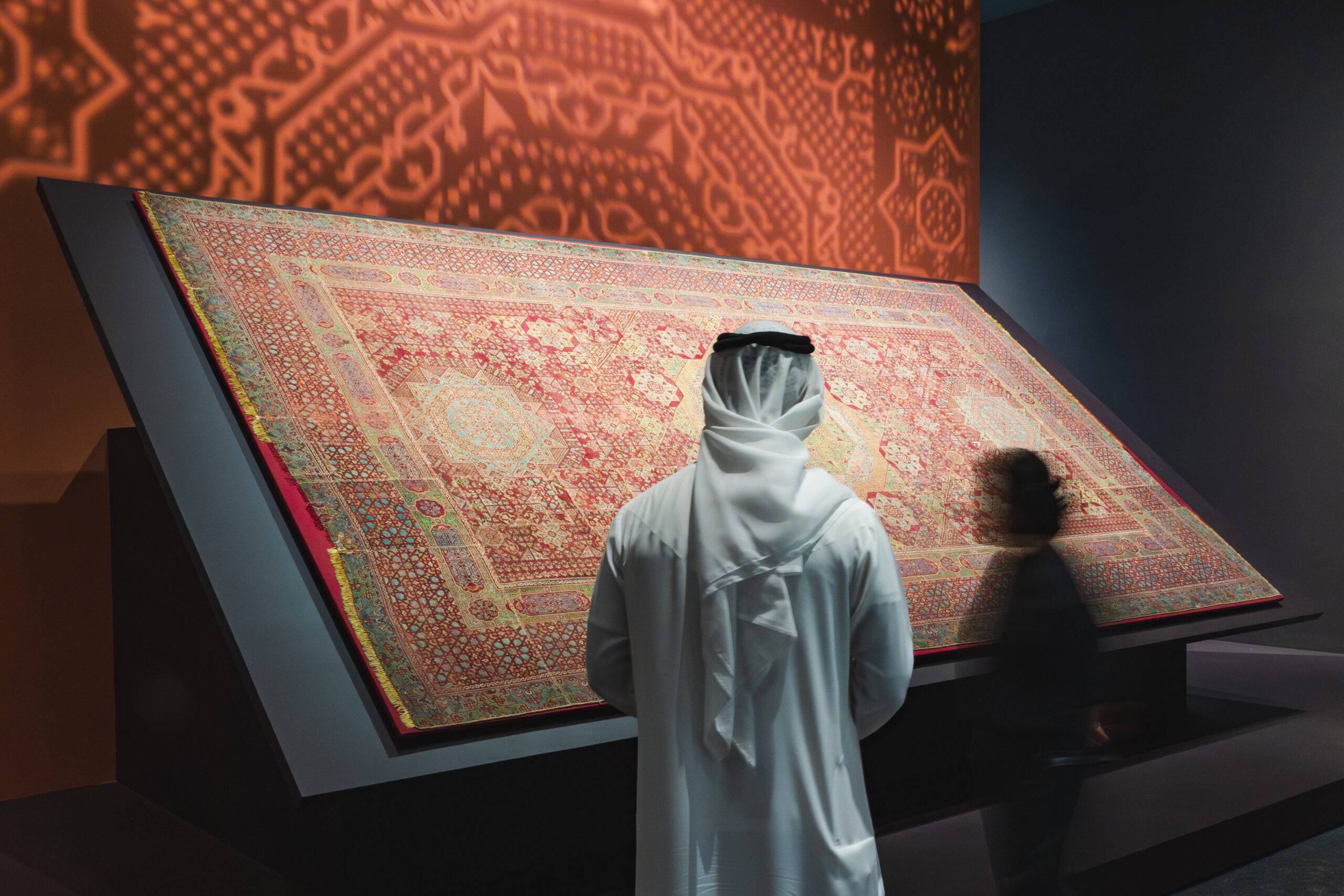

Spanning seven thematic sections, the show comprises over 270 works drawn from 34 museums and institutions in 13 countries. Visitors can get close to objects that rarely leave their home collections, including the dazzling Baptistery of Saint Louis, a Key to the Kaaba inscribed with the name of Sultan Faraj and a Venetian painting that captures a diplomatic mission in Damascus. From intricately engraved helmets to rare Qur’anic manuscripts and carpets, the works highlight both the grandeur and the everyday life of the empire.
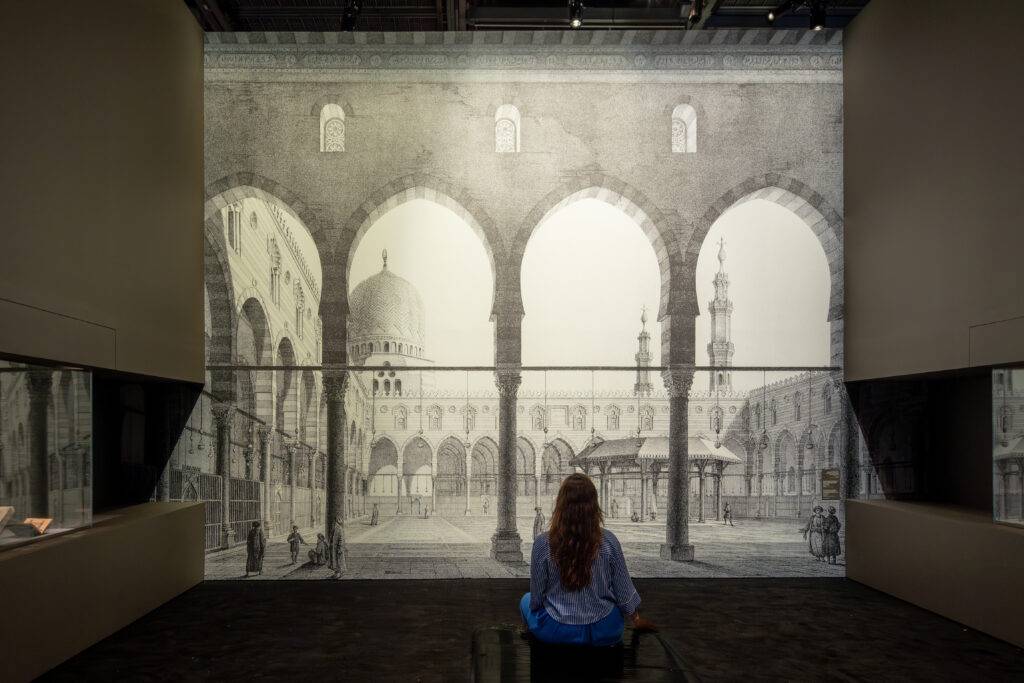
The exhibition, which debuted at the Musée du Louvre in Paris earlier this year, has been expanded for Abu Dhabi with regional loans that underscore the deep ties between the Gulf and the wider Islamic world. Alongside the artefacts, interactive screens and a packed cultural programme, from curator talks to family workshops, ensure visitors can engage with the history on multiple levels.
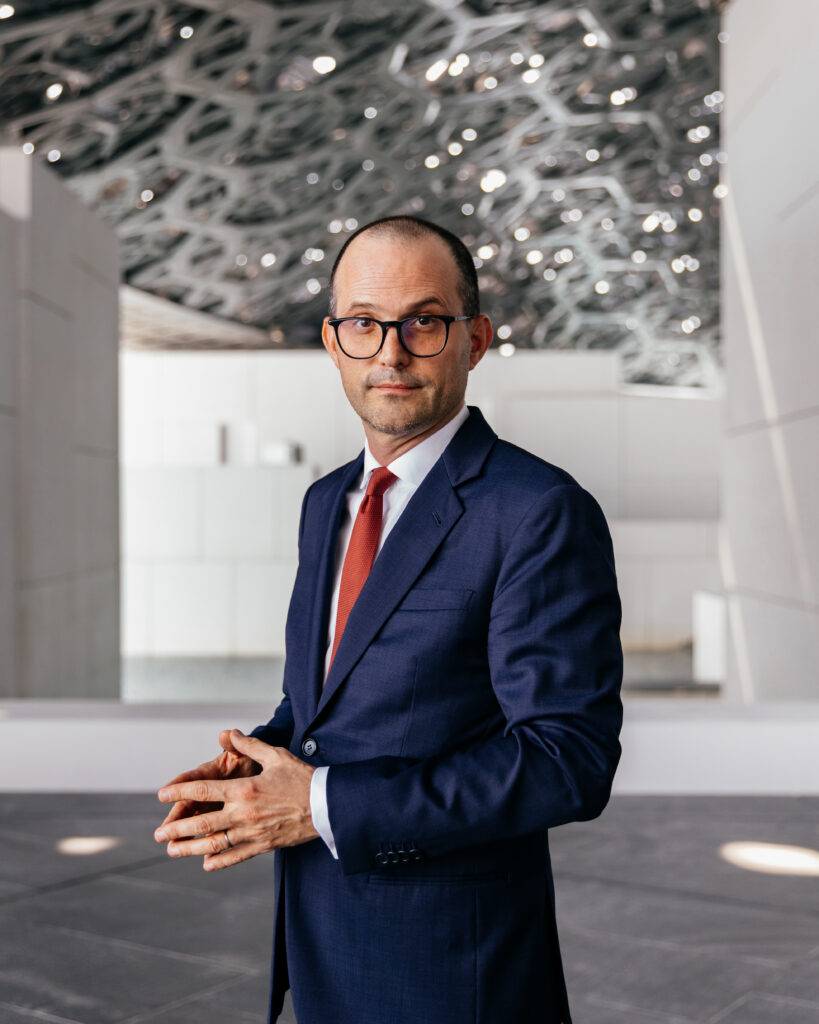
A Conversation with Louvre Abu Dhabi’s Director Manuel Rabaté
What’s the most rewarding part of leading a museum like the Louvre Abu Dhabi?
The most rewarding part is in the morning when I arrive at the museum early and see the kids coming on the school buses. Honestly, it’s so cute.
We have a significant number of activities and during the school year, we welcome a large number of students. Of course, this mainly happens in the morning, so we even open the museum a little earlier for them. When you see these kids, it always brings a smile to your face and at the same time solidifies our mission of nurturing curiosity and creativity.
If you had to recommend one exhibition to someone visiting for the first time, which would it be?
Our exhibitions are sequential, so there is almost always something new at Louvre Abu Dhabi. Today, I would recommend Mamluks: Legacy of an Empire because that is what we’re currently offering to the world.
If you ask me about my favourite artworks, there are many I could choose from within the galleries. Still, for a first-time visitor, I recommend finding the right balance: start with the permanent galleries, where you can understand the museum’s DNA and the connected history of art spanning 10,000 years, presented in a chronological approach. That’s the backbone of the museum and it should not be missed. Then I would recommend never missing the temporary exhibitions that we host.
What’s a little-known fact about the museum that people might not expect?
Did you know that the incredible dome weighs as much as the Eiffel Tower? You have to imagine there is so much stainless steel and aluminium that its weight equals that of the Eiffel Tower. Of course, the Eiffel Tower stands tall while our dome spreads out like a sky over us, but structurally, they carry the same weight.
What’s your favourite spot inside the museum and why?
As a museum director, you have to remain mobile. A museum is a place where we welcome people and care for artworks, but by nature, it is constantly evolving. Depending on new loans or new acquisitions, the museum shifts and transforms. The same happens with visitors. They come, they choose, they create new focal points. For instance, we discovered that there is one spot under the dome where people love to stand in the “rain of light,” take selfies, or ask a friend to take their picture.
We even created an offer to provide a professional photographer there, but the visitors themselves chose this spot as a place of interest. Similarly, there are artworks or areas, like the Olmec heads at the entrance, that people naturally gravitate toward. So for me, there isn’t just one favourite spot. The museum keeps revealing new ones.
What do you hope visitors will take away from this exhibition?
I hope they take away a sense of the strength and beauty of the Mamluks. They were fighters against adversity but also lovers of beauty and knowledge.
If people can appreciate the significance of this showcase and understand the sense of belonging it conveys. Belonging does not mean being disconnected from the rest of the world, but rather it means knowing who you are, your values and what matters to you and then connecting outward. That would be pretty meaningful. Of course, I would hope visitors also appreciate the 270 beautiful masterpieces of Islamic art on display.
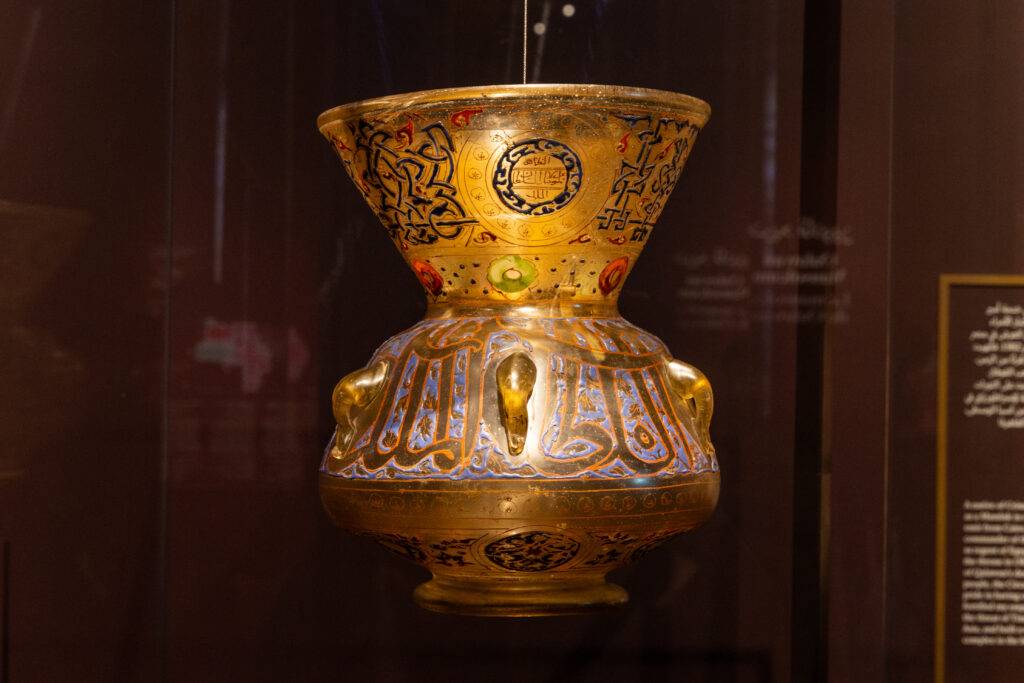
What does the Mamluk era represent in the broader story of world history and why is it important to showcase this here in Abu Dhabi?
Islamic art is vast and diverse, but not all of its legendary moments are well known.
For us, it was essential to unravel the Mamluk legend, to explore its diversity, origins and functioning.
This exhibition allows you to zoom in on one of the many golden ages of Islamic civilisation, to understand its strength, its complexity, its connectivity and its relevance for the world.
What is one star piece you think will truly capture visitors’ imagination?
There are many. One example is the Furusiyya, the beautiful armoire, which is haute couture. It’s fascinating because it’s an object of war, yet it’s also an object of such beauty that you can’t help but fall in love with it.
Another star piece is the Mamluk Carpet, one of our masterpieces. It went to Paris for the exhibition and has returned to be a highlight here. We cannot touch it, it is extremely fragile and precious but it is an absolute centrepiece of the show.
It’s also interesting to see how the carpet is displayed differently in the permanent collection, it connects with other objects. In contrast, here it is presented as the climax of the exhibition. It allows us to rediscover it in a new way.
The exhibition has multiple pieces on loan, did you face any challenges in securing them?
We are very fortunate to have an incredible network of institutions working with us. The Louvre in Paris, of course, is a long-term partner, so that relationship secured a significant part of the exhibition from the start. It was also crucial for us to include pieces such as the Furusiyya, as well as loans from the Benaki Museum, the Chester Beatty and some of the finest Islamic art collections in the Western world. We also had support from partners in Doha, Riyadh, Kuwait and the UAE.
Yes, it is always a challenge, but it’s also stimulating. This is how you build long-term relationships between institutions, objects, teams, scholars and registrars. The objects move, the institutions connect and people come together. That’s what makes it worthwhile.