

London Fashion Week has always made room for opposing ideas to exist side by side. This season, Flair Fashion’s UNFOLD Collective embraced that spirit, bringing seven distinct voices together for a showcase that questioned what femininity can look like when it is freed from a single definition.
Rather than presenting one interpretation of the modern woman, UNFOLD allowed multiple perspectives to coexist. Across couture, ready-to-wear, embroidery and contemporary craft, the collections explored heritage, displacement, memory, womanhood and the relationship between the body and clothing.
The result was a showcase connected less by aesthetic uniformity than by a shared willingness to ask questions.
Belsize25: From Fresco to Water
For Belsize25, SS27 began in Rome.
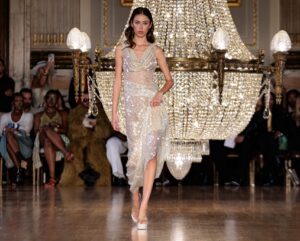
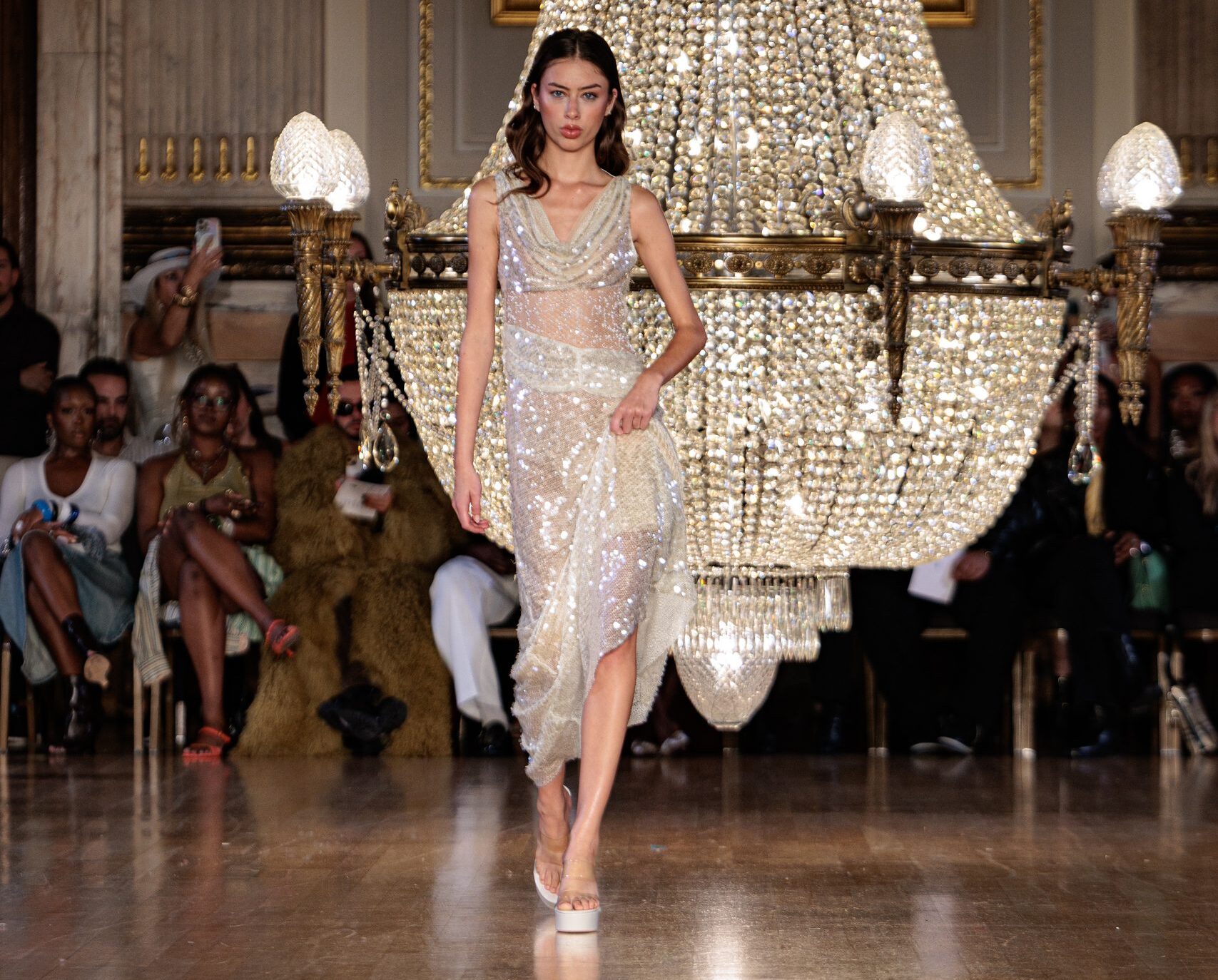
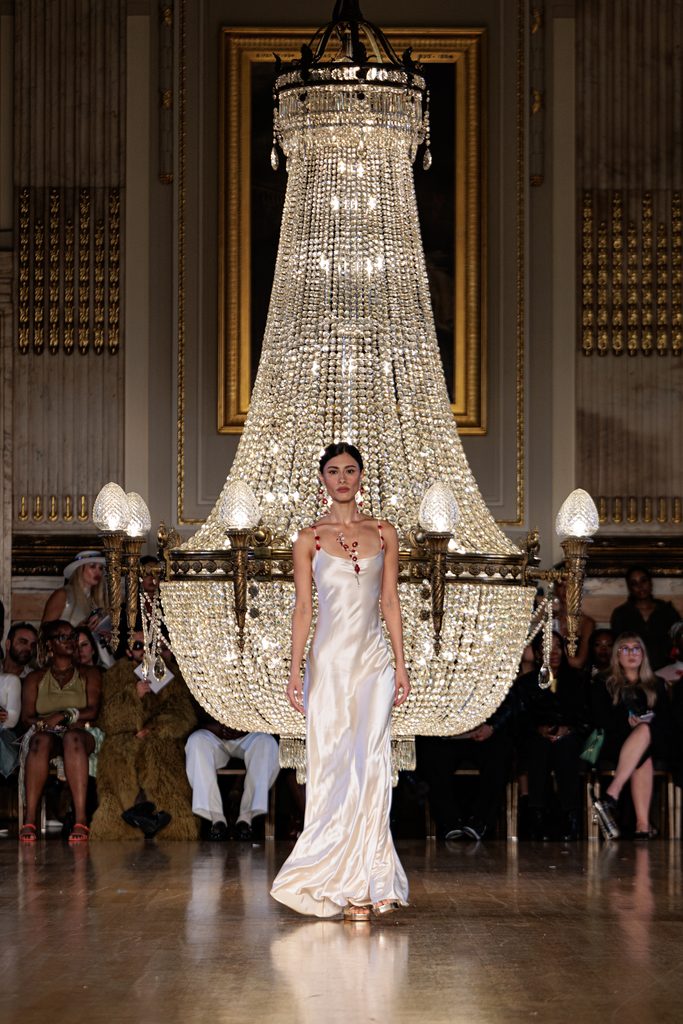
Titled Diana’s Bath, the collection takes its inspiration from the Bagno di Diana within Rome’s Palazzo Doria Pamphilj, an ethereal private bathroom commissioned by Prince Filippo Andrea Doria Pamphilj for his English bride.
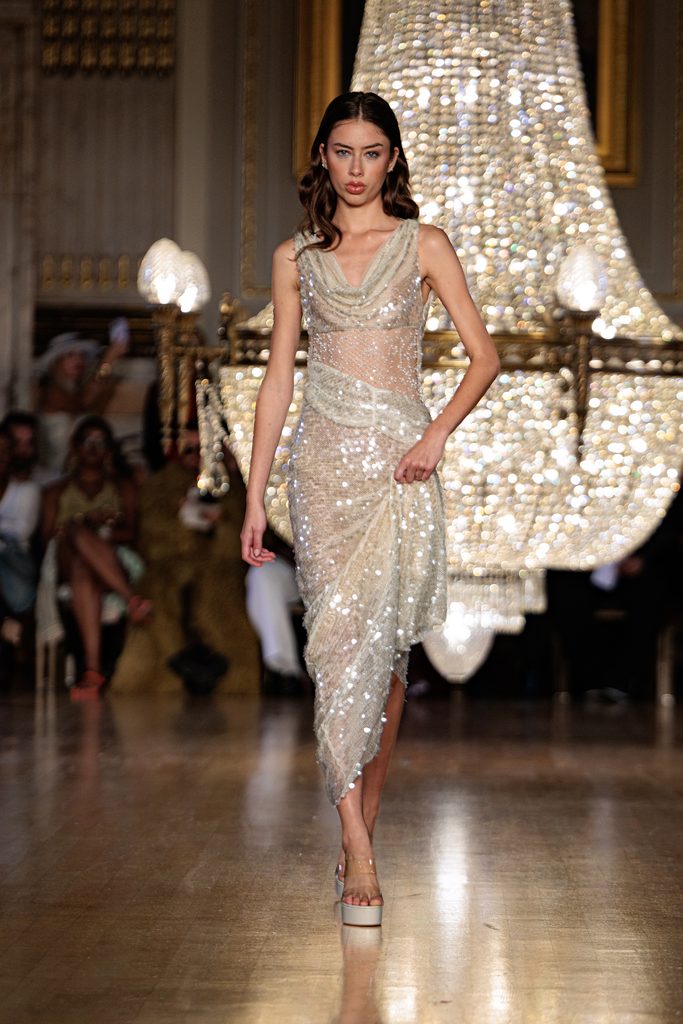
The romance of the frescoed room is translated into flowing silk chiffon, delicate draping and silhouettes that appear almost suspended. The blue reflections associated with the bath become aquatic tones and fluid satin, while nude-toned fabrics and delicate sequins evoke the suggestion of luminous skin beneath the surface of water.
It is a collection concerned with movement and transformation, moving from fresco to water, and from water to skin.
The philosophy of Belsize25 is similarly poetic. Adapted from a Chinese proverb, its guiding idea suggests that the greater retreat lies not in the forest, but in the city. Here, that tension between the outside world and an imagined private sanctuary becomes part of the collection itself.
Juliene Couture: Twenty Thousand Stories
For mother-and-daughter duo Luljeta and Ylberine Lushtaku, fashion becomes a vessel for memory.
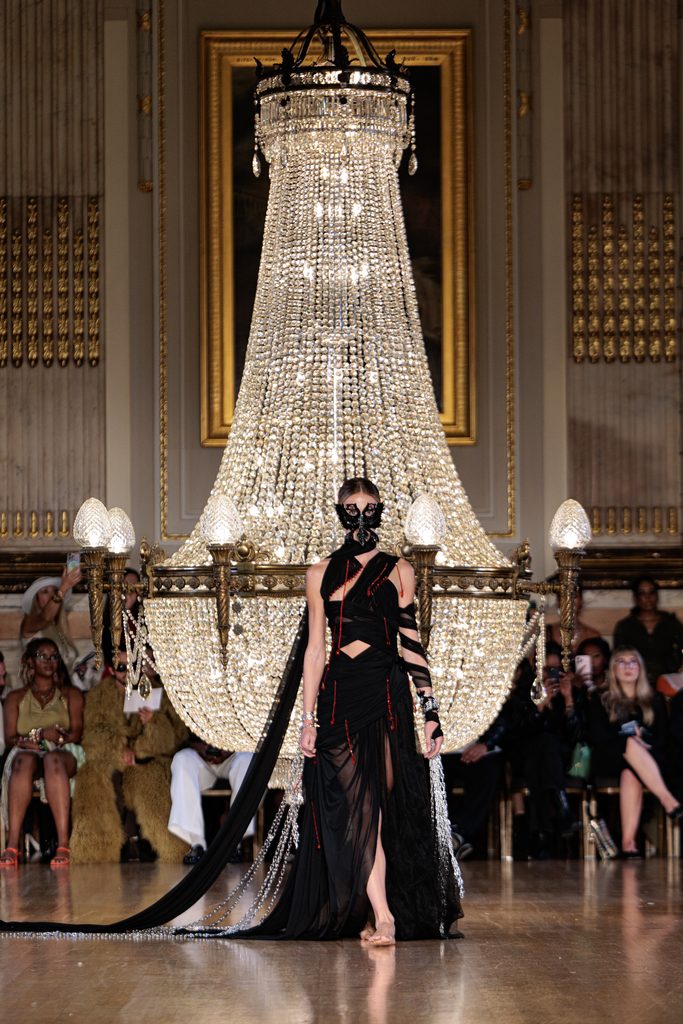
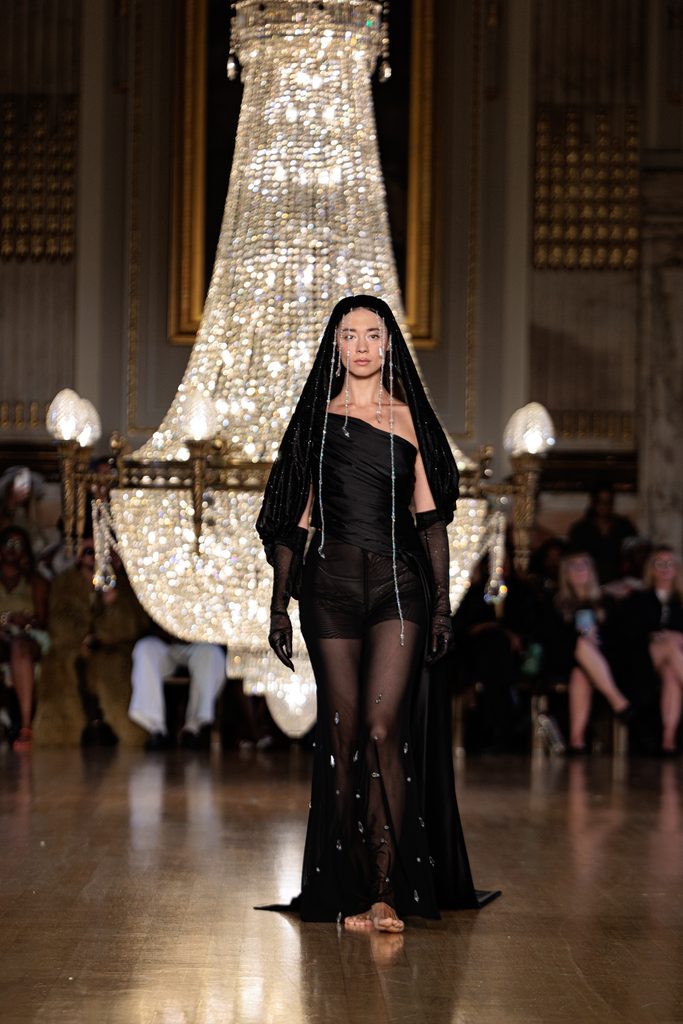
Supported by Grow Kosovo and Diverse Academy of Fashion, Juliene Couture presented 20,000 Stories, One Memory, a six-look collection addressing the legacy of conflict-related sexual violence experienced by women and girls during the 1998–1999 Kosovo War.
The collection does not attempt to recreate violence. Instead, it considers what remains afterwards.
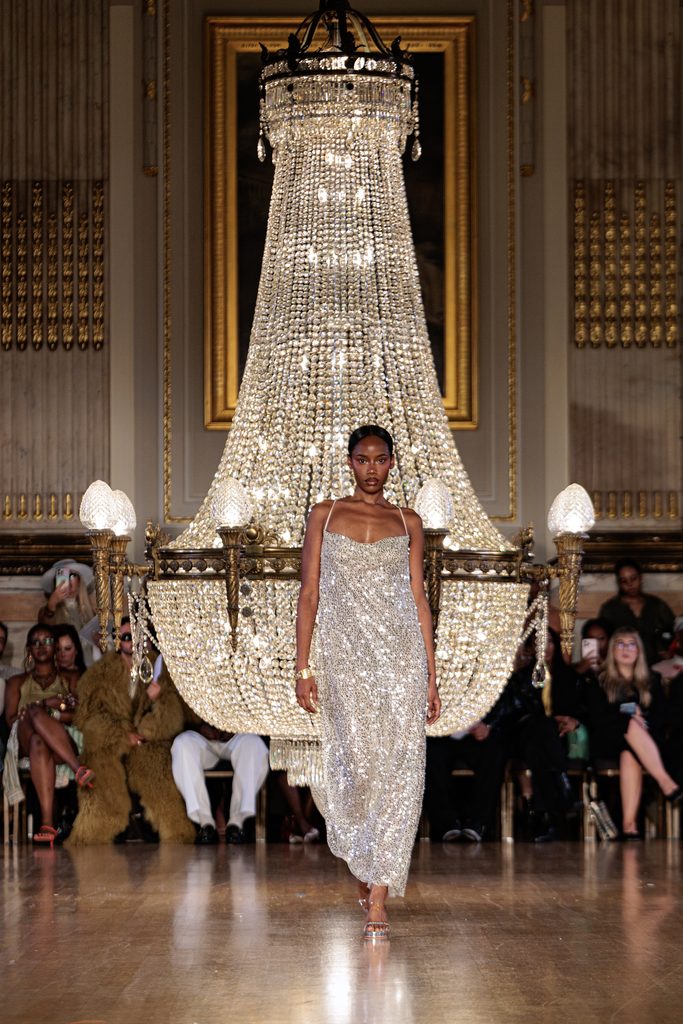
Concealed forms, chains, tulle, silk, rubberised lycra and crystal fragments create a visual language of silence, restraint, burden and remembrance before gradually moving towards visibility and renewal.
The title refers to the estimated 20,000 survivors recognised within Kosovo’s public memory, while acknowledging that the true number remains unknown. Through clothing, Juliene Couture gives form not to the violence itself, but to questions of dignity, identity and collective memory.
Nesse’s Aure: Finding a Way Home
Displacement takes a different form in Nesse’s Aure’s Regrounded.
Also supported by Grow Kosovo and Diverse Academy of Fashion, the collection explores the forced migration of people from Kosovo during the war and the complicated emotional relationship between departure and homecoming.
Across six looks, objects associated with movement and memory become symbols: luggage, old letters, keys, stamps, torn fabrics and footprints. At the centre of the collection is the idea of roots, representing the ties to a homeland that can remain intact even after physical separation.
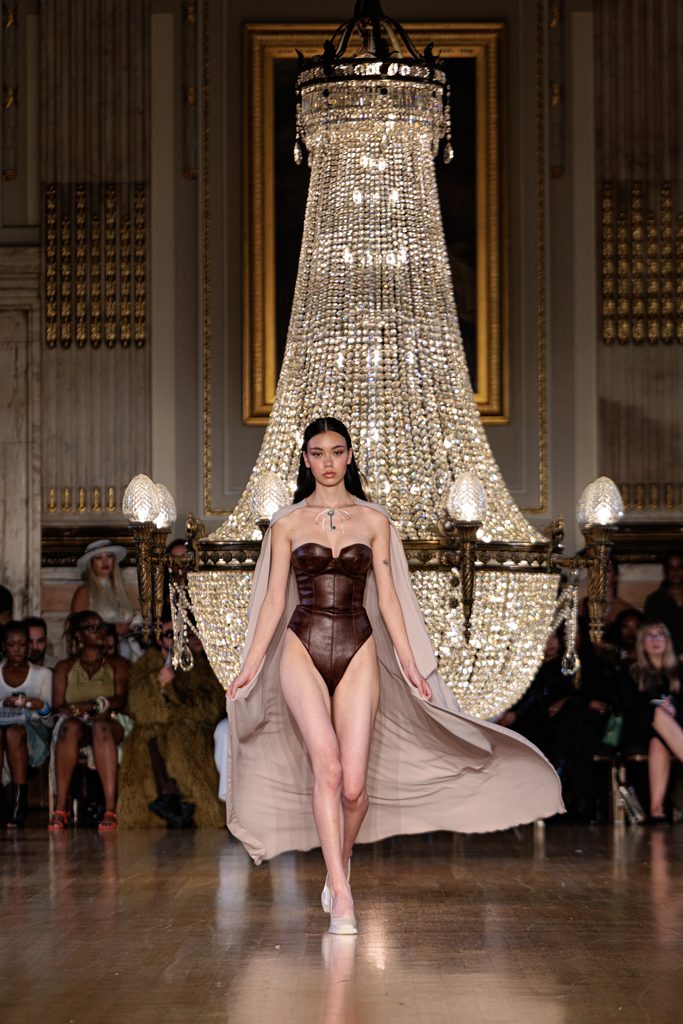
For Nesse’s Aure, femininity is expressed through strong, sculptural silhouettes. Corsetry and waist definition establish a dialogue between structure and the female form, creating pieces that feel both expressive and assured.
Ultimately, Regrounded is about return. Not simply returning to a physical place, but reconnecting with identity, heritage and the sense of belonging that displacement can disrupt.
Hayal Couture: Heritage, Reimagined
At Hayal Couture, heritage becomes something alive.
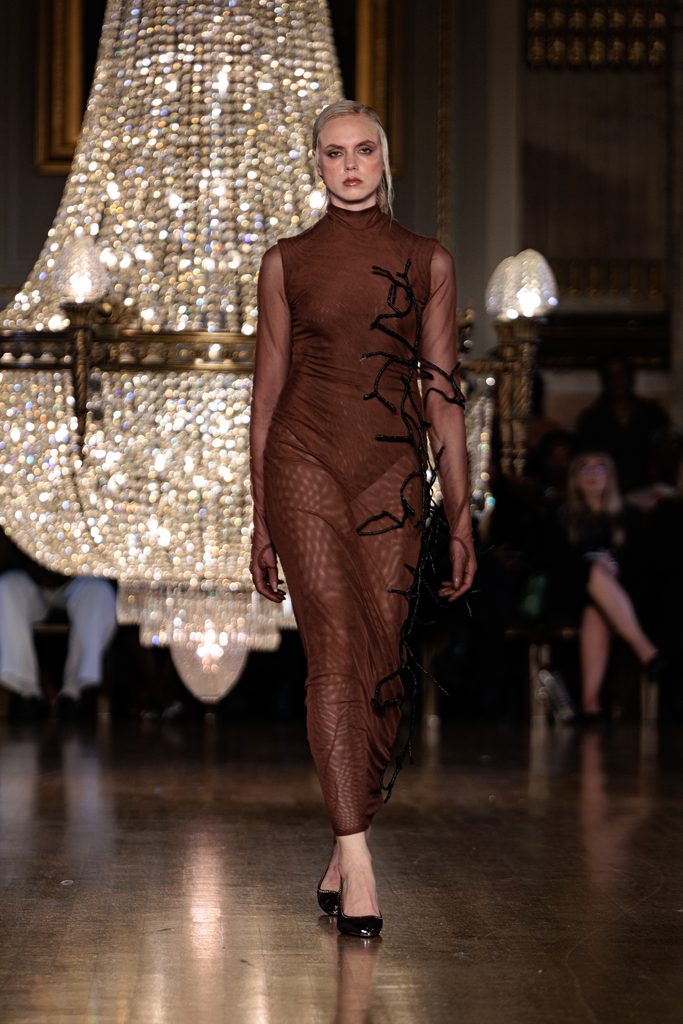
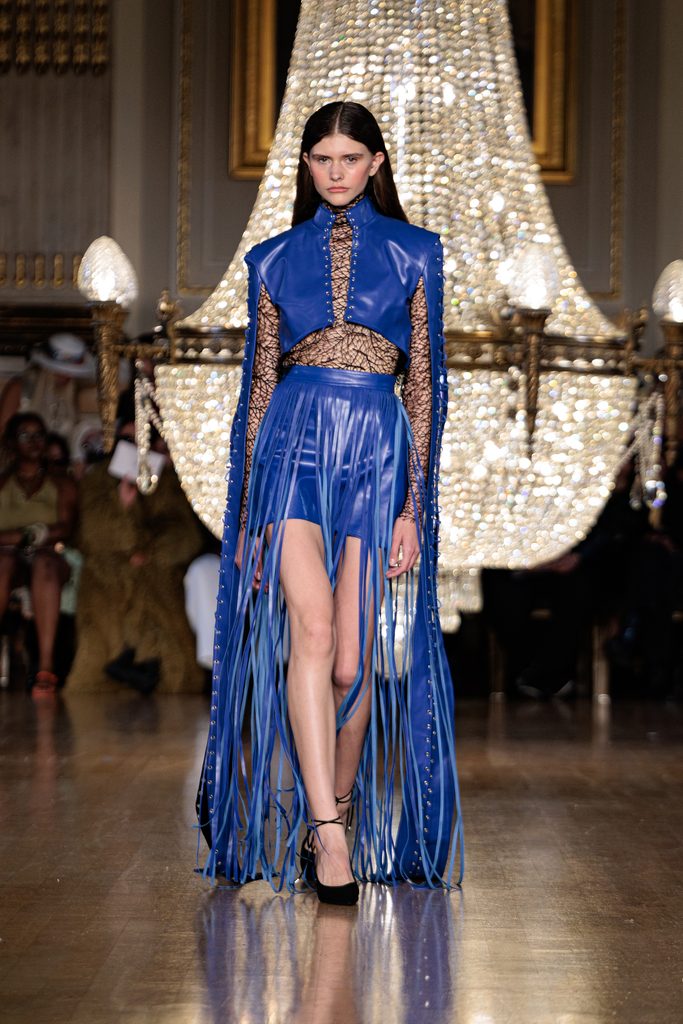
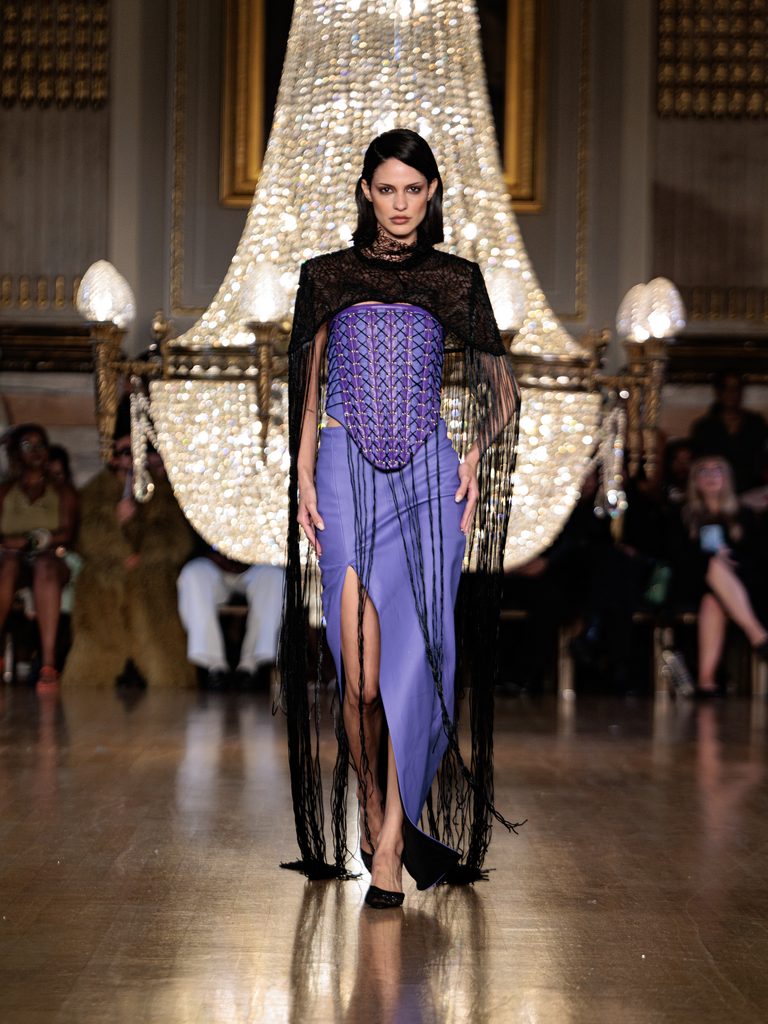
Unseen Heritage traces a journey from the cobblestone streets of Albania to the rain-soaked streets of London, bringing together different generations and geographies through contemporary couture.
Rather than treating tradition as something preserved behind glass, the collection takes cultural memory apart and reconstructs it. Traditional details are reinterpreted through leather, metal, eyelets, sculpted corsetry and elongated fringes, while Oya, a delicate handmade craft passed down through generations, provides a softer counterpoint.
The collection is built around contrasts: softness against structure, delicacy against strength, and history against the present.
Even the house’s name reflects its philosophy. Hayal means “dream”, and each creation begins with an imagined form before being transformed through craftsmanship into something tangible.
SSLB: Nature Is Never Still
For SSLB (Seven-Spot-Ladybird), transformation comes from nature.
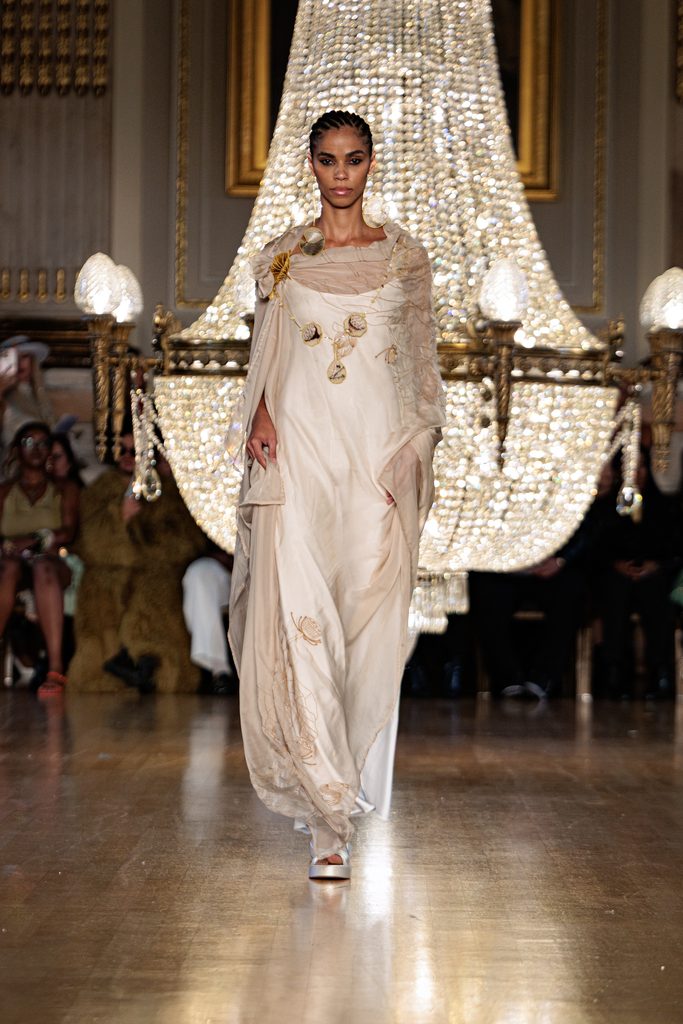
The brand, known for its hand-embroidered accessories and commitment to preserving embroidery techniques, continued its exploration of Nature & Creatures with a nine-look collection centred on the passage of time.
The lotus becomes its central motif, followed through its entire life cycle: blooming in summer, transforming and eventually fading into its sculptural autumn form.
Rather than treating beauty as something fixed at its peak, SSLB embraces every stage of existence, from blooming and transforming to fading and becoming anew.
Chinese feitian embroidery, with its sense of movement and ethereal quality, gives the collection a distinctive lightness. The final transition comes through the peacock, traditionally associated with beauty and good fortune, bringing the story towards a final expression of vitality and splendour.
The message is simple, but resonant: nature is never still.
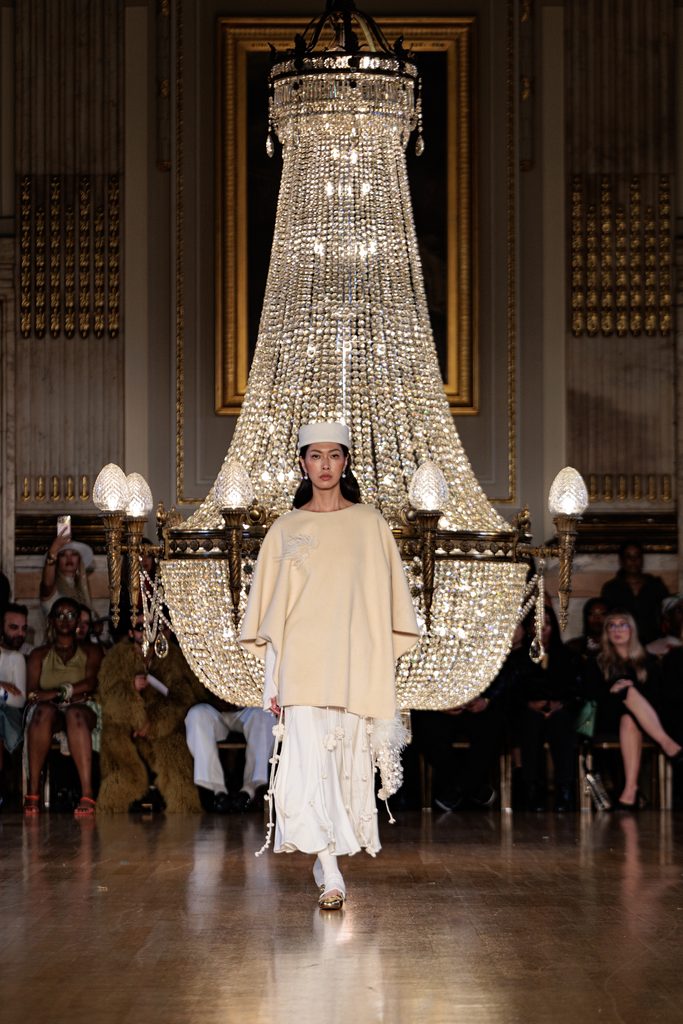
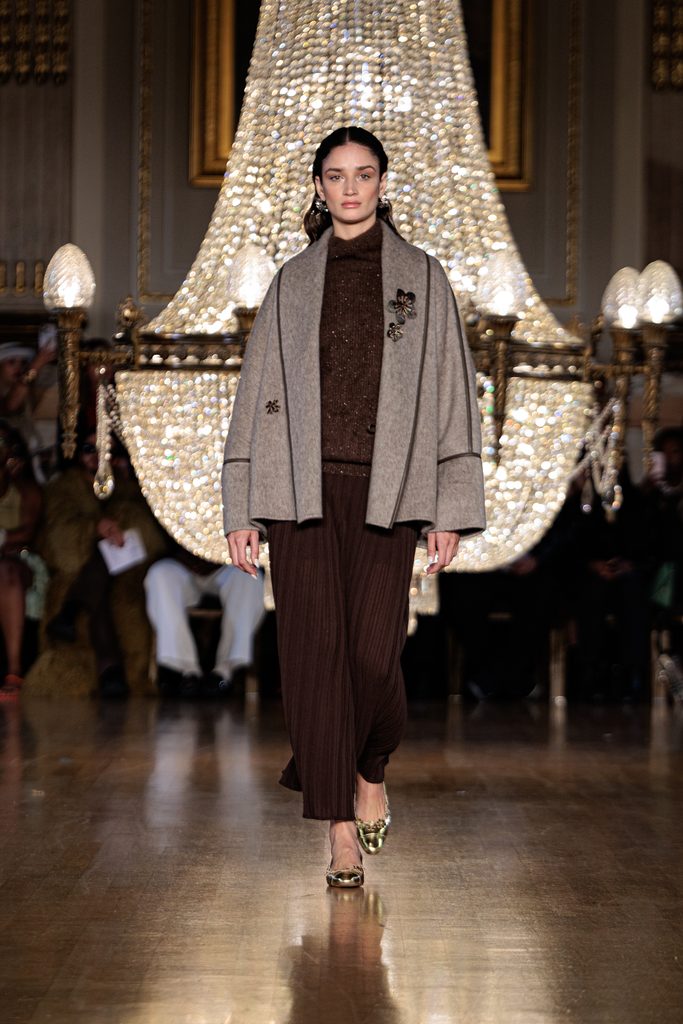
For Poem: Clothing as a Brushstroke
For Chinese designers Leah Fu and Pan, clothing becomes something closer to painting.
Their Interbloom series draws inspiration from Japanese graphic artist Hidetoshi Mito, combining traditional Chinese motifs with an artistic language influenced by his work.
Each look is imagined almost as a brushstroke across textured washi paper. The silhouettes remain quiet and considered, allowing the detail to emerge through feather-trimmed lapels, crochet flower fringes and delicate fabrication.
The effect is subtle rather than theatrical.
For Poem, whose name refers to “poetry” or “beautiful things”, approaches clothing as more than something functional. Its designs are intended as expressions of attitude for the modern, independent woman, with minimalist silhouettes providing space for craftsmanship and detail to speak.
GG CHENN: Inherited Womanhood
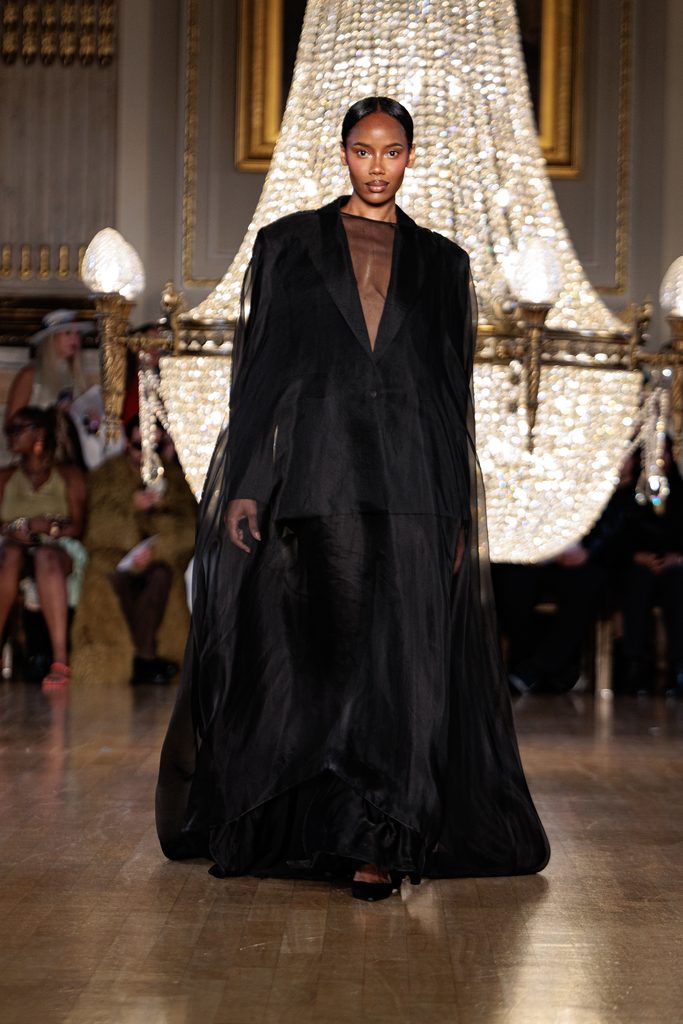
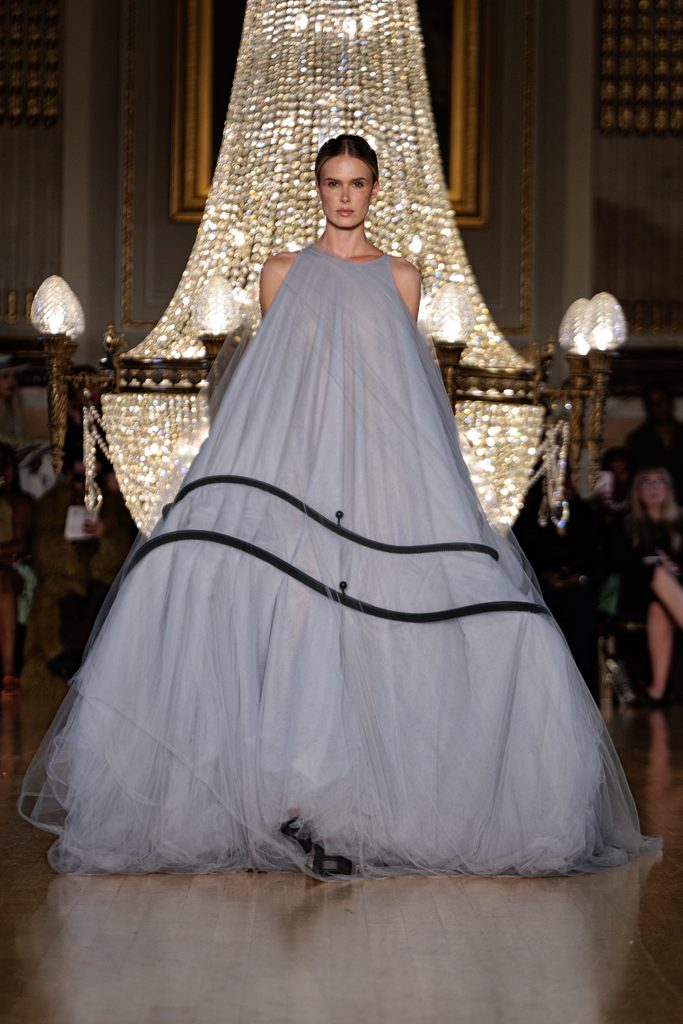
The newest voice within UNFOLD, GG CHENN, brings the conversation firmly into the present.
Founded in London in 2026 by designer Gigi Chen, the womenswear label explores the relationship between material, construction and the body through both ready-to-wear and atelier pieces.
Its debut collection, Embodied Memory, considers femininity as something inherited, passed from grandmother to mother to daughter.
For Chen, who grew up between countries, womanhood is shaped by generations of expectations surrounding duty, care and deference. These ideas are translated into garments through a dialogue between softness and rigidity.
Sheer layers are contrasted with metal frames inspired by her grandmother’s jewellery, creating pieces that carry physical traces of memory while questioning the expectations attached to them.
It is an exploration of identity as something we inherit, but also something we can reshape.
Seven Voices, One Conversation
What makes UNFOLD compelling is that its seven designers do not attempt to arrive at the same conclusion.
Instead, they approach femininity from entirely different directions.
One looks to a Roman fresco and the movement of water. Another confronts the memory of war. One examines displacement and the meaning of home, while another transforms inherited craft into contemporary couture. Elsewhere, nature becomes a metaphor for transformation, painting becomes clothing, and generational memory becomes the foundation for a new label.
Together, they suggest that there is no single way to dress, construct or understand femininity.
At a time when fashion can sometimes feel dominated by repetition, UNFOLD offers something more personal: seven designers with seven histories, seven visual languages and seven ideas of what the woman of today can be.
Not agreement, but conversation.
Not one definition of femininity, but many.
That is where UNFOLD finds its voice.