
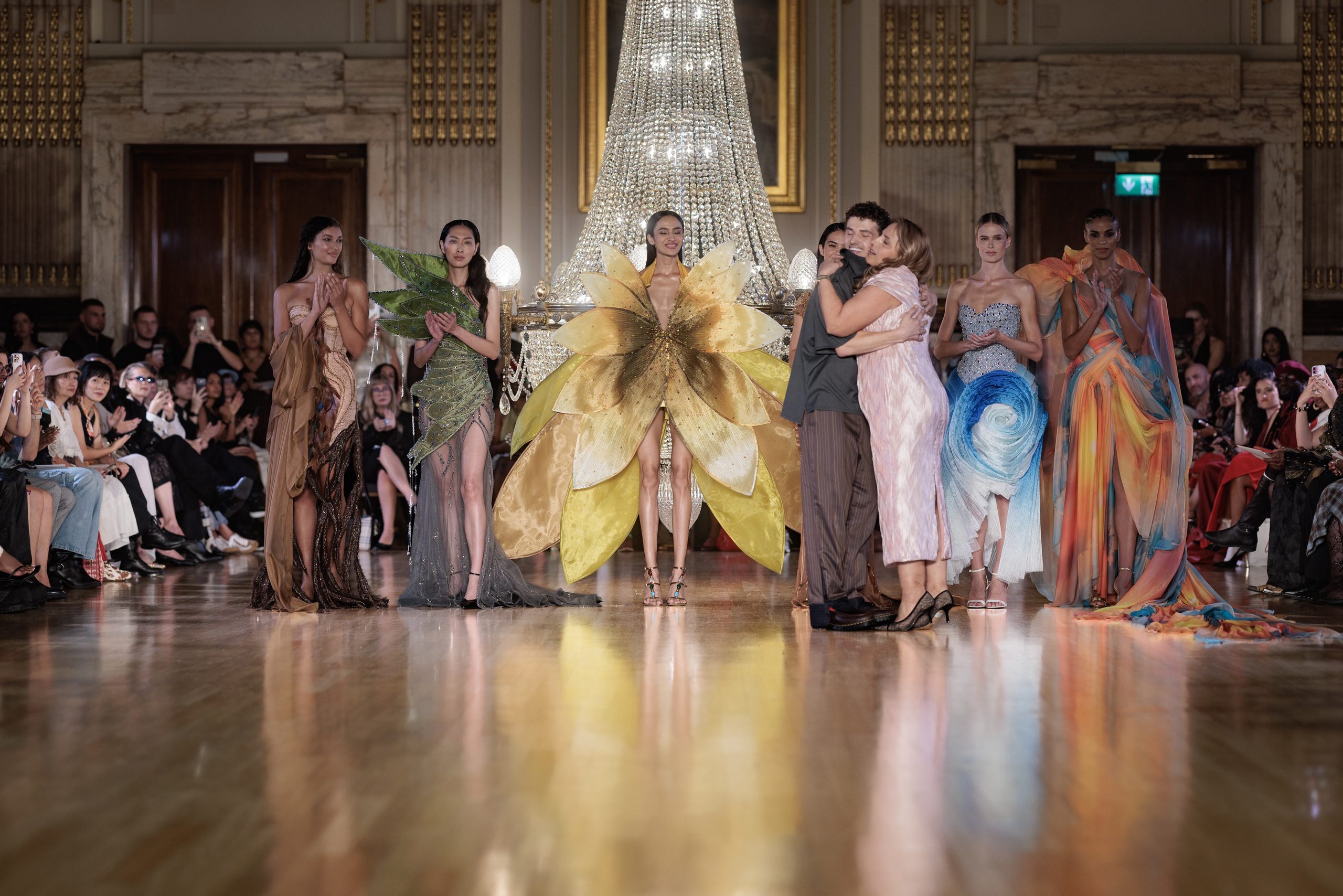

Flair Fashion returned to London Fashion Week on 19 September 2026 with IGNITE Collective SS27, a showcase dedicated to eight emerging designers redefining what contemporary fashion can look and feel like.
Rather than presenting a single aesthetic, the runway brought together distinctly different creative perspectives, spanning couture, wearable technology, post-streetwear, conscious design, nostalgia and theatrical costume. Together, the collections reflected a generation of designers less interested in following established fashion formulas and more concerned with creating their own visual languages.
The result was a runway centred on creative independence, craftsmanship and experimentation, giving each designer the space to explore ideas that sit beyond conventional seasonal dressing.
Gashani: Nature, Transformation and the Golden Hour
Made in Kosovo and created for generations, couture house Gashani translates emotion and the poetry of the natural world into meticulously crafted garments.
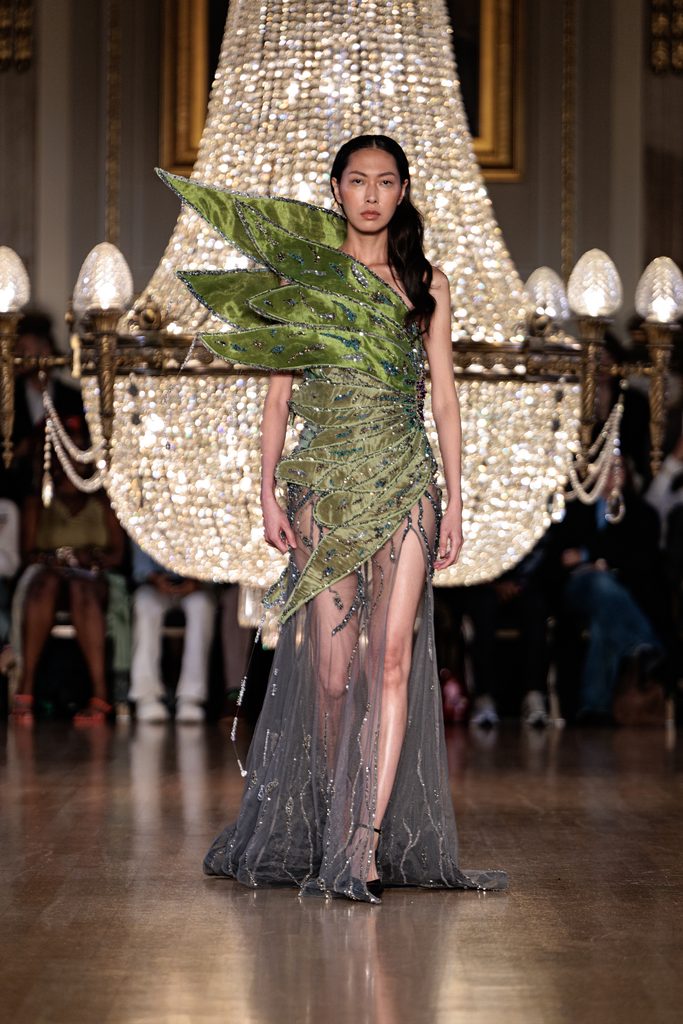
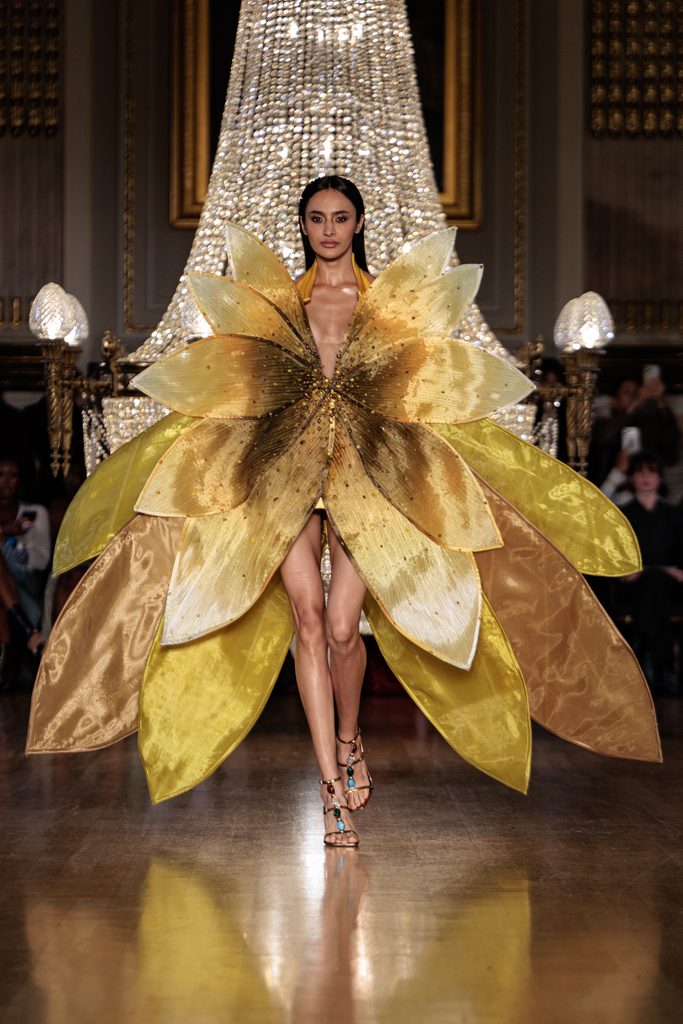
For Spring/Summer 2027, The Golden Hour explores transformation through the imagery of roots, wings, sunlight, water and movement. Sculpted corsetry and delicate beadwork establish a connection to the earth before the collection evolves into butterfly-inspired silhouettes, blooming golden petals and fluid oceanic forms.
The final look, a weightless chiffon gown painted in the colours of the golden-hour horizon, brings the collection’s central ideas together. Nature, light and couture become intertwined, creating a collection that moves from grounded strength towards freedom and flight.
Supported by Grow Kosovo, Gashani’s presentation placed craftsmanship and emotional storytelling at the centre of the runway.
Quarez: Fashion as Protection and Expression
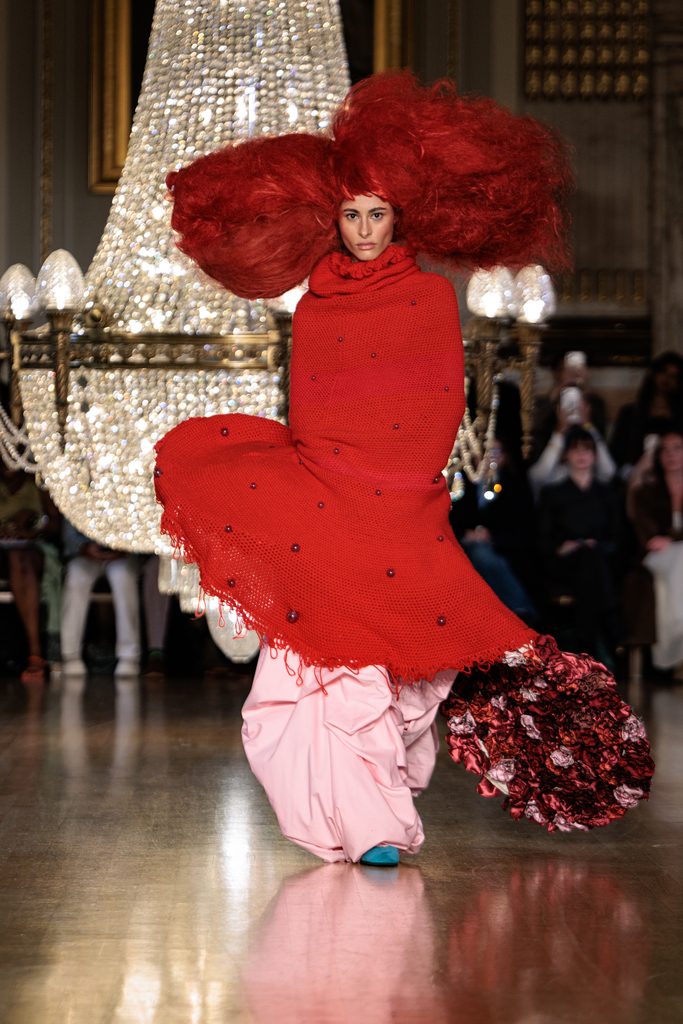
For Quarez, fashion is less about conventional branding and more about giving physical form to ideas.
Drawing deeply from childhood, the designer explores vivid imagination, vulnerability and freedom, transforming memories of colour, print and familiar silhouettes into something surreal and unexpected.
The SS27 collection uses pre-existing materials as a starting point, allowing reuse and limitation to become part of the creative process. Exaggerated proportions, protective silhouettes and distorted forms create garments that feel almost like wearable shells.
The collection considers what clothing can offer beyond appearance: a place to hide, transform or disappear, while simultaneously allowing something more vulnerable to emerge.
Femininity is explored through awkwardness, imagination and the perspective of the deeply shy child, creating a world somewhere between reality and fantasy.
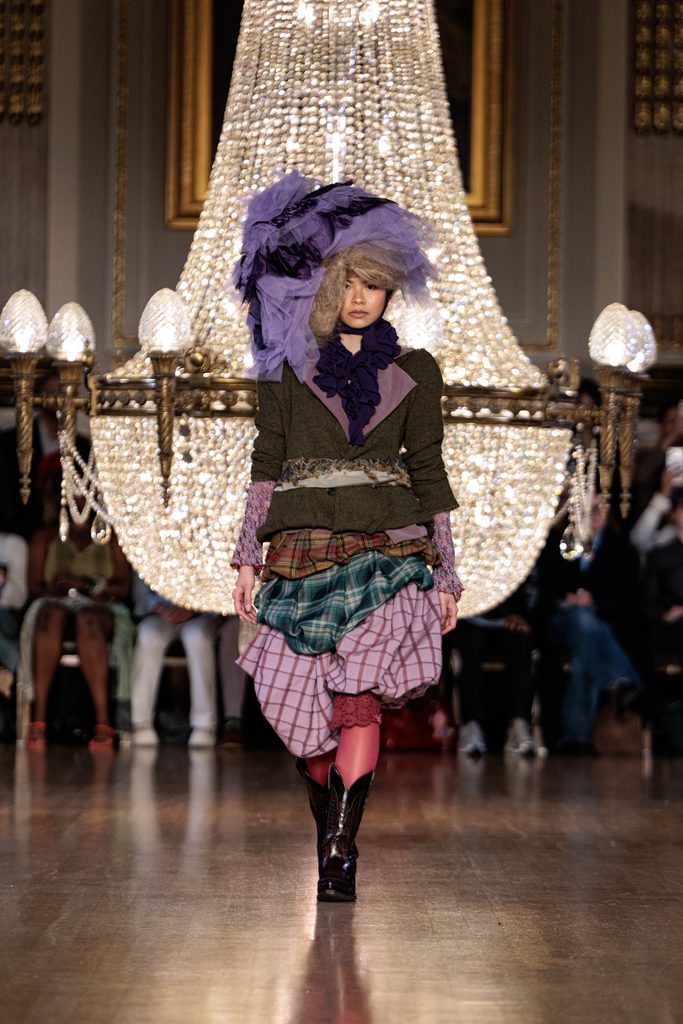
Berth: Dreamers, Nostalgia and the Spirit of the 1970s
Founded in 2014 by fashion designer Afa Tsang, UK-based Berth has developed a distinctive modern-vintage language across womenswear, menswear, kidswear and accessories.
Sculptural silhouettes, geometric forms, bold colour blocking, Art Deco influences, unexpected textiles and original prints define the brand’s eclectic approach.
For SS27, Gathering Of Dreamers looks towards the free-spirited energy of the 1970s hippie and bohemian movement.
Layered silhouettes, rich textures, diverse fabric combinations and cascading fringes create movement throughout the collection, while dream-catcher motifs, florals, embroidery and ethnic-inspired patterns reinforce its romantic spirit.
At its core, the collection is an invitation to embrace individuality, connection and the freedom to dream.
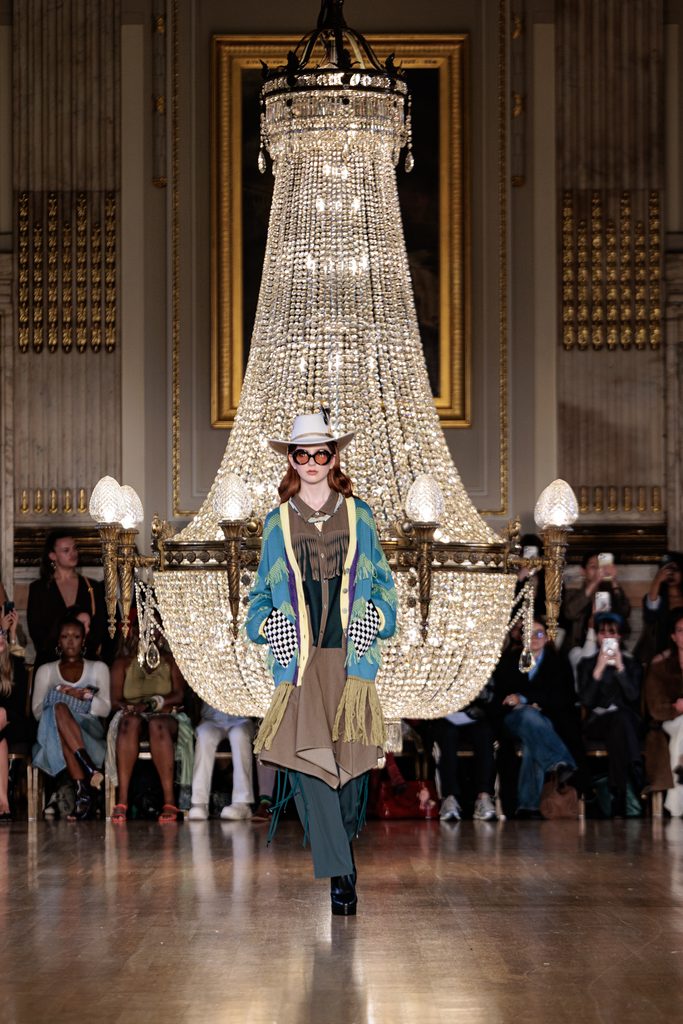
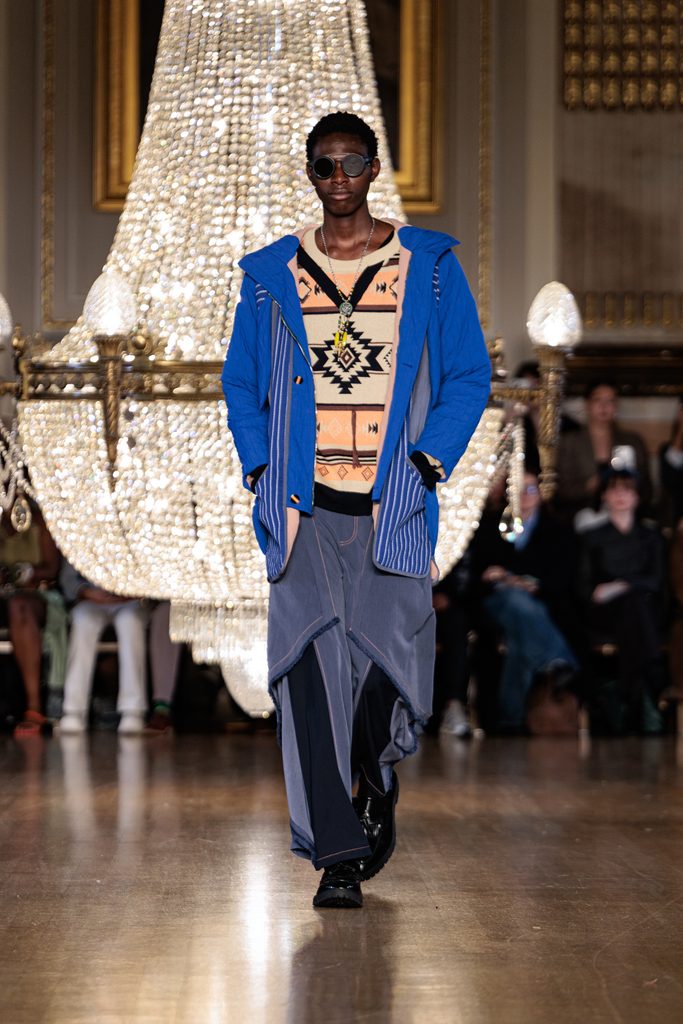
VELESPACE x The Kong Is Dead: When Fashion Meets Technology
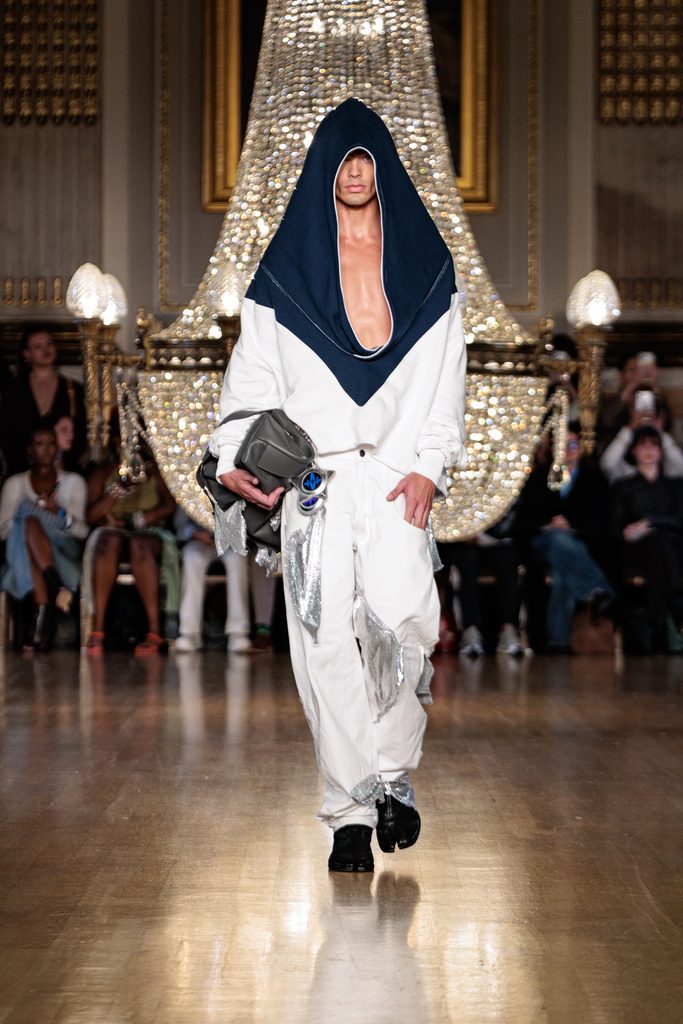
One of the most striking collaborations on the IGNITE runway came from VELESPACE x The Kong Is Dead, bringing together expressive technology and post-streetwear.
VELESPACE introduced its Tech Charm through debut collection SPHERE 01, while London label The Kong Is Dead presented Wounds In Blue, its second consecutive appearance on the London Fashion Week schedule.
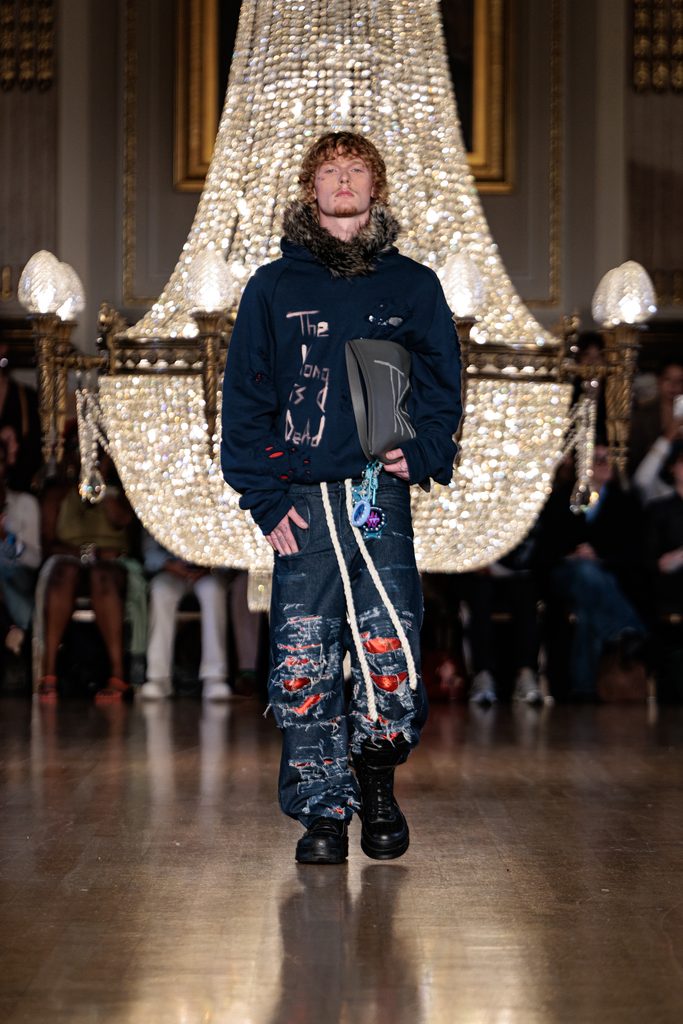
For Wounds In Blue, the work of Lucio Fontana becomes a conceptual starting point. His radical approach to cutting through the canvas is translated into fabric, with garments deliberately treated as unfinished surfaces.
Denim is opened to reveal red fabric underneath, paint merges with a full denim look and branding cuts directly through the back of a garment. Rather than treating clothing as a finished object, the collection leaves each piece deliberately open.
VELESPACE takes that idea into the digital realm. Its circular display transforms still and moving imagery into part of the garment itself, creating a look that changes with the wearer.
Together, the two labels question where fashion ends and technology begins, exploring the relationship between surface and depth, physical materials and digital expression.
Une Enfant: Imagining the Future Through the Past
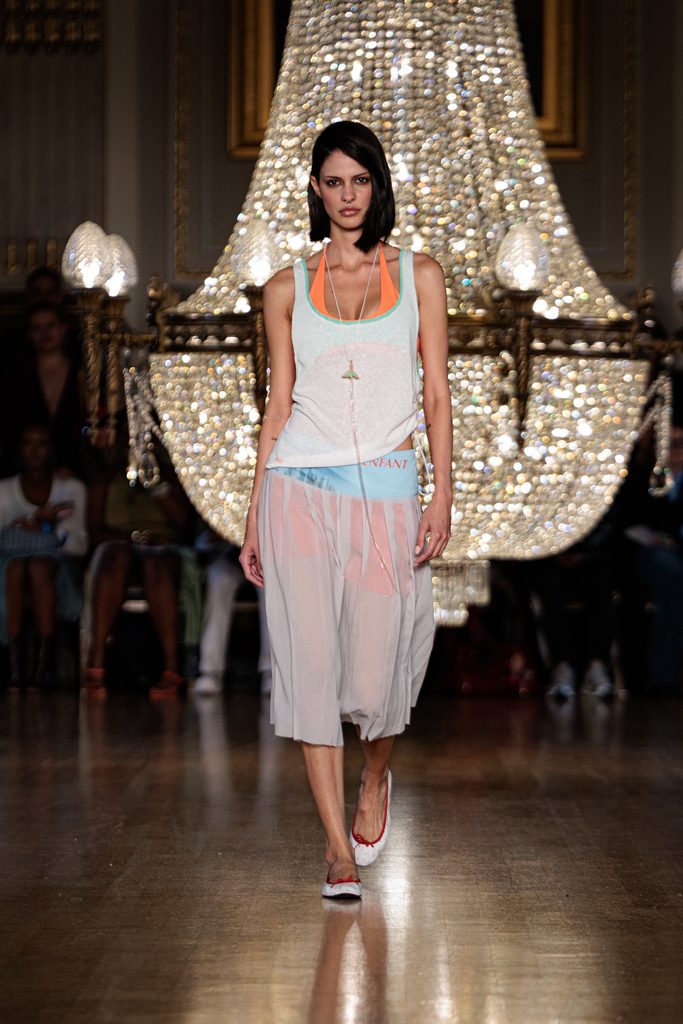
Founded in London in 2025, womenswear label Une Enfant approaches fashion through the relationship between memory and imagination.
The brand’s latest collection looks towards the visual culture and architecture of the early 2000s, revisiting the era’s optimism and futuristic vision through a contemporary perspective.
Clean silhouettes, subtle futuristic details and a cool urban palette create a wardrobe that feels simultaneously familiar and forward-looking.
Rather than approaching the early 2000s simply as nostalgia, Une Enfant considers how the future imagined during that period continues to exist in the present.
The collection turns memory into a visual language, connecting the past, present and imagined future through clothing.
El Khemie: From Corporate Culture to Nocturnal Fantasy
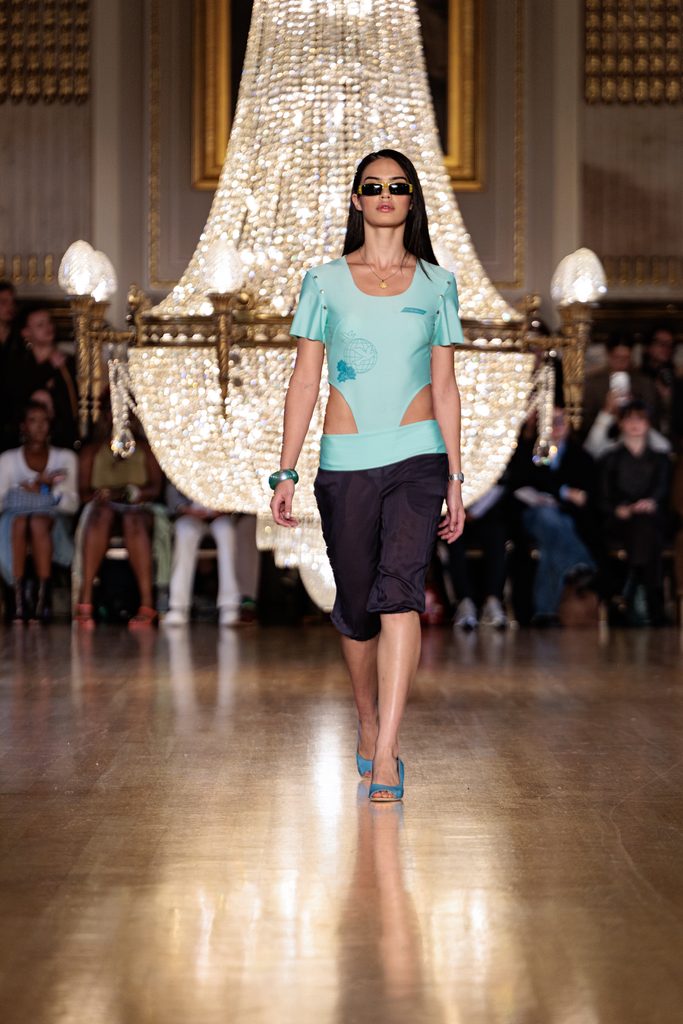
Supported by Design Singapore Council, emerging fashion laboratory El Khemie takes inspiration from the ancient pursuit of alchemy and the mythical search for El Dorado.
Founded by architect Kassandra following her return to corporate life, the label transforms the intensity of Singapore’s corporate culture into an environment for experimentation, escape and wonder.
Its latest collection, Department of Nocturnal Affairs, follows a caffeine-fuelled worker from midnight towards an awakening dawn, unfolding across six acts inspired by Singaporean coffee and tea rituals.
Black tea, chamomile and Peranakan butterfly pea tea are hand-extracted and layered into silk organza. Their colours gradually evolve into botanical greens and earthen shadows, set against corporate navy suiting.
The result is both fashion collection and social commentary, questioning the rhythms of working life while creating a world in which there is room to wander, wonder and dream before the sun rises.
Psy Lau: The Art of Letting Go
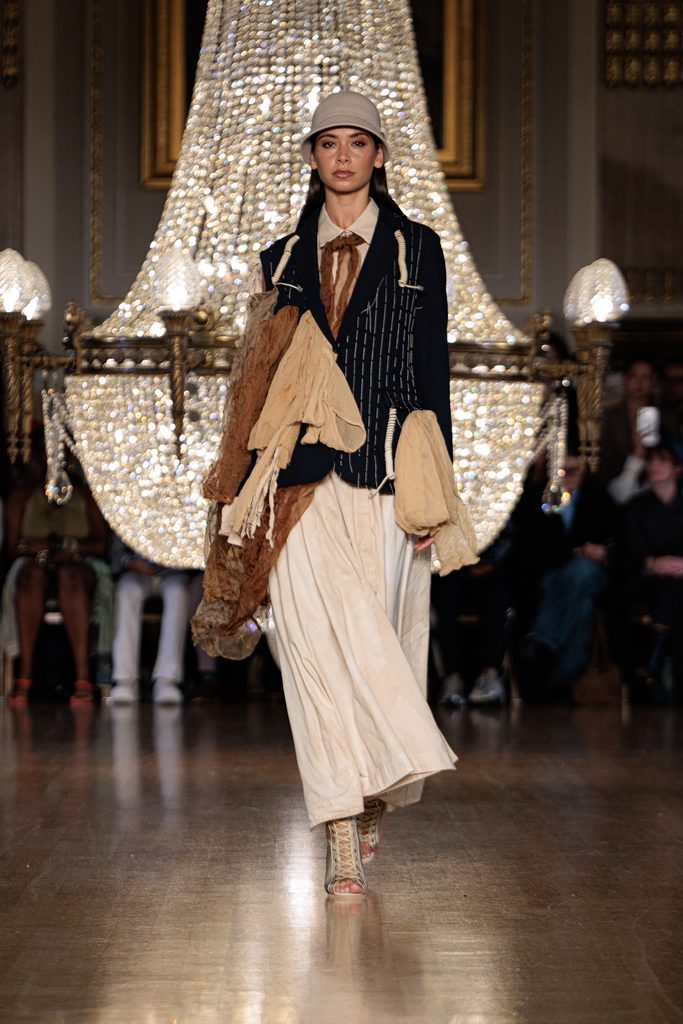
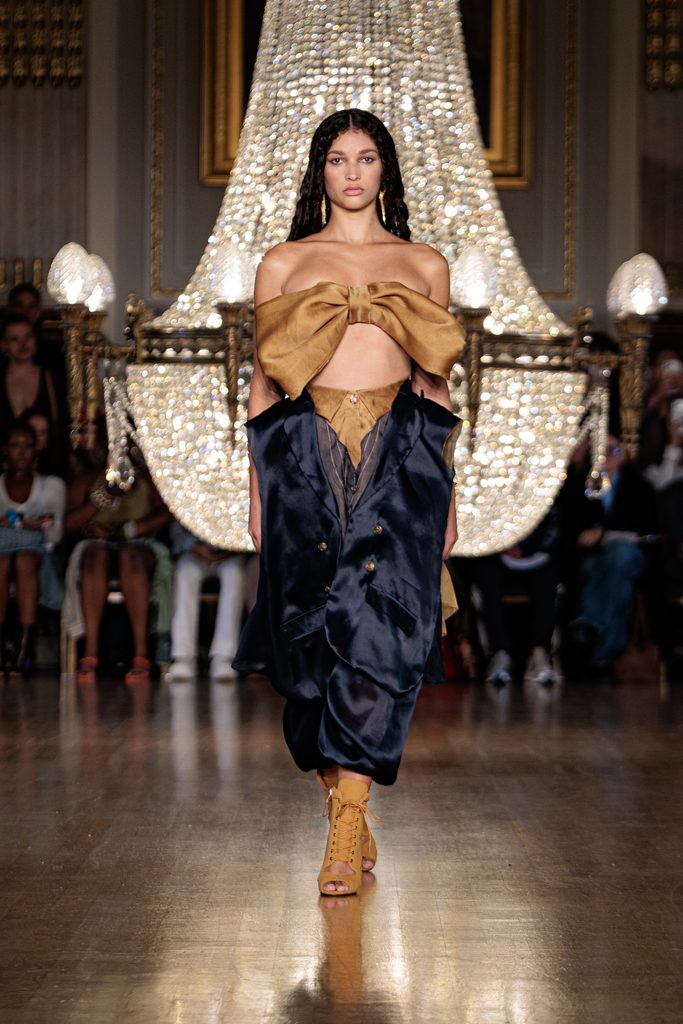
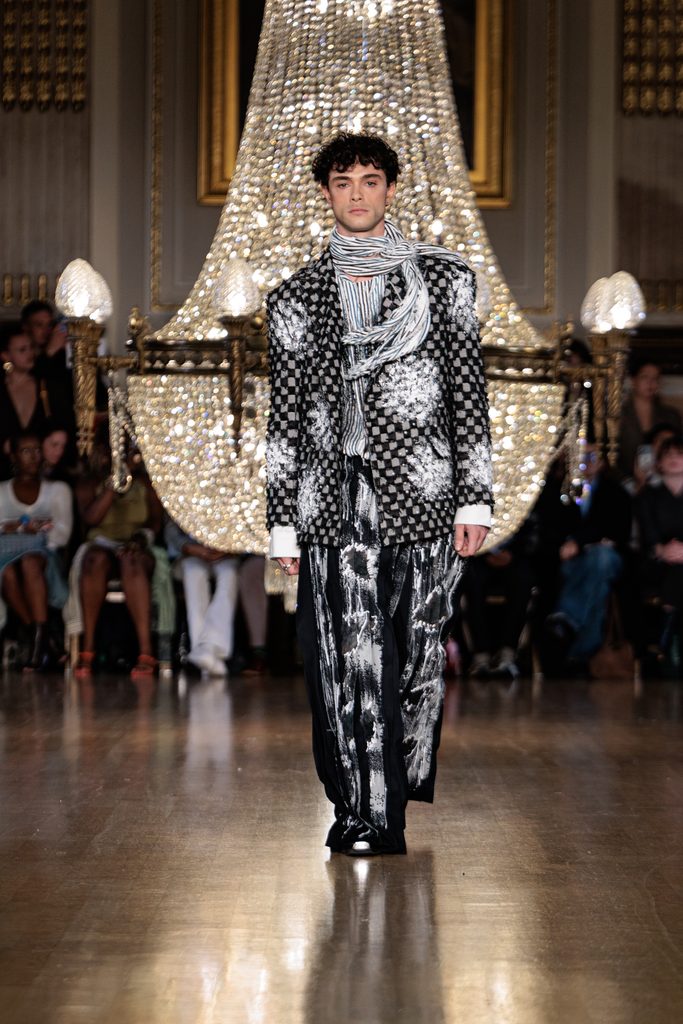
Hong Kong-based streetwear label Psy Lau is known for tailor-made limited jackets, shirts and shorts, with each piece carrying its own personal story.
The designer’s approach places sustainability, individuality and imperfection at its centre, seeking alternative ways of making and encouraging a reconsideration of consumption.
For SS27, The Art of Letting Go turns towards the Japanese philosophy of Danshari, centred on decluttering, release and reclaiming one’s space.
The concept extends beyond the physical wardrobe. Psy Lau uses the language of fashion to explore emotional attachment, relationships and the difficult process of accepting change.
The collection considers how people, like garments, can occupy different chapters of our lives. Some remain, while others eventually move in another direction.
The resulting silhouettes reflect this emotional transition, transforming the idea of letting go into a visual and wearable narrative.
Trashy Planets: Couture, Costume and Rebirth
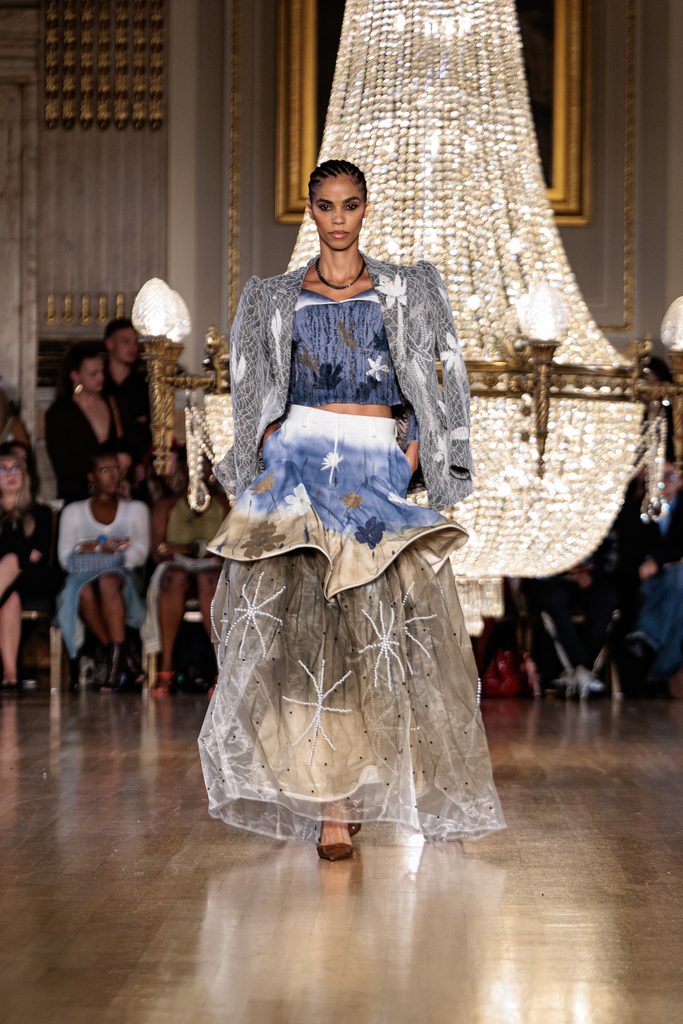
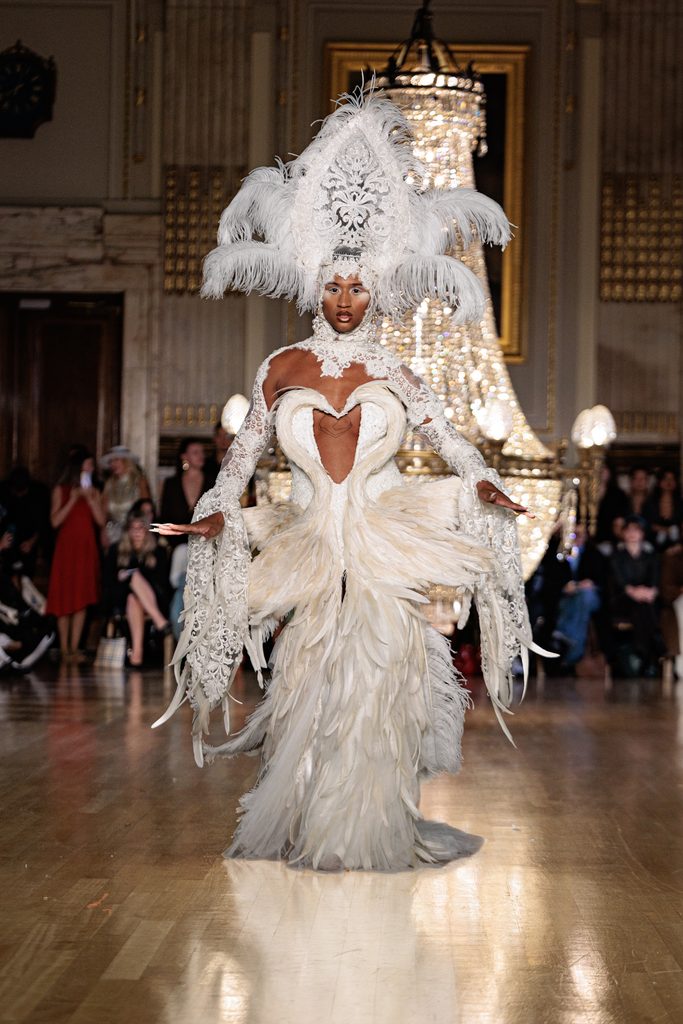
Closing the collection’s spectrum of creative voices, London-based independent fashion and costume house Trashy Planets brought its theatrical approach to the runway.
Founded by self-taught designer and showgirl Bambi Blue, the label creates one-of-a-kind handcrafted pieces where couture meets spectacle.
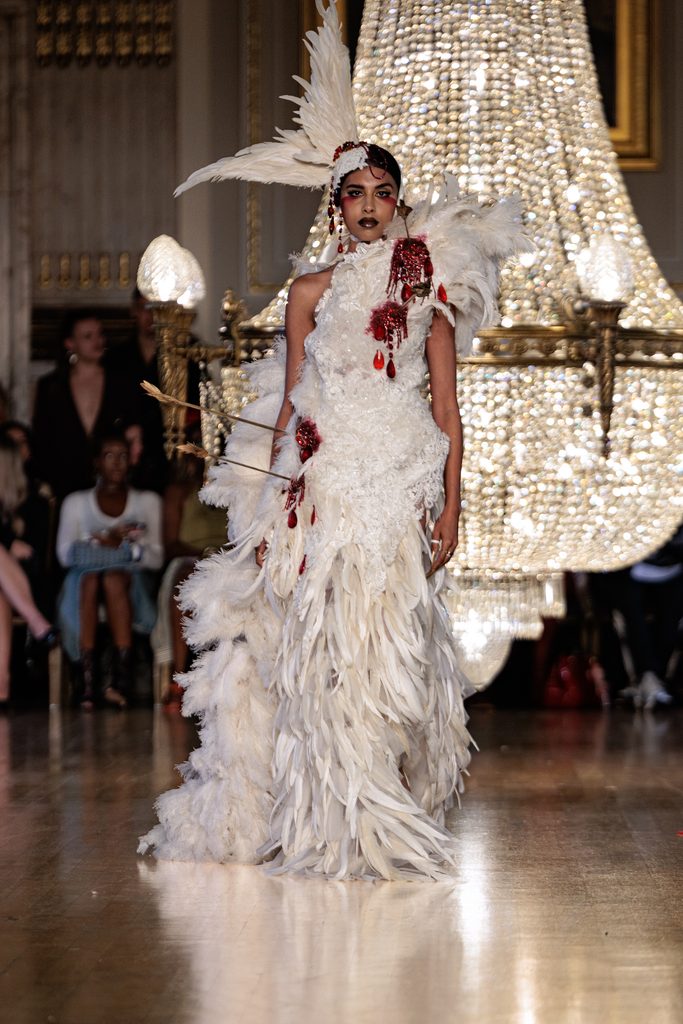
The work is rooted in theatre, subculture and the transformative power of costume, combining traditional costume-making techniques with sculptural silhouettes, intricate embellishment and unexpected details.
For SS27, Ashes To Ashes explores regality, mythology and rebirth.
Ancient royalty and mythical symbolism provide the foundation for dramatic forms, rich embellishment and feathered details, creating a world of ceremony and otherworldly opulence.
The collection captures Trashy Planets’ fascination with transformation and the possibility of turning what has been discarded into something magnificent.
Eight Designers, Eight Perspectives
What made Flair Fashion’s IGNITE Collective SS27 particularly distinctive was its refusal to settle on a single definition of contemporary fashion.
Across the runway, clothing became a vehicle for very different ideas: nature and transformation at Gashani, childhood vulnerability at Quarez, nostalgia at Berth, technology at VELESPACE, memory at Une Enfant, corporate culture at El Khemie, emotional release at Psy Lau and theatrical rebirth at Trashy Planets.
The designers may have approached fashion from entirely different directions, but they shared an instinct to experiment, challenge convention and build worlds around their work.
At a London Fashion Week increasingly shaped by conversations around technology, sustainability, identity and creative independence, IGNITE Collective offered a reminder that emerging fashion does not need to speak with one voice.
Eight brands. Eight perspectives. One Flair Fashion runway.