

London Fashion Week has always been at its most interesting when it reflects the city around it.
From the designers emerging from its fashion schools to the communities that have shaped its streets, London has never been defined by one aesthetic, one culture or one way of dressing. Its fashion identity has been built through movement, migration and the meeting of different worlds.
As London Fashion Week returns from 17 to 21 September 2026, that diversity remains one of the most compelling parts of the programme.
Alongside some of the industry’s biggest established names, a new generation of designers continues to challenge what British fashion can look like, drawing on heritage, family, craftsmanship and cultural identity to create something distinctly their own.
Here are four names worth knowing this season.
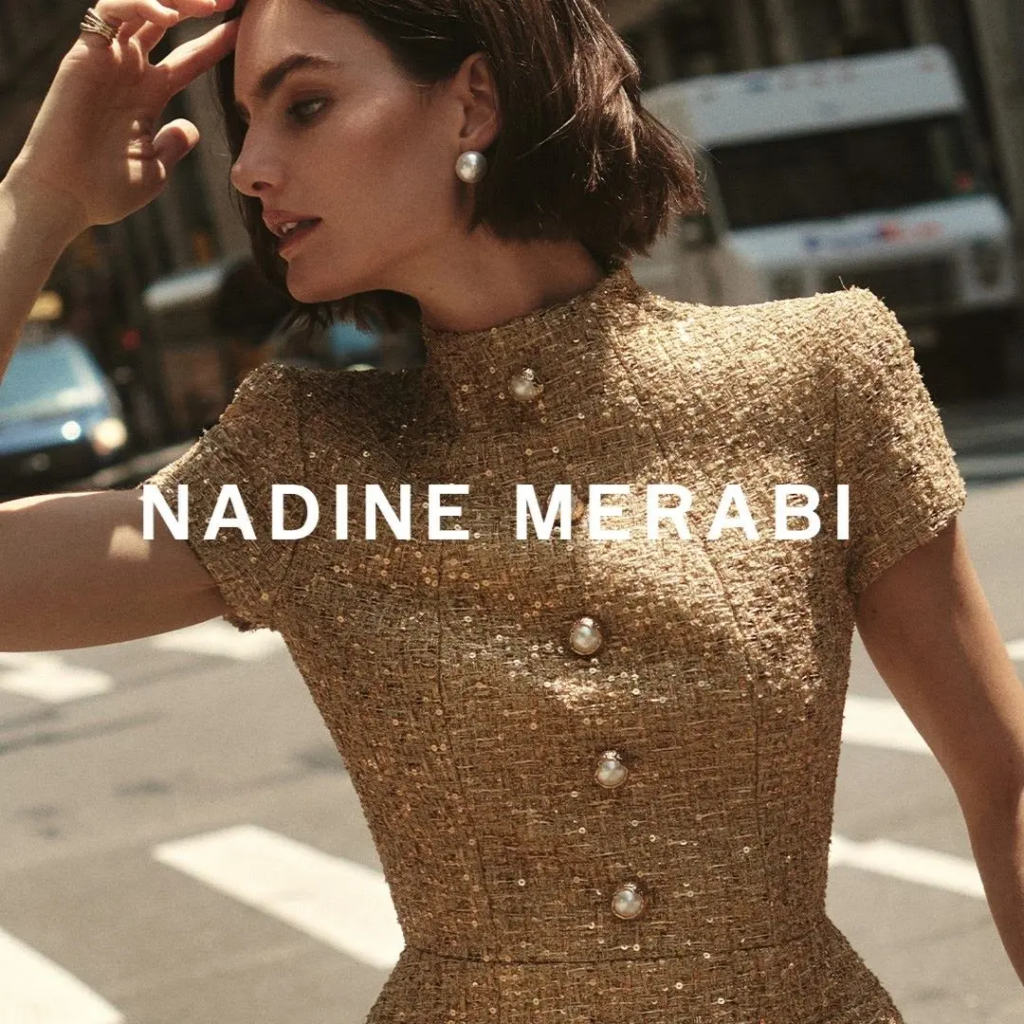
Nadine Merabi
Few designers understand the power of an entrance quite like Nadine Merabi.
The Lebanese-British designer has built her eponymous label around occasionwear designed to make an impact, with heavily embellished dresses, sequins, feathers and statement silhouettes forming the foundation of the brand.
But the story behind the label is just as interesting as the clothes.
Before fashion, Merabi spent a decade playing hockey for England before moving into event planning. Frustrated by the lack of occasionwear that felt original, well-fitting and accessible, she began creating pieces herself.
She launched her label in 2015 with just £250, teaching herself to sew from her parents’ home in Manchester. Within six months, the brand had secured its first wholesale order with Selfridges.
Today, the business has grown considerably, but its sense of occasion remains central to the brand.
Merabi’s Lebanese heritage and British upbringing come together in designs created for what the brand describes as life’s unforgettable moments.
This September, the label will be part of London Fashion Week through an exclusive cocktail event celebrating the brand.
Bora Aksu
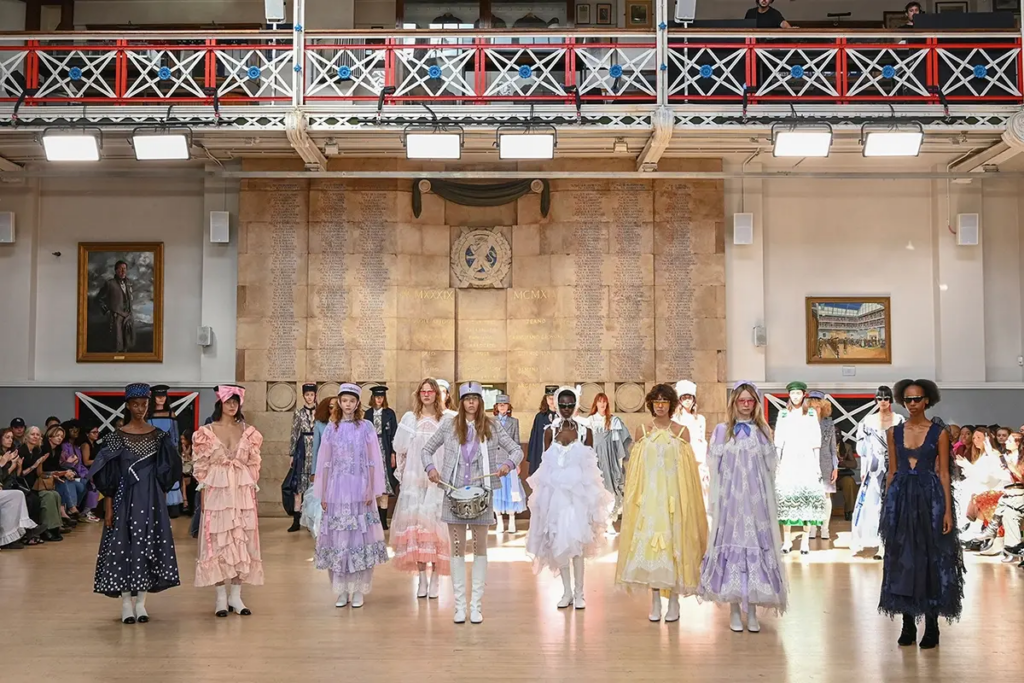
There is something unmistakably romantic about Bora Aksu’s approach to fashion.
The Turkish-born designer has been part of the London Fashion Week landscape for more than two decades, having founded his label in 2002 after graduating from Central Saint Martins.
His career began with a significant vote of confidence. Pieces from his MA collection were bought by Domenico Dolce and Stefano Gabbana, helping put the young designer firmly on the fashion industry’s radar.
Since then, Aksu has developed a distinctive visual language built around delicate fabrics, intricate embroidery, flowing silhouettes and meticulous craftsmanship.
But behind the romanticism is often a story.
Aksu frequently looks to women from history whose lives and achievements have been overlooked, using their experiences as starting points for his collections.
His Turkish heritage is equally important. The influence of his grandmother and aunt, who taught him the importance of creating things by hand, can be seen throughout his work, particularly in his approach to embroidery and detail.
For Aksu, heritage isn’t something to simply reference. It is something to reinterpret.
Kazna Asker
Kazna Asker represents another side of London’s fashion story.
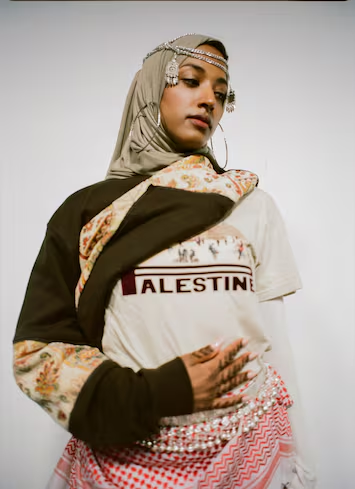
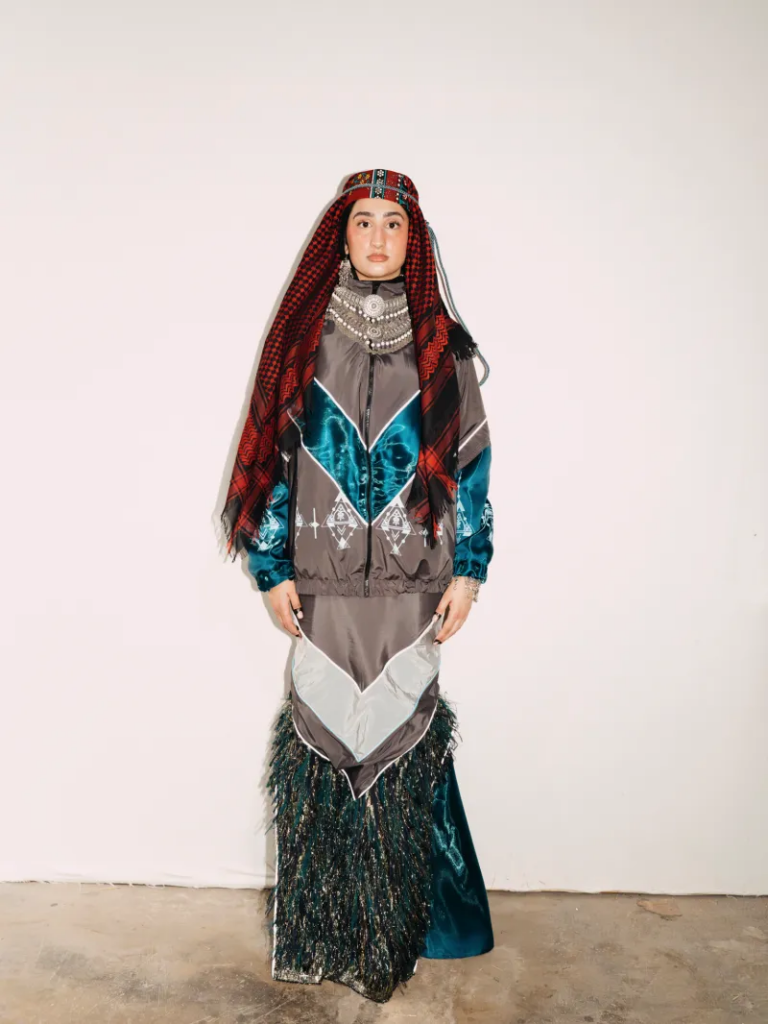
The British-Yemeni designer has built her label around faith, heritage and contemporary streetwear, creating clothing that brings traditional Islamic dress into conversation with modern British style.
Raised in Sheffield’s Burngreave neighbourhood, an area with a significant Yemeni community, Asker’s upbringing has played an important role in shaping her creative identity.
In 2022, she became the first student to showcase hijabs on the runway at Central Saint Martins’ MA Fashion show. Her work subsequently earned her a place on the British Fashion Council’s NEWGEN programme.
Her collections have included tracksuits, jilbabs, abayas and chadors, often created from upcycled and repurposed fabrics and handmade in her London studio.
But Asker’s work extends beyond the clothes themselves.
She has used Fashion Week as an opportunity to create space for other creatives and businesses from communities across South West Asia and North Africa.
In 2025, rather than staging a conventional runway show, she helped create a two-day souk during London Fashion Week’s City Wide Celebration, bringing together independent businesses and creatives alongside traditional crafts including Palestinian embroidery and Sudanese soap.
It is a reminder that fashion can be a platform, not simply a product.
DIJÁGO
London’s multicultural identity is perhaps nowhere more beautifully expressed than through DIJÁGO.
Founded by Pakistani designer Khudija Zaib Lughmani and Ghanaian-Namibian designer Gracey Owusu-Agyemang, the London-based luxury label brings together the founders’ Afro-Asian heritage with a deliberately slower approach to fashion.
The pair met while studying fashion design at Regent’s University London and launched DIJÁGO in 2022.
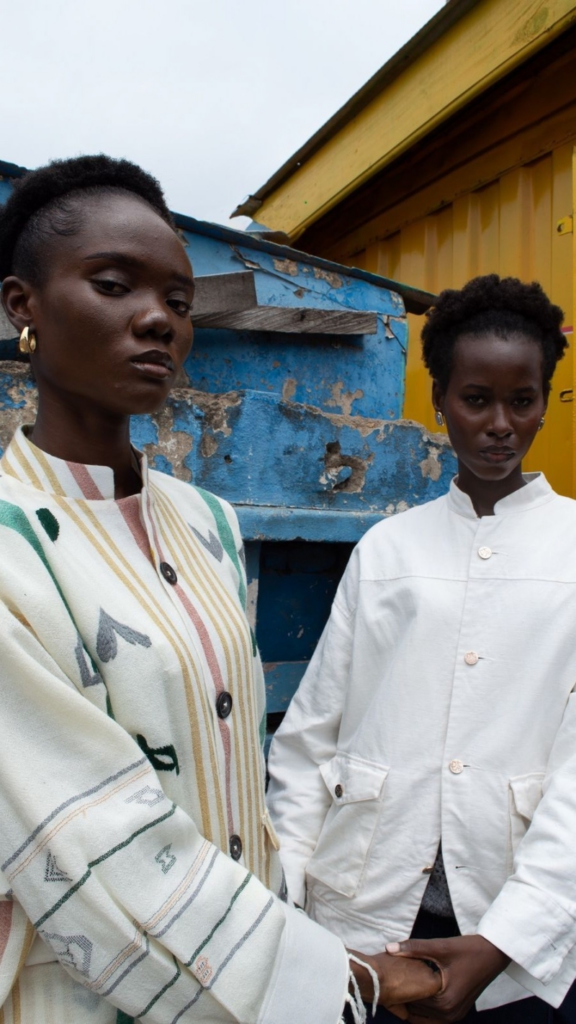
Their work brings Pakistani embroidery techniques together with West African influences, using natural materials including Zambian cotton and collaborating with artisans in Pakistan.
Traditional Ghanaian symbols and motifs also appear throughout their work, creating collections that feel rooted in multiple places at once.
The brand presented its debut collection, Badlav, digitally during London Fashion Week in 2023. Its second collection, Ek Sien Jou, followed as part of the official LFW schedule, bringing together Pakistani architectural references and West African textiles.
DIJÁGO also takes a distinctly different approach to the idea of luxury.
Rather than producing large quantities, the brand creates a limited number of new pieces each year, with many made to order. Craftsmanship, natural materials and traditional techniques are placed at the centre of the process.
It is luxury with a sense of provenance.
A different picture of British fashion
These designers represent very different aesthetics, backgrounds and approaches to their work, but together they tell a bigger story about London.
British fashion is no longer easily defined by a single visual identity.
It can be a sequinned gown inspired by a Lebanese-British upbringing. It can be an abaya reimagined through London streetwear. It can be embroidery passed between generations or Pakistani and West African references brought together in a contemporary luxury collection.
And perhaps that is precisely what makes London Fashion Week so exciting.
The city doesn’t ask its designers to leave their identities at the door.
It gives them a stage to bring those identities with them.
This September, as the international fashion industry descends on London once again, these are the designers reminding us that the future of British fashion is not one story.
It is many stories, being told at once.
The Zenith Magazine will be in London throughout Fashion Week, meeting the designers, creatives and brands shaping the season through our Zenith Asks series.