


Artificial intelligence has no shortage of spectacle. New models arrive almost weekly, investment continues to accelerate and companies across the world are racing to understand what the technology might mean for them.
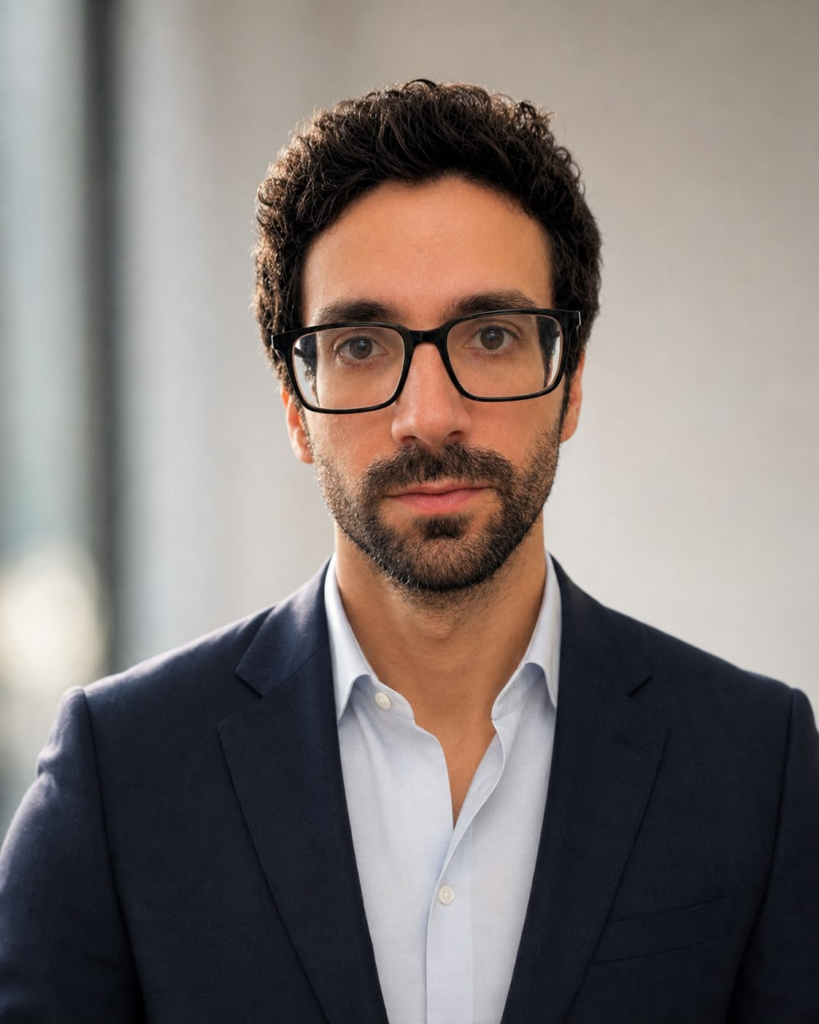
Henri Saab is interested in something rather less theatrical: making it actually work.
As the founder of TowardsChange, Saab has spent much of his career at the intersection of technology and organisational transformation, working with more than 50 organisations across sectors including finance, pharmaceuticals, manufacturing, sport and government. His focus is increasingly on a deceptively simple question: how do you take AI beyond the impressive demonstration and make it part of the way a business operates?
It is a question that has now brought TowardsChange to Dubai.
A Natural Next Chapter
For Saab, the decision to establish a stronger presence in the emirate was less an exercise in expansion than a response to where the company was already heading.
“Dubai felt less like a new market for us and more like the natural next chapter,” he says. “The ambition is here, the infrastructure is here, and so is the demand.”
A growing proportion of TowardsChange’s work has come from the region over the past two years, making a physical presence increasingly important. Alongside Paris and Riyadh, Dubai gives the company a network spanning Europe and the Gulf, while bringing its team closer to the organisations it is helping transform.
There is another attraction too: confidence.
The UAE has been unusually explicit about the role it believes artificial intelligence can play in its future economy. For companies deciding whether to commit significant capital to AI infrastructure, Saab believes that clarity matters.
It is part of a broader shift taking place across the Gulf. Governments are not simply discussing AI as an abstract ambition; they are investing in the infrastructure, data and talent required to support it.
“The region isn’t just adopting the AI transformation,” Saab says. “It has an opportunity to shape what enterprise AI looks like next.”
Beyond the AI Hype
If the past few years have been defined by experimentation, Saab believes the conversation inside sophisticated organisations is already changing.
Two years ago, boards were asking whether they should invest in artificial intelligence. Today, the questions are considerably more complex: where can it create genuine value? What should be automated? What should be built internally? How should systems be governed? And, perhaps most importantly, how does AI become embedded within the organisation itself?
The companies extracting the greatest value, Saab argues, are often those willing to undertake the least glamorous work.
That means understanding processes, organising data, establishing governance and preparing employees before chasing the newest model.
“AI does not create value simply because you put a model into a company,” he says. “It creates value when it is connected to the way that company actually works.”
It is an important distinction in an industry fascinated by tools.
For Saab, buying technology and transforming a company are two very different propositions.
Businesses first need to distinguish between using AI to make employees more productive and using it to fundamentally redesign how the organisation operates. The former might mean giving teams access to an enterprise AI assistant. The latter could involve intelligent agents, automated workflows, APIs and bespoke systems working throughout the company.
“The biggest mistake is treating AI as a technology purchase rather than a transformation decision,” he says.
The starting point, therefore, should not be the model.
It should be the business.
The Human Side of Intelligence
There is a paradox at the heart of the AI revolution. The more capable the technology becomes, the more important people may become to its successful deployment.
Across the organisations TowardsChange has worked with, Saab has noticed a recurring pattern. The businesses moving fastest tend to have a senior leader with genuine accountability for transformation and, crucially, the authority to change how the organisation works.
But leadership alone is not enough.
“The organisations that succeed are the ones that take the human transformation as seriously as the technological one,” he says.
AI can introduce new capabilities almost overnight. Competitive advantage comes from whether employees know what to do with them.
It also reframes one of the most persistent anxieties surrounding artificial intelligence: jobs.
Saab says his conversations with chief executives are increasingly focused not simply on whether AI will replace people, but on whether organisations can remain in control of the technology they deploy. Where does company data go? Who can access it? Is the system compliant? Can its decisions be explained to a regulator, auditor or board?
These are not concerns to be dismissed, he argues. They are signs of responsible leadership.
The more immediate impact on work may instead be the disappearance of repetitive tasks. Searching, summarising, reformatting and documenting can increasingly be handled by intelligent systems, leaving people with more time for judgement, creativity and decision-making.
That does not mean every job remains unchanged.
It means businesses have a responsibility to ensure their people change with them.
The Luxury of Invisible Technology
Some of TowardsChange’s most interesting deployments are far removed from the futuristic AI demonstrations dominating social media.
In one project, the company developed a voice system for a legal and notary organisation of more than 500 people. The technology captures, transcribes and structures legal work while retaining the traceability required in a highly regulated environment. According to Saab, the system achieved around 99 per cent transcription accuracy while significantly accelerating drafting.
Elsewhere, the company has worked in precious metals, applying document analysis, image recognition and evidence gathering to continuous due diligence and brand protection.
Neither sounds particularly theatrical.
That, perhaps, is precisely the point.
“The biggest opportunities are not always where AI looks most exciting,” Saab says.
Instead, they can be found buried within compliance departments, procurement processes, investigations, claims, administration and documentation: the machinery that keeps organisations functioning but rarely attracts attention.
“The most transformative AI may ultimately be the AI you never see,” he says, “and it is simply the reason the business works better.”
There is something distinctly luxurious about that idea.
The best technology, like the best hospitality or design, does not necessarily demand attention. It removes friction. It anticipates. It quietly makes an experience feel effortless.
For enterprise AI, sophistication may ultimately be measured not by how prominently a company displays it, but by how seamlessly intelligence disappears into the organisation.
Building for What Comes Next
There is an obvious problem with investing heavily in artificial intelligence today: what happens when today’s breakthrough becomes tomorrow’s obsolete technology?
Saab’s answer is not to attempt to predict which model will win.
“You don’t build around today’s model. You build around the business.”
Models will change. What should endure is the organisation’s own intellectual infrastructure: its data, processes, institutional knowledge, governance, terminology and integrations.
If those foundations are designed correctly, switching to a more capable model becomes an evolution rather than a reconstruction.
It also leads to what Saab believes could become one of the defining shifts of the next five years.
For decades, companies have adapted themselves to software. They purchased a platform and changed their processes to accommodate what that platform could do.
Artificial intelligence could reverse the relationship.
As bespoke software becomes faster and more economical to create, companies may increasingly design technology around the way they want their organisation to operate.
That could fundamentally alter what businesses consider an asset.
Data will remain important, but so too will the structured representation of everything a company knows: its terminology, rules, relationships, processes and institutional memory. This organisational intelligence will provide the foundation upon which AI agents can operate reliably.
The Apprenticeship Problem
Yet Saab believes one of the most consequential questions surrounding AI has received comparatively little attention.
What happens to expertise?
Traditionally, people become exceptional at their profession by first completing the repetitive, often mundane tasks associated with being a junior employee. Analysts analyse. Lawyers review documents. Marketers research. Engineers perform foundational work.
Those tasks are precisely the ones AI is becoming exceptionally good at automating.
“If AI automates much of the routine work through which people traditionally developed experience, we need to rethink how expertise is built,” Saab says.
It creates what might be called the apprenticeship problem.
How does someone become an exceptional lawyer, strategist, engineer or executive if intelligent systems perform many of the tasks through which previous generations learned their craft?
For Saab, the organisations that solve that question could gain an enormous advantage.
It is also why his vision of the AI-powered company is ultimately less about machines replacing humans than it is about redesigning the relationship between them.
For CEOs wondering where to begin, his advice is refreshingly uncomplicated: understand the business first.
Identify where time disappears. Find where decisions stall. Understand where information becomes difficult to access and where talented people are consumed by repetitive work. Then determine where AI can create meaningful value and whether it can realistically be implemented.
And then, importantly, use it.
Saab believes leaders should spend time working directly with AI themselves: writing with it, researching with it, challenging it and discovering both its extraordinary capabilities and its very real limitations.
A CEO who understands both sides will make better decisions than one whose experience of artificial intelligence extends only as far as a board presentation.
For all the extraordinary technology being developed, perhaps that is the most compelling idea of all.
The future of artificial intelligence will not simply be determined by which company possesses the most powerful model.
It will be determined by which organisations learn how to become more intelligent because of it.