
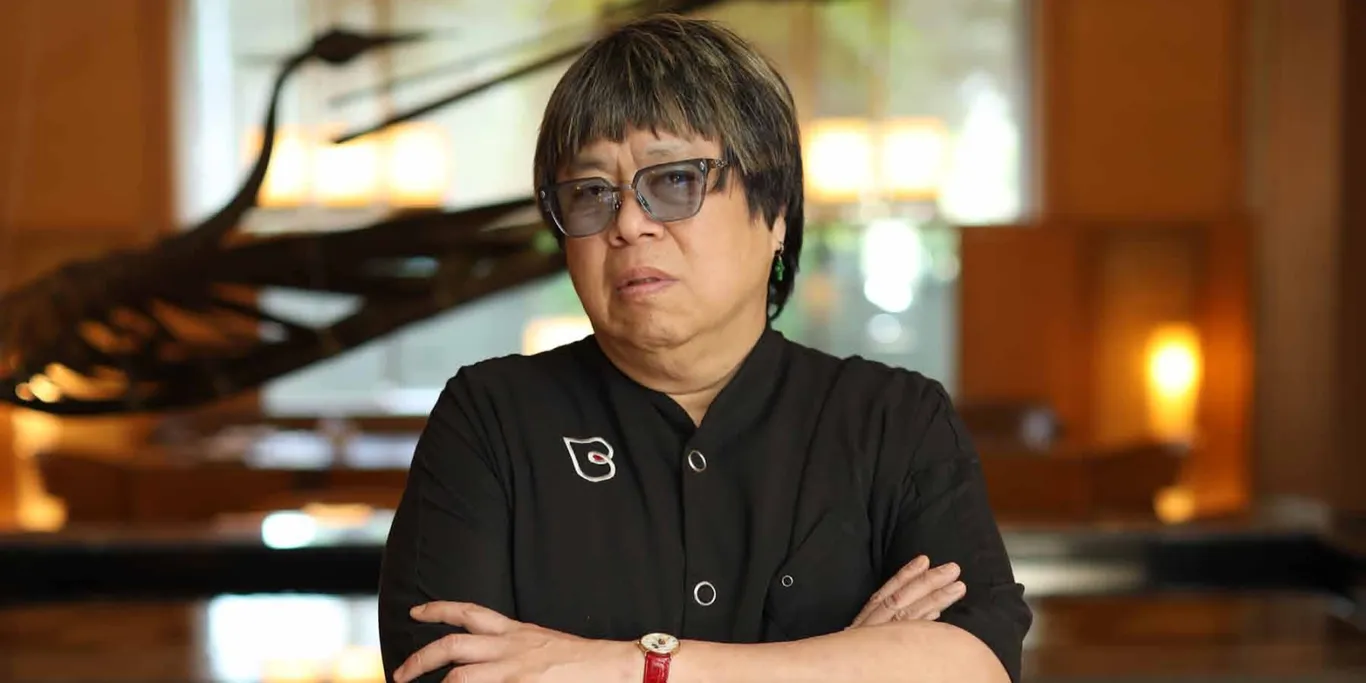

At 65, with Michelin stars, global restaurants and a renowned television persona known around the world, Chef Alvin Leung speaks with the calm assurance of someone who has tested his limits and constantly expanded them.
Growing up in Canada within an Asian household, the prospect of the first-born son becoming a chef was once viewed through a traditional, blue-collar lens, a far cry from the celebrity status chefs enjoy today. It wasn’t until he was 40 that Chef Alvin made the decisive pivot from running his family’s engineering business to opening his first restaurant in 2003.
The Engineer in the Kitchen
This technical background is not merely a footnote in his biography. It forms the very framework of his creativity in the kitchen.
“Engineering does help me a lot,” he explains during our conversation. In his view, creativity without practicality is unusable. Every dish at his restaurants is engineered rather than simply created, involving a logical deconstruction of a dish’s DNA, from proteins and textures to the minute balance of sweet, sour, bitter and umami. He rejects the stereotype of engineers as being purely technical minds. “Engineers are creative and practical,” he says. That balance defines his cooking.
He approaches menu development like he would a technical system, with research, logic and structure. He compares the process to how artificial intelligence draws from a vast library of data. His own “library” is Chinese cuisine, layered with history, texture, regional nuance, and medicinal traditions. Add to that his Canadian upbringing and exposure to global food cultures and that forms a fairly extensive culinary database.
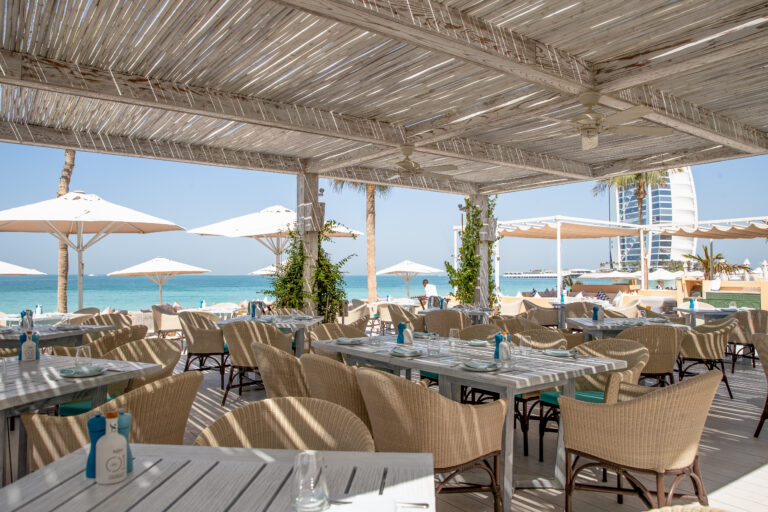
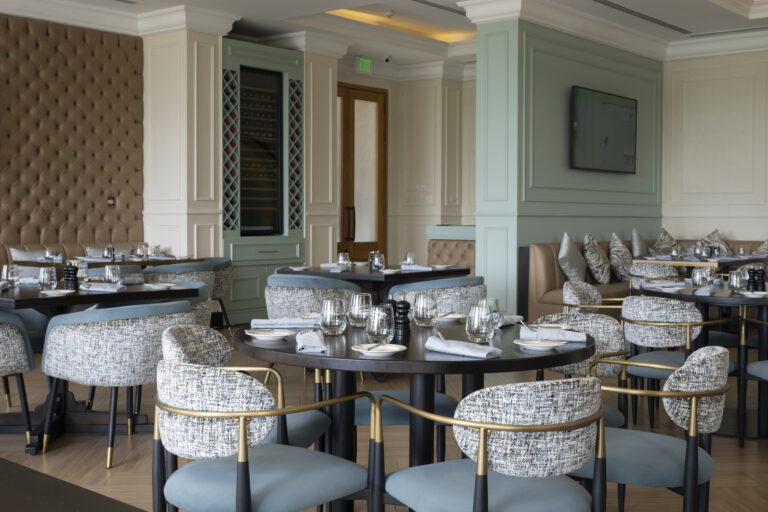
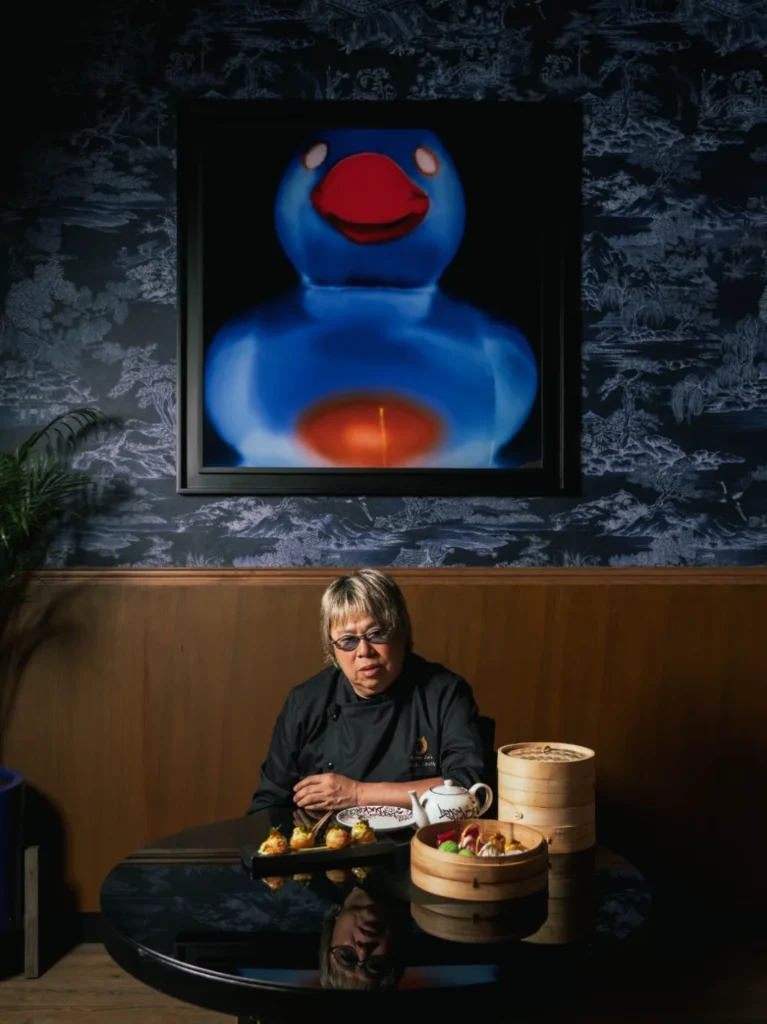
He uses that database when building a concept like Demon Duck in Dubai. Keeping in mind the culture, religious and dining habits in the region.
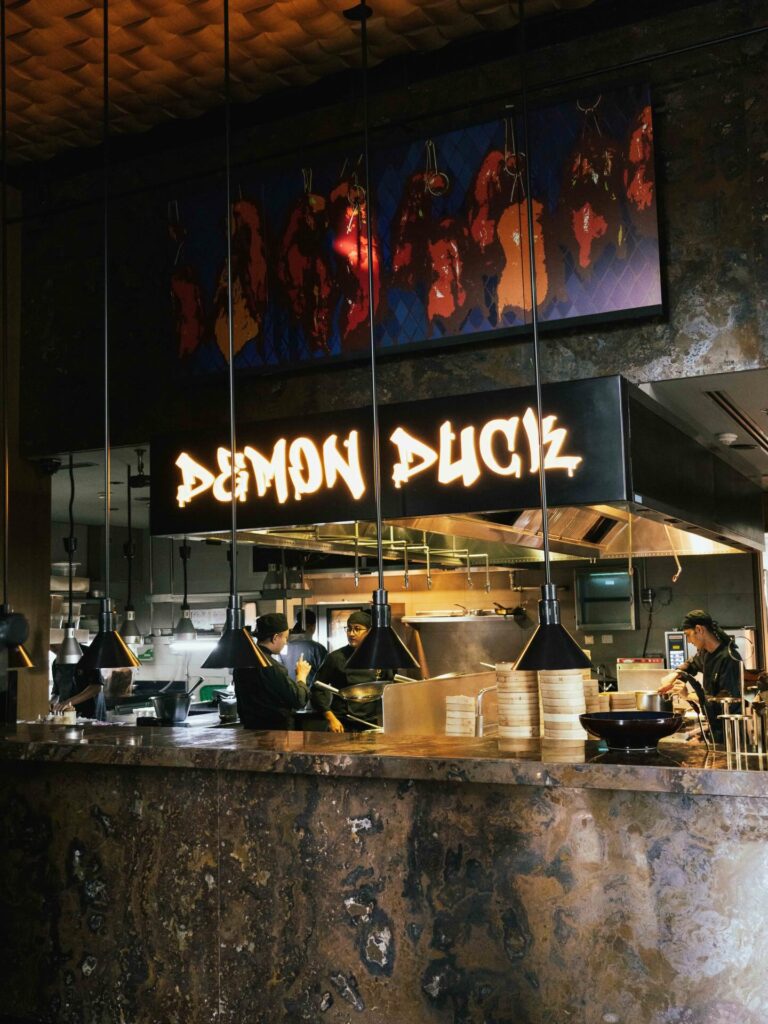
“Pork is not an option in a Muslim-majority market and texture matters in regions where food is often eaten by hand,” he tells us. “Spice is not simply about heat but about aroma, preservation and history. Chinese and Korean culinary traditions are deeply intertwined with medicinal principles. This is why every ingredient and every dish on our roster has a reason for being included.”
It is this understanding of context, combined with a methodical way of thinking, that allows him to adapt his cuisine without losing its core identity.
Defining X-Treme Chinese
This analytical approach is what gave birth to his signature style, the “X-treme Chinese.” Emerging in the early 2000s, when molecular gastronomy was the global culinary zeitgeist, the term represents a commitment to pushing flavours and concepts to their absolute limits. Chef Alvin describes the experience as taking a diner to their boiling point, the edge of what they can comprehend and tolerate. It is a pursuit of the perfect extreme and reaching a balance of the provocative and the palatable.
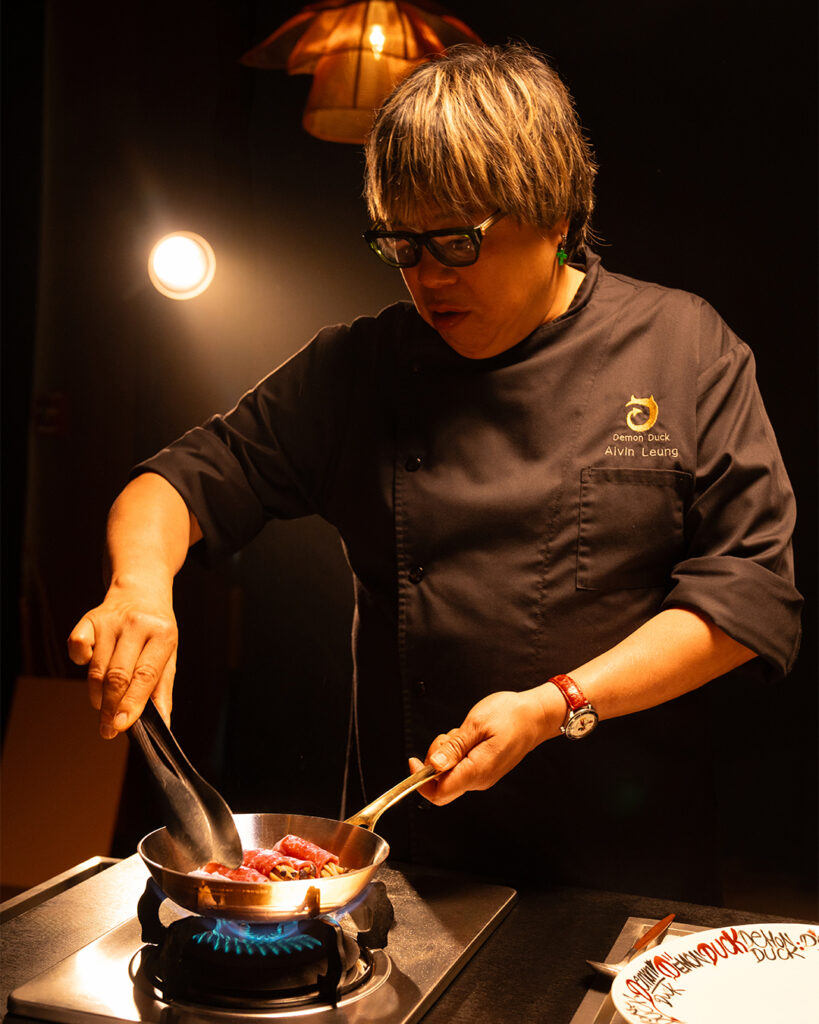
The Demon Chef Persona
This philosophy extends to his moniker, the “Demon Chef.” Rejecting the “God of..” titles often favoured in Asian culinary circles as blasphemous, Chef Alvin has chosen the opposite for himself.
“I’d rather be the devil, but a fun one,” he says. It is a persona that suggests playfulness rather than malice, a chef who likes to play with his guests’ expectations without ever intending to cause harm, a figure who challenges and provokes the norm.
The Demon Chef is less a character and more a philosophy that translates into high standards. Chef Alvin admits to resorting to a certain toughness in the kitchen, but it is a quality born of a desire to see his team at their best. His greatest pet peeves are illogic and a lack of preparation. To Chef Alvin, a junior chef who cannot manage themselves, manifested in a lack of cleanliness or organisation, cannot hope to manage a kitchen.
“I get upset when people are not at their best.” The frustration comes from seeing wasted potential. He pushes his team because he believes in mutual growth.
He views the relationship between a chef and their kitchen as one of necessary harmony; if he grows and the kitchen does not, he is forced to drag them along, which is a waste of energy. Instead, he strives to foster an environment where his staff believes in his vision and passion.
Over the years, he has mentored multiple Michelin-starred chefs, including winners of prestigious industry awards.
Beyond the Legacy
With more than 20 restaurants worldwide and international acclaim, he shrugs at the idea of chasing rankings. In his words, guides rise and fall and lists change annually. He is no longer chasing trivial numbers or the top of ranking lists. While he remains open to new opportunities, his focus has shifted toward stability and legacy rather than the fleeting prestige of a guide.
At 65, having conquered the Michelin Guide and television screens globally, he feels no urgency to accumulate more accolades. If an opportunity aligns with his energy and values, he will take it. If not, he is content with what he has built. His current joys are found far from the heat of the line. “My biggest joy right now is to be able to go home,” he shares. Between his two grandchildren, his daughter, and his beloved cats, the Demon Chef has found a different kind of “perfect extreme”.