



“To thine own self be true.”
A line from Hamlet, first repeated to Dr Katherine Iscoe by her father, that now serves as the emotional and intellectual backbone of her latest book, The Self-Respect Playbook for Overthinkers, Overdoers and Overgivers. She carries this sentiment through the book as both a personal anchor and a challenge, asking the reader to look at who they actually are beneath the heavy roles they’ve learned to perform for the benefit of others.
In the opening pages, she writes about her father with warmth, humour and affection, recalling a man who taught her life’s greatest lessons through questions rather than grand speeches, often beginning with a simple, disarming “have you considered…”. This approach defines the entire book, instead of prescribing rigid solutions, she builds each chapter around a narrative, followed by open-ended questions that push the reader to examine their own life patterns.
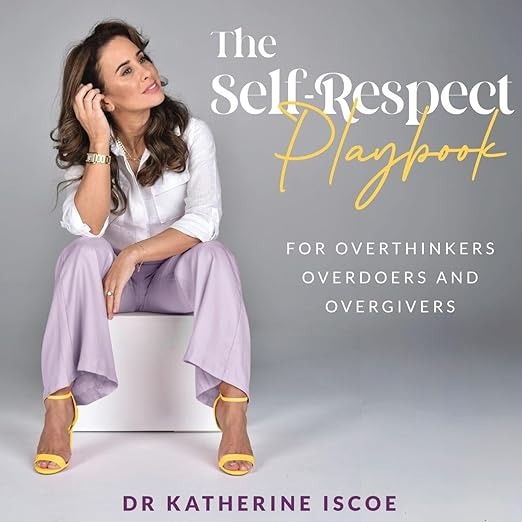
That is exactly what I responded to while reading. The book is simple, straightforward and easy to follow, but not in a watered-down way. Dr Katherine has a gift for taking ideas that can easily turn woolly in the hands of a less disciplined writer and making them practical. In her framing, self-respect lives in daily behaviour. It is found in your decisions, your boundaries and your willingness to stand on your own even when external approval is nowhere to be found. A large part of the book’s appeal comes from its structure. Dr. Katherine relays her core tenets through what she calls, the seven non-negotiables of self-respect.
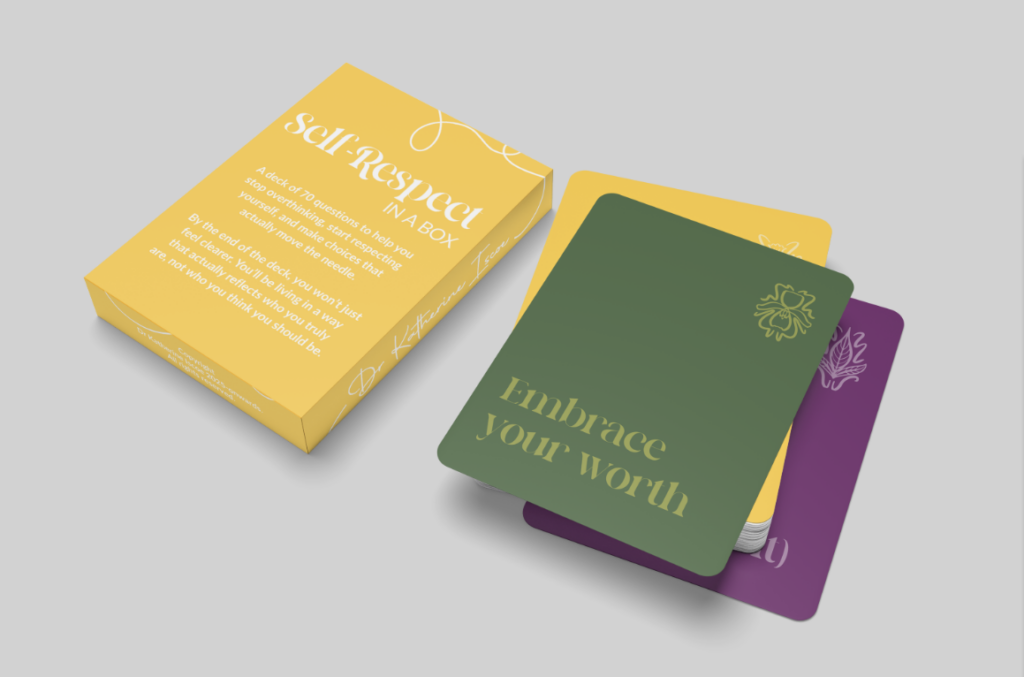
The seven non-negotiables, arranged through the acronym RESPECT, give the book its shape and momentum. What works especially well is that each principle gets room to breathe through dedicated chapters. Each one is built around a relatable story, then closed out with an open-ended question that sends the reader reflecting back into their own life rather than leaving them parked in Dr Katherine’s. That is smart. It keeps the book from becoming a monologue and asks something of the reader.
Those seven principles are memorable precisely because they are so unapologetically direct. Risk it or regret it. Embrace your worth. Put yourself first without guilt. Stop trying to please everyone. Accept that mistakes do not cancel out your value. Care more about your own inner pride than outside praise. Take the help that is available to you. Even written out like that, you can see why the framework lands. There is no mystery to what she is trying to say. The challenge, as she rightly notes, lies entirely in the daily, often difficult application of these standards.
One of the most compelling threads in the book is what she calls “the voice.” That nagging internal heckler that pipes up every time you dare to want something.
Who do you think you are? What makes you think you’re good enough to want this? Why would this work for you?
It is a voice many high-achieving people know intimately, especially those who have become experts at over functioning for others while privately shrinking themselves. I found this section particularly effective because of how she connects that internal noise to the weight of regret. The damned voice does not merely sow self-doubt in the present, it actively talks you out of action, then leaves you with all the “shoulda, coulda, wouldas” as she says, while you’re left looking at opportunities in the rearview mirror.
I also appreciated the humour that runs throughout the text. Self-development books often struggle with tone, veering into preachy territory or are polished to death to the point that they lose all human texture. Dr Katherine avoids that trap by leaning into self-deprecating humour and personal anecdotes. Whether recounting her five-foot great-grandmother standing up to the Hlinka Guard or writing about her father dressed as a rabbit-pirate-clown for Halloween, these are the kinds of details that stop a book like this from feeling generic. They tell you there is an actual person behind the message, with family mythology, absurd yet fond memories and a willingness to laugh at herself.
She is also refreshingly candid about her own history, from bankruptcy and disordered eating to the years spent trying to anchor her worth in other people’s opinions. She isn’t writing as someone who has magically transcended insecurity rather as someone who is all too familiar with the usual patterns, has paid the price for inhabiting them and is now attempting to hand the reader a better one.
Another reason the book connected with me is its handling of feelings of fraud even when there’s evidence to the contrary. That habit of downplaying your achievements, dismissing what you have survived and acting as though every good thing that has come your way was some sort of clerical error. Dr Katherine seems to understand that mindset from the inside.


On a personal note, I couldn’t help but smile when I read her author bio. She describes herself as a “dog-obsessed, murder documentary-loving nerd who uses sewing as therapy”. As a cat-obsessed, murder documentary-loving nerd who uses painting in much the same way, I felt an immediate sense of kinship. It is a small detail, but it captures an essential aspect of the book. For all its talk of self-respect, it never loses its personality.
If I have one criticism, it is that readers who are already steeped in self-development literature may find some of the core ideas familiar. However, the value here lies less in novelty and more in the delivery. What lifts the book is the clarity and honesty of its storytelling and the fact that Dr Katherine keeps returning the reader to their own behaviour. What are you tolerating? What are you avoiding? Where are you betraying your own values to stay palatable?
That, to me, is where The Self-Respect Playbook earns its place. It does not promise transformation through empty slogans. It asks for something more demanding and ultimately more useful. A better relationship with yourself, built one decision at a time.
Final verdict
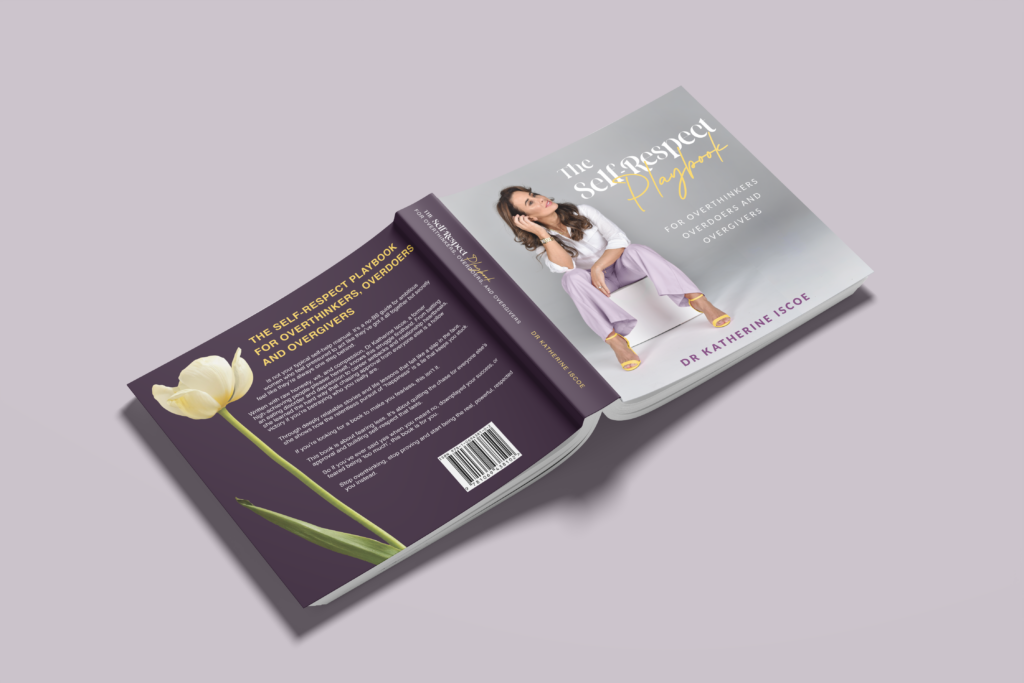
A warm, readable and genuinely relatable book that turns self-respect into something practical. Dr Katherine Iscoe writes with clarity, humour and enough self-awareness to keep the message grounded. For anyone prone to overthinking, people-pleasing, or treating their own worth as negotiable, this is a must read.
To purchase a copy of The Self-Respect Playbook, visit risewithrespect.com